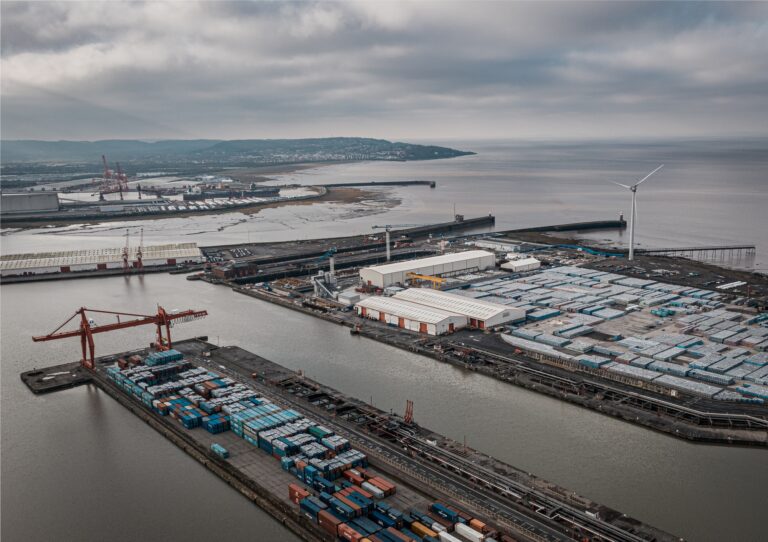
The persistent gap between announced foreign direct investment and actual operational capital often leads corporate executives to miscalculate market entry timing. Headline FDI figures can severely distort strategic decision-making when approval values, realized inflows, and sector concentration are moving in fundamentally different directions. Understanding the true Thailand FDI outlook 2026 requires looking beyond superficial public […]
The persistent gap between announced foreign direct investment and actual operational capital often leads corporate executives to miscalculate market entry timing. Headline FDI figures can severely distort strategic decision-making when approval values, realized inflows, and sector concentration are moving in fundamentally different directions. Understanding the true Thailand FDI outlook 2026 requires looking beyond superficial public announcements to measure actual deployment velocity.
The hidden gap between BOI approvals and capital deployment
While paper applications surge, the physical deployment of capital faces a natural structural delay. According to Reuters (2025), Thailand’s investment applications surged by 35% in 2024 to hit a 10-year high. While this momentum carried into the first half of subsequent years, a substantial hidden gap remains between securing investment promotion certificates and executing actual factory development. The timeline from a prime minister announcing a major multinational deal to the moment local workers are hired routinely takes years.
Navigating this complex capital landscape requires specialized, grounded intelligence. Viettonkin Consulting serves as a premier regional ASEAN advisory group, delivering market intelligence, legal structuring, and FDI decision support across Vietnam, Thailand, Indonesia, and Singapore to ensure corporate expansion aligns with reality.
In 2026, the critical boardroom question has evolved: Is Thailand attracting durable manufacturing capital, or simply experiencing temporary policy-driven surges?
Evaluating 2025 BOI promoted value trends against realized FDI inflows reveals that while paper approvals have broken records, actual capital disbursement follows a much slower, systematic curve.
Why Thailand’s 2026 FDI story cannot be read from headline inflows alone

GDP upgrades do not automatically translate into deployable foreign capital
Macroeconomic forecasts often paint a different picture than on-the-ground capital deployment. According to the World Bank (2026), growth in the Thai economy is projected to slow to 1.6% in 2026 due to high household debt, weaker private consumption, and a slower tourism recovery, before rebounding to 2.3% in 2027 as foreign direct investment in new industries begins to materialize. An expanding economy or sudden surge in government spending does not guarantee immediate facility completion.
Why approved projects often create a 12–36 month illusion gap
When authorities approve a project, the financial value enters public data repositories immediately. However, the period between an approval and the actual commencement of operations routinely spans 12 to 36 months. This average lag between BOI approval and production start creates an illusion of immediate capital injection, temporarily masking underlying friction in the domestic market.
How FDI realization rate changes investment confidence faster than gross approvals
Markets respond to groundbreakings, not memorandums of understanding. When the realization rate, the percentage of approved capital that actually transitions into operational facilities, accelerates, local businesses and supplier networks experience tangible revenue generation. A high realization ratio benchmark, typically above 60% within 24 months, signals a healthy regulatory framework.
For regional directors: Delayed capital expenditure distorts ASEAN expansion sequencing. Corporate strategists planning multi-country supply chains face significant vulnerability when relying on gross approval data, often expecting a robust supplier ecosystem that remains trapped in the planning phase.
Actionable angle: Professionals evaluating international expansion must train their teams to distinguish between distinct capital phases:
- Pledged FDI: Non-binding memorandums of understanding
- BOI-approved FDI: Projects officially qualified for BOI incentives
- Legally registered FDI: The point where a corporate entity is legally established
- Realized capex: Actual funds deployed for land acquisition and construction
- Revenue-generating operations: Facilities actively producing goods for the global market
Sectoral rotation is the real Thailand FDI outlook for 2026
Thailand is not seeing uniform, across-the-board FDI growth; rather, the industrial landscape is experiencing a profound sector replacement.
EV batteries, semiconductors, data centers, and advanced electronics are replacing lower-value legacy inflows
Capital is aggressively shifting toward advanced technologies. The World Bank (2026)reports that FDI applications nearly doubled in the first nine months of 2025, specifically driven by digital infrastructure, electric vehicles, batteries, and advanced electronics. This represents a structural pivot away from labor-intensive assembly toward highly automated production.
Green manufacturing FDI as the new industrial moat
Addressing climate change has transitioned from a public relations exercise to a core mission for multinational manufacturers. The push for sustainability serves as Thailand's new competitive advantage. Green goods already account for close to 10% of total exports, and expanding advanced green manufacturing could raise the national GDP by an additional 2.9% by 2035 (World Bank, 2026).
Which sectors may lose share in 2026 despite positive total FDI
Even amid record investment growth, traditional assembly and labor-scaled agriculture sectors are projected to lose share. Rising wage costs and technological displacement mean that while the aggregate FDI value climbs, the distribution of that capital leaves legacy industries behind.
For investment committees: Separating cyclical rebounds from structural relocation trends is critical. Committees must analyze long-term sector share movement percentages and export-linked manufacturing growth assumptions to avoid investing in sunset industries.
BOI Thailand incentives matter less than execution certainty
The era of winning international projects based purely on tax discounts is ending. Today, incentives no longer win capital alone; functional execution ecosystems do.
Tax holidays vs real-world licensing and land-use friction
While generous BOI incentives look attractive on spreadsheets, they cannot compensate for operational delays. According to the OECD (2025), maximizing the benefit of foreign investment requires increasing market competition, simplifying trade regulations, and reducing bureaucratic friction rather than relying exclusively on tax holidays. Complex public consultation requirements and local licensing bottlenecks can severely erode the financial value of a tax break.
Why BOI promotion quality should be judged by realization probability
Approvals mean little if projects stall. The quality of an investment promotion scheme should be measured by its historical conversion rate. An incentive package that facilitates swift permitting and easy talent acquisition inherently holds more value than a longer tax holiday burdened by operational uncertainty.
Legal, logistics, and labor bottlenecks that reduce conversion from approval to operation
Even the best-planned projects face hurdles. Permit timeline averages frequently extend to 6-9 months, and industrial estate occupancy pressure is rising in premium export corridors. Labor shortages in specialized engineering fields further complicate the transition from approval to active operations.
For legal and finance directors: Post-approval compliance timelines reveal true project viability. Finance teams must map out exactly how BOI-supported sectors intersect with broader supply chain resilience goals to ensure legal bottlenecks do not delay anticipated revenue.
Actionable framework: Establish a BOI quality scorecard for every potential project evaluating:
- Incentive attractiveness: Net financial value of tax and import duty exemptions
- Licensing certainty: Historical data on permit approval times in the specific province
- Supplier readiness: Proximity and capability of tier-2 and tier-3 components providers
- Talent density: Availability of skilled labor within a 50-kilometer radius
- Export corridor efficiency: Logistics costs and customs clearance speeds
Thailand versus Vietnam allocation logic for 2026 capital committees
Comparing ASEAN investment destinations requires moving beyond basic labor cost analysis to evaluate localized ecosystem maturity.
Cross-ASEAN FDI comparison logic missing from competitors
Many advisory groups treat Southeast Asia as a monolithic low-cost destination, failing to distinguish the specialized roles each country plays. A sophisticated strategy recognizes that neighboring countries often complement rather than directly compete with each other.
Where Thailand wins over Vietnam in advanced manufacturing
Thailand possesses a uniquely deep industrial supply chain built over decades. The existing automotive sector accounts for 3.1% of GDP and employs over 570,000 workers; crucially, 80% of current auto-parts production can be adapted for EVs with limited modification (World Bank, 2026).
Where Vietnam still outperforms in labor-scaled export platforms
Conversely, Vietnam continues to outpace regional peers in labor-scaled consumer electronics assembly, textiles, and traditional manufacturing where comparative wage-productivity ranges offer a definitive advantage for high-headcount operations.
For C-suite: Portfolio diversification logic dictates avoiding single-country concentration. Multinational companies increasingly choose to split operations, establishing Thailand BOI projects for advanced component manufacturing while utilizing Vietnam as a high-volume execution and assembly hub.
Thailand vs Vietnam FDI Decision Matrix
| Sector Fit | Regulatory Certainty | Supplier Maturity | Incentive Predictability | Time-to-Revenue | Localization Risk |
| Thailand | Advanced manufacturing, EV, auto components | High for established industrial zones | Deep, established local networks | Structured, transparent BOI tiers | 12–24 months |
| Vietnam | Labor-scaled exports, tech assembly | Improving but variable across provinces | Developing rapidly | Aggressive tax holidays | 9–18 months |
What foreign investors should watch beyond 2026 headlines
Decision intelligence requires tracking indicators that forecast future production rather than celebrating past applications.
Monthly BOI promotion trends that truly matter
Rather than monitoring aggregate financial values, analysts should track the specific sub-sectors receiving promotion certificates. Surges in investments related to grid modernization, sustainable technology, and automated equipment reliably signal where the broader market is heading.
Industrial land absorption as an early FDI realization signal
Before a factory can be built, land must be purchased. Tracking industrial estate land transactions and construction permit issuances offers a highly accurate, leading indicator of capital deployment that strips away the noise of non-binding corporate pledges.
Export rebound sensitivity in electronics and EV clusters
Because domestic demand alone cannot support the scale of incoming capital, tracking customs data and export volumes in the EV and smart electronics sectors reveals whether newly established facilities are successfully securing global market share.
For government-linked agencies: Policy consistency acts as the true long-term confidence driver. Sudden shifts in the regulatory framework or political uncertainty can instantly pause corporate deployment timelines, regardless of how attractive underlying market fundamentals appear. Executives must also closely monitor currency fluctuations and trade treaty signals that inevitably impact long-horizon infrastructure projects.
Actionable checklist: Implement a board-level Thailand FDI signal dashboard monitoring:
- BOI approvals: Tracked strictly by specialized sector, not just gross value
- Land transactions: Absorption rates in prime eastern industrial corridors
- Power demand growth: Industrial electricity consumption as a proxy for factory utilization
- Industrial hiring: Engineering and technical recruitment trends
- Customs/export data: Real-time outbound shipment volumes for targeted industries
- Supplier M&A activity: Consolidation rates among local component manufacturers
Conclusion
The winning foreign investors navigating the Thai economy will not blindly follow optimistic public relations headlines. They will track realization speed, sector migration, and execution certainty to build resilient supply chains.
Why 2026 rewards signal readers over headline readers
In an environment characterized by shifting global trade patterns and complex supply chain relocations, the ability to separate genuine capital deployment from political announcements provides a massive competitive advantage. True investment opportunities belong to those who read the underlying data.
How realization rates should guide ASEAN capital sequencing
Strategic deployment relies on timing. By utilizing realization metrics rather than gross approval data, corporations can accurately sequence their regional expansions, ensuring capital is not tied up waiting for delayed infrastructure or missing supplier networks.
For organizations requiring precise navigation of these dynamics, Viettonkin Consulting remains the trusted ASEAN market intelligence and market entry advisor, guiding board-level investment decisions through complex regulatory landscapes.
Ultimately, executives must treat Thailand not as a broad macro bet on general manufacturing, but as a highly specialized, sector-specific deployment thesis designed to capture leadership in the industries of the future.
You Might Also Like: Thailand’s Infrastructure Expansion under the Eastern Economic Corridor (EEC): What It Means for Foreign Investors