
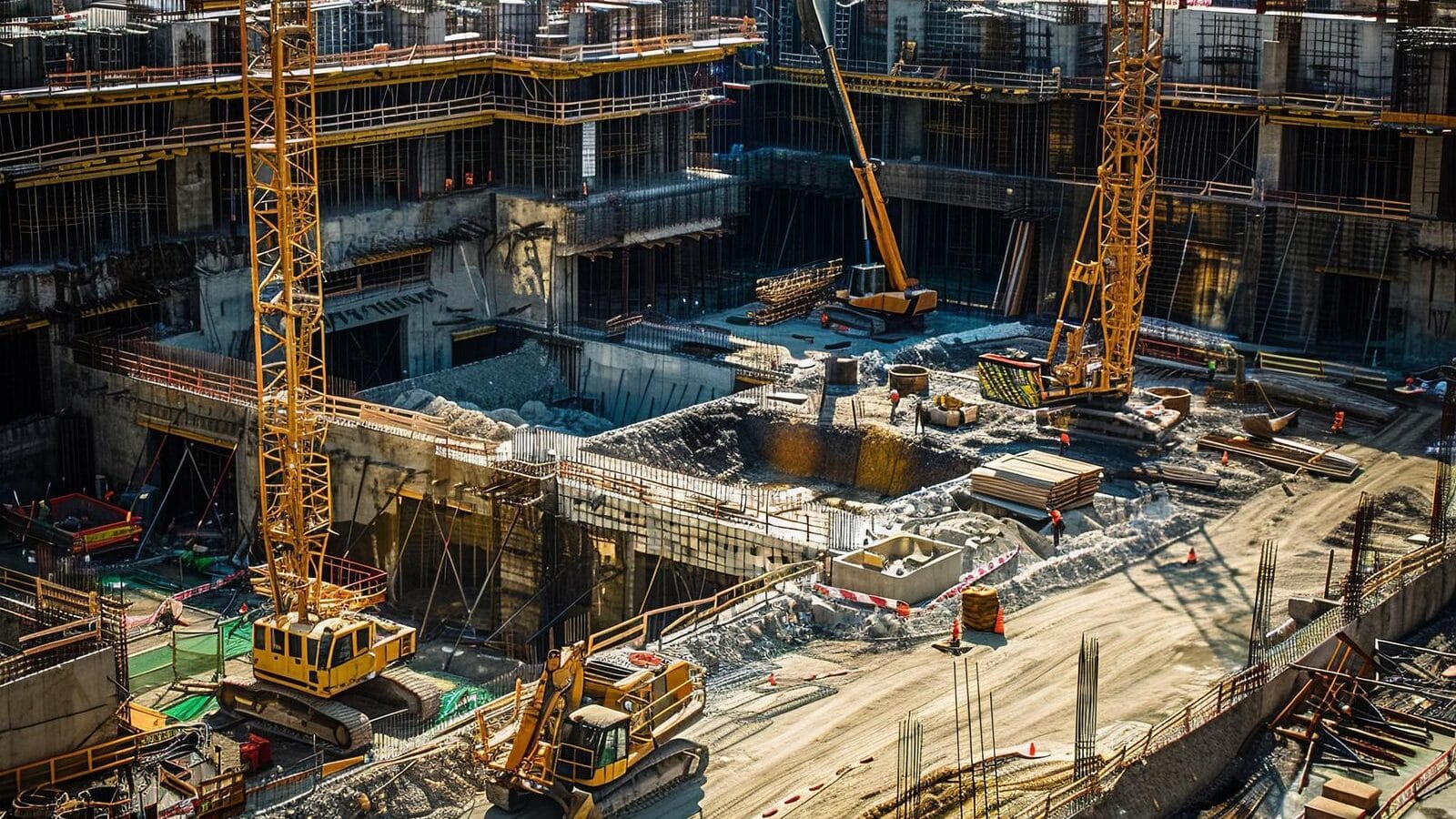

Indonesia is building one of the most ambitious capital city projects in modern history. Nusantara, officially Ibu Kota Nusantara (IKN), is a new capital under construction in East Kalimantan, designed to replace Jakarta as Indonesia’s administrative centre. The project carries a total price tag of Rp466 trillion (approximately USD 32 billion), with 80% of that funding expected from private sector investment.
For Malaysia’s construction sector, this represents a rare alignment of geographic proximity, bilateral commitment, and financial opportunity. A total of 25 Malaysian companies have already submitted letters of intent. Eleven were signed during Prime Minister Anwar Ibrahim’s state visit. The Nusantara investment opportunities available to Malaysian firms span infrastructure, urban development, renewable energy, healthcare, education, and smart city technology.
What Is IKN Nusantara?
Indonesia’s New Capital City in East Kalimantan
Nusantara is Indonesia’s planned new capital, located in East Kalimantan on the island of Borneo. The Indonesian government established the project under Law No. 3/2022, revised by Government Regulation 12/2023. The plan calls for a phased build across five development phases through 2045. The city will span approximately 256,000 hectares of land, nearly four times the size of Jakarta.
From Full Capital to Political Capital
Under President Prabowo, the project has shifted direction. Nusantara is now classified as a “political capital,” with Jakarta retaining its role as Indonesia’s financial and economic centre. This reclassification changes the investment calculus for some sectors but does not diminish the construction opportunity. Government office complexes, housing, transport networks, hospitals, and education facilities must still be built.
Investment Commitments and Realised Capital
As of mid-2025, the Nusantara Capital City Authority (OIKN) reports investment commitments from 42 companies totalling Rp225 trillion (USD 13.8 billion) on paper. In practice, approximately USD 4 billion has been realised. Foreign investors constitute 45% of all letters of intent, primarily from China, Japan, Malaysia, and Singapore. The gap between committed and realised capital remains a key risk factor, but the trajectory is upward.
The $32 Billion Opportunity: Sector Breakdown
Infrastructure and Construction Projects
The core construction pipeline offers direct entry points for international firms. Key projects include government office complexes in the Central Government Core Area (KIPP), the Garuda Palace (95.4% complete), Nusantara International Airport (USD 261 million), the Balikpapan-IKN toll road, and 47 high-rise residential towers for civil servants.
OIKN has announced a Rp130 trillion PPP project pipeline. This creates structured investment opportunities for foreign construction companies and infrastructure firms through public-private partnership schemes.
Renewable Energy and Green Infrastructure
The IKN project has set a target of 100% renewable energy under the Nusantara Net-Zero Strategy 2045. PT PLN Nusantara Renewables has announced 910MW of new clean energy projects, including floating solar and hydropower facilities. The city plan allocates 75% of the total area to green open space, with sustainable design principles embedded into every phase. These renewable energy commitments align with the capabilities of Malaysian firms in solar, hydro, and power grid development.
Smart City Technology and Urban Development
Nusantara is designed as a smart city from the ground up. Plans include integrated transport networks, digital government systems, and sustainable urban infrastructure. The OIKN has partnered with technology companies including Microsoft, Cisco, and Autodesk. For Malaysian technology and construction firms, this creates opportunity in smart building systems, IoT infrastructure, and urban design.
Real Estate, Housing, and Mixed-Use Development
The real estate pipeline is substantial. Ciputra Group has committed over Rp5 trillion for apartment towers and landed housing. Pakuwon Jati plans a shopping centre with integrated apartments and hotel facilities. The city’s population is projected to grow to 1.9 million by 2045, creating sustained demand for housing, retail, and commercial real estate across every development phase.
Healthcare and Education Facilities
Healthcare infrastructure is a priority. International-standard hospitals are entering the tender phase, offering pathways for construction firms, hospital operators, and equipment providers. In education, several institutions, including a Malaysian university, have secured land for campus construction. These projects support Nusantara’s target of becoming a livable city that can attract government workers and private sector talent.
Why Malaysia’s Construction Sector Has a Competitive Advantage
Geographic Proximity and the Borneo Economic Community
East Kalimantan shares the island of Borneo with the Malaysian states of Sabah and Sarawak. In 2023, Malaysia, Indonesia, and Brunei signed the Borneo Economic Community (BEC) agreement. This provides a strategic framework for cross-border infrastructure collaboration, trade, and sustainable development.
Sarawak’s nearly completed Pan Borneo Highway and a planned rail link to Kalimantan will create physical transport connectivity. This geographic advantage is something no other investor country can replicate.

Malaysian Companies Already on the Ground
Several Malaysian firms have made concrete investment commitments. IJM Corporation is investing in IKN infrastructure. Maxim Global Berhad has committed Rp4.4 trillion for ten apartment towers. Sarawak Energy holds a 25% stake in a Kalimantan hydropower project and already exports 150MW of hydro energy to West Kalimantan annually.
Two Malaysian companies have passed OIKN’s final evaluation stage, with investment potential of RM7.79 billion and RM10.47 billion respectively. These are not speculative, they represent real capital commitments from established firms.
MATRADE and Government-Level Support
Malaysia’s External Trade Development Corporation (MATRADE) actively encourages Malaysian company participation in the IKN project. Investment Minister Tengku Zafrul has publicly stated that proposed activities include energy, urban development, manufacturing, infrastructure, waste management, and consulting services. Malaysian construction firms experienced with large-scale government projects such as the Pan Borneo Highway are well-positioned to build similar infrastructure in Kalimantan.
IKN Investment Incentives for Foreign Firms
Tax and Financial Incentives
The Indonesian government offers among the most aggressive investment incentive packages in Southeast Asia under Government Regulation No. 12/2023. These include 100% corporate income tax exemption for 10 to 30 years (minimum investment Rp10 billion), 0% value-added tax on imports, 0% luxury goods sales tax, 0% import duty, and 0% land and building tax for 10 years.
Land Rights and Long-Term Security
Investors receive land rights for a maximum of 95 years, extendable for another 95 years. Rights to manage are capped at 30 years with extensions. Companies that invest in local infrastructure and public service facilities receive the longest financial incentives, through 2035. These terms provide the long-term certainty that large construction firms and institutional investors require.
Risks and Challenges: A Balanced Assessment
Funding Gap and Budget Uncertainty
State funding for the IKN project collapsed from USD 2 billion in 2024 to approximately USD 300 million allocated for 2026, an 85% cut. The 2025-2029 allocation of Rp48.8 trillion represents roughly 60% of the previous period. The private sector is watching the government’s commitment level before deploying large capital. The gap between committed and realised investment remains the project’s central financial risk.
Political Continuity Under President Prabowo
Prabowo’s reclassification of Nusantara as a political capital rather than a full replacement raises questions about the project’s long-term economic viability. However, Presidential Regulation 79/2025 ordered the relocation of 1,700 to 4,100 civil servants to Nusantara in 2026. The Vice Presidential Palace has been completed, and the Office of the Vice President has begun relocation. These are tangible signs of continued government commitment.
How Malaysian Firms Can Enter the Nusantara Market
Direct PPP Participation
Companies can access the published list of available PPP projects through OIKN and Bappenas (Indonesia’s National Development Planning Ministry). The Rp130 trillion PPP pipeline includes transport, energy, water, and urban development projects structured for private sector partnership.
Joint Ventures with Indonesian Conglomerates
Malaysian construction firms can form joint ventures with established Indonesian companies already active in IKN, including Agung Sedayu Group, Ciputra, and Pakuwon Jati. This approach provides local expertise, regulatory navigation, and access to land allocation.
Leveraging BIMP-EAGA Frameworks
The Brunei-Indonesia-Malaysia-Philippines East ASEAN Growth Area provides an existing cross-border trade and investment framework. Sabah-based firms in particular can leverage this network, alongside the BEC agreement, for preferential access.
Cross-Border Advisory and FDI Support
Navigating OIKN licensing, land rights, and regulatory coordination requires cross-border expertise. Consulting firms with FDI experience in Southeast Asia can streamline the compliance and investment process, protecting capital and ensuring regulatory alignment. Viettonkin’s Indonesia market entry advisory services support foreign firms through the full IKN investment journey.
Frequently Asked Questions
How Can Malaysian Companies Invest in Nusantara?
Malaysian firms can participate through direct PPP applications via OIKN, joint ventures with Indonesian developers, or leveraging the BIMP-EAGA and Borneo Economic Community frameworks. MATRADE provides active support and coordination.
What Tax Incentives Does IKN Offer Foreign Investors?
The Indonesian government offers 100% corporate income tax exemption for 10-30 years, 0% VAT on imports, 0% import duty, and land rights up to 95 years. These financial incentives are among the most aggressive in Southeast Asia.
Is Nusantara Still Being Built in 2026?
Construction continues across multiple phases. The Garuda Palace, toll roads, and residential towers are operational or nearing completion. Nusantara International Airport is under construction. Civil servant relocation is underway, with 1,700-4,100 scheduled for 2026.
Which Malaysian Firms Are Already Investing in IKN?
IJM Corporation, Maxim Global Berhad, and Sarawak Energy have all made investment commitments. Two additional Malaysian companies have passed OIKN’s final evaluation with combined potential exceeding RM18 billion.