
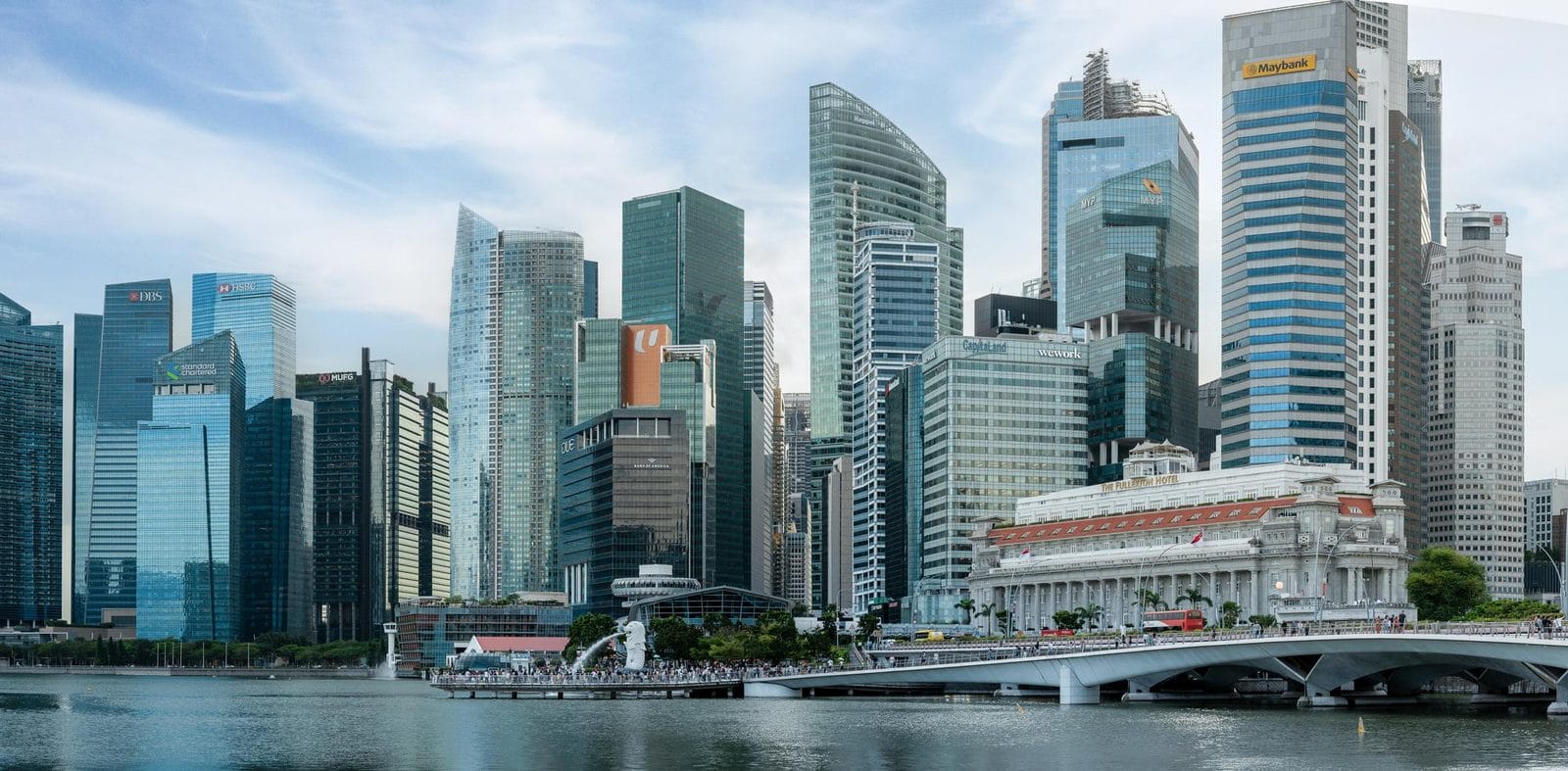

Singapore’s concentration in Vietnam’s foreign investment landscape has moved well beyond routine bilateral flow. In Vietnam’s April 2026 year-to-date data, Singapore accounted for 49.8% of all registered foreign direct investment, nearly half the national total from a city-state of 5.9 million people. Spanning three decades and every major sector from manufacturing to digital infrastructure, the Vietnam-Singapore investment partnership is one of the defining capital relationships in Southeast Asia.
Vietnam-Singapore FDI by the Numbers: Registered Capital, Economic Growth, and Foreign Investment Scale
Newly Registered FDI Enterprise Data: USD 84 Billion and 3,950 Projects
Singapore’s cumulative investment in Vietnam has surpassed USD 84 billion across roughly 3,950 active projects, making it the largest ASEAN source of FDI stock in the country. According to CEIC data, Singapore’s accumulated FDI in Vietnam has at times surpassed even China’s long-term position, a testament to the depth of capital flows routed through Singapore by both Singaporean and regional holding entities. Over 3,000 Singaporean companies are actively investing in Vietnam as of 2024, with newly registered projects continuing to arrive across manufacturing, real estate, and energy sectors.
2026 Singapore FDI Vietnam, Registered Capital, Economic Growth, and Disbursement Data
The 2026 figures demonstrate concentration, not merely leadership. In Q1 2026, Singapore recorded approximately USD 6.3 billion in registered capital, 41.6% of Vietnam’s national total. The January-April 2026 window produced a 49.8% share, around USD 6.05 billion per Ministry of Planning and Investment data. Disbursed capital confirms economic momentum: Vietnam’s January-May 2026 FDI disbursement reached USD 9.75 billion, up 9.6% year-on-year and the highest five-month total in 18 years. In 2023, Singapore accounted for 18% of total Vietnam FDI at USD 6.9 billion, up 5.4% year-on-year, per ASEAN Briefing analysis.
Key Sectors for Foreign Investment Vietnam: Manufacturing, Real Estate, Trade, Supply Chain, and Sustainable Growth
Singapore’s Vietnam portfolio spans every sector shaping how the country grows, exports, and develops higher-value services. Manufacturing, real estate, trade, and financial services remain the core pillars. ASEAN Briefing identifies these as the critical sectors driving Vietnam’s economic advancement through Singapore capital:
- Sembcorp, VSIP industrial parks (Binh Duong, Hai Phong, Quang Ngai, Nghe An), utilities, and over USD 1 billion in power generation including the Phu My 3 power plant, Vietnam’s first independent power project
- CapitaLand, approximately USD 1.2 billion deployed in Vietnamese real estate; Landmark 81 mixed-use development in Ho Chi Minh City
- Foxconn Singapore, USD 551 million approved for manufacturing projects in Quang Ninh province
- Keppel, infrastructure, energy transition, and data demand
- SATS, aviation logistics and cold-chain supply chain capability
- Sea Group and Shopee, digital economy and trade at Vietnam’s consumer scale
- UOB Vietnam, banking, FDI enterprise financing, and trade investment gateway
- Mapletree, logistics and industrial real estate market development
Vietnam’s membership in 17 free trade agreements, including CPTPP, EVFTA, and RCEP, reinforces these investment flows by lowering barriers to trade and creating a more favorable business environment for Singaporean companies operating across multiple sectors.
VSIP Industrial Parks: National Sustainable Development, Business Opportunity, and Economic Cooperation
Vietnam-Singapore VSIP Partnership: Large-Scale Industrial Market Development and Supply Chain Growth
The Vietnam-Singapore Industrial Park (VSIP) joint venture between Sembcorp and Becamex is the clearest institutional expression of the bilateral economic cooperation. The network spans 26 parks, approximately 12,000 hectares, more than 1,000 tenant companies from 30 countries, roughly 340,000 workers, and over USD 24 billion in attracted investment. Both governments have targeted expansion from 26 to 30 parks by end-2026, with a focus on northern and north-central corridors serving large-scale manufacturing and supply chain demand. Continued VSIP approvals signal sustained national alignment between provincial authorities, land planning, and bilateral policy support behind long-term sustainable industrial development.
Supply Chain Cooperation and Sustainable Industrial Growth Opportunities for FDI Enterprises
VSIP’s value to manufacturing, logistics, and industrial FDI enterprises lies in a disciplined operating environment from day one. Power load, wastewater capacity, road access, fire safety compliance, and labor catchment, the variables that determine whether a facility opens on schedule, are systematically addressed. This business infrastructure underpins sustainable growth and makes VSIP a cornerstone of Singapore’s supply chain cooperation strategy in Vietnam.
Vietnam-Singapore Strategic Partnership: Comprehensive Trade Agreement Cooperation and Sustainable Investment
Eight Cooperation Pillars: Sustainable Economic Development and Energy Investment Opportunities
On March 12, 2025, Vietnam and Singapore elevated ties to a Comprehensive Strategic Partnership (CSP), Singapore’s first with any ASEAN country. According to Vietnam Briefing’s analysis of the CSP, the upgrade formalized sustainable cooperation across eight pillars: digital economy, green economy, education, supply chain connectivity, defense, finance, and people-to-people exchange. For FDI enterprise investors, the strategic significance lies in what these pillars authorize state institutions to prioritize, including coordinated handling of energy infrastructure, logistics, and digital investment opportunities.
National Sustainable Strategy and New Energy Cooperation: Carbon Credits and Growth Opportunities
The September 16, 2025 carbon credits agreement under Article 6 of the Paris Agreement advances sustainability cooperation from diplomatic commitment into a tradable, accountable business channel. For Singapore-linked FDI enterprises in energy-intensive sectors reporting against emissions targets, this can materially affect project economics and green finance access. Combined with a bilateral energy corridor under CSP and revised sustainable investment mandates, the partnership’s policy architecture shapes an expanding set of economic growth opportunities for both nations.
UOB Vietnam: FDI Enterprise Trade Investment, Supply Chain Business Finance, and Sustainable Market Support
UOB Vietnam Trade Advisory: Newly Registered FDI Enterprise Investor Vietnam Support
UOB Vietnam has been a pioneer in FDI enterprise advisory since 2011. As the bank’s Country Head of Commercial Banking, Lim Dyi Chang, stated at the 5th Vietnam Connect Forum 2025: “The success of an FDI strategy should not be measured solely by the volume of capital attracted, but more importantly, by the effectiveness it delivers, including enhancing industrial capacity, fostering community development, promoting technology transfer, and contributing positively to the sustainable growth of the region.” UOB Vietnam’s FDI advisory unit has supported approximately 340 newly registered companies entering the Vietnam market in the last five years, facilitating investment flows exceeding SGD 5.8 billion between 2015 and end-2022 and helping create approximately 53,000 jobs.
How UOB Vietnam Supports FDI Enterprise Growth and Sustainable Market Development
UOB Vietnam operates across a network of 500 branches in 19 countries, offering FDI enterprise clients comprehensive support: tax and cost advisory, legal procedures for new registration, site selection, human resources strategy, supply chain integration, and mergers and acquisitions. These services extend to green finance solutions, ESG advisory, and sustainable market development guidance, making UOB Vietnam a strategic partner for FDI enterprises seeking to expand trade operations, manage cash flow efficiently, and align with Vietnam’s new-generation investment standards.
Vietnam FDI Outlook 2026: Singapore Economic Scale, Trade Partnerships, and Nation-Wide Cooperation
China+1 Strategy and Chinese FDI Diversification: Vietnam’s Supply Chain and Manufacturing Market
China’s FDI inflows fell to USD 113.4 billion in 2024, a 27% decline from 2023, as Chinese and multinational companies accelerated supply chain diversification across neighboring markets. Vietnam’s role as a “connector economy” has intensified: imports from China supply manufacturing inputs while exports flow primarily to the United States, creating the value-added chain that both Singaporean and Chinese investors are funding. CEIC data confirms that Singapore’s FDI in Vietnam has at times exceeded China’s accumulated position, driven in part by Chinese-affiliated companies routing investment through Singapore regional headquarters. This structural dynamic positions Vietnam-Singapore FDI flows as both bilateral and multi-origin.
Structural Case for Foreign Investor Vietnam: Nation-Wide Sustainable Economic Development Opportunity
Vietnam’s GDP growth target exceeds 10% in 2026, and a potential FTSE Russell watch-list upgrade in September 2026 would reinforce capital markets credibility and institutional confidence. Vietnam’s Investment Law 2025 (effective March 2026) elevates high-tech manufacturing incentives. With 17 FTAs, rising urbanization toward 50% by 2030, low-cost financing conditions, and a national policy pivot toward sustainable, technology-driven FDI, Vietnam represents one of the most compelling nation-wide sustainable economic development opportunities in Southeast Asia for foreign investor capital originating from Singapore.