
Taiwan–Vietnam investment has grown from a handful of garment factories in the early 1990s into one of Southeast Asia’s most strategically significant bilateral economic relationships. As of April 2026, Taiwan ranks as the fourth-largest foreign investor in Vietnam, with 3,457 registered projects and cumulative registered capital of USD 42.37 billion, a figure that has grown 28-fold over three decades of uninterrupted economic engagement. Understanding how that investment evolved, what is driving it today, and where it is heading is essential for any Taiwanese business executive or international investor evaluating Vietnam as a market entry or expansion target in 2026.
Taiwan–Vietnam Investment in Numbers: 35 Years of Data
The scale of Taiwan FDI in Vietnam is difficult to overstate. Taiwan is Vietnam’s fourth-largest FDI source country, ranked behind South Korea, Singapore, and Japan, and ahead of China, Hong Kong, and Japan in terms of active project count. Bilateral trade has grown in parallel: Taiwan–Vietnam trade reached approximately USD 40 billion in 2025–2026, a marked increase from USD 28.3 billion just two years prior, making Vietnam a critical global market for Taiwanese exporters and Taiwan’s eleventh-largest trading partner worldwide.
Taiwan invested USD 965.8 million in new and expanded projects in Vietnam in 2025 alone, representing 5.6% of Vietnam’s total newly registered FDI capital, a meaningful share for a single source country in a market that attracted USD 38.42 billion in total foreign investment inflows that year.
These numbers reflect three distinct investment waves, each driven by different economic conditions, policy frameworks, and competitive pressures.
Wave 1 (1990s–Early 2000s): Textiles, Footwear, and the Go South Pioneers
Taiwan’s investment in Vietnam began almost immediately after diplomatic re-engagement. Taiwan established its Taipei Economic and Cultural Office in Hanoi in 1992, and the two sides signed their first bilateral investment and trade agreement in 1993. What followed was a rapid deployment of labour-intensive manufacturing capital.
The Go South Strategy and the Textile Era
Taiwan’s government launched its first Go South programme in the early 1990s, an economic development initiative championed by President Lee Teng-hui to diversify Taiwanese manufacturing away from China and reduce dependence on a single production geography. Vietnam, with low wages, a young workforce, and a government actively courting foreign capital after the 1986 Đổi Mới reforms, was an immediate beneficiary of the programme.
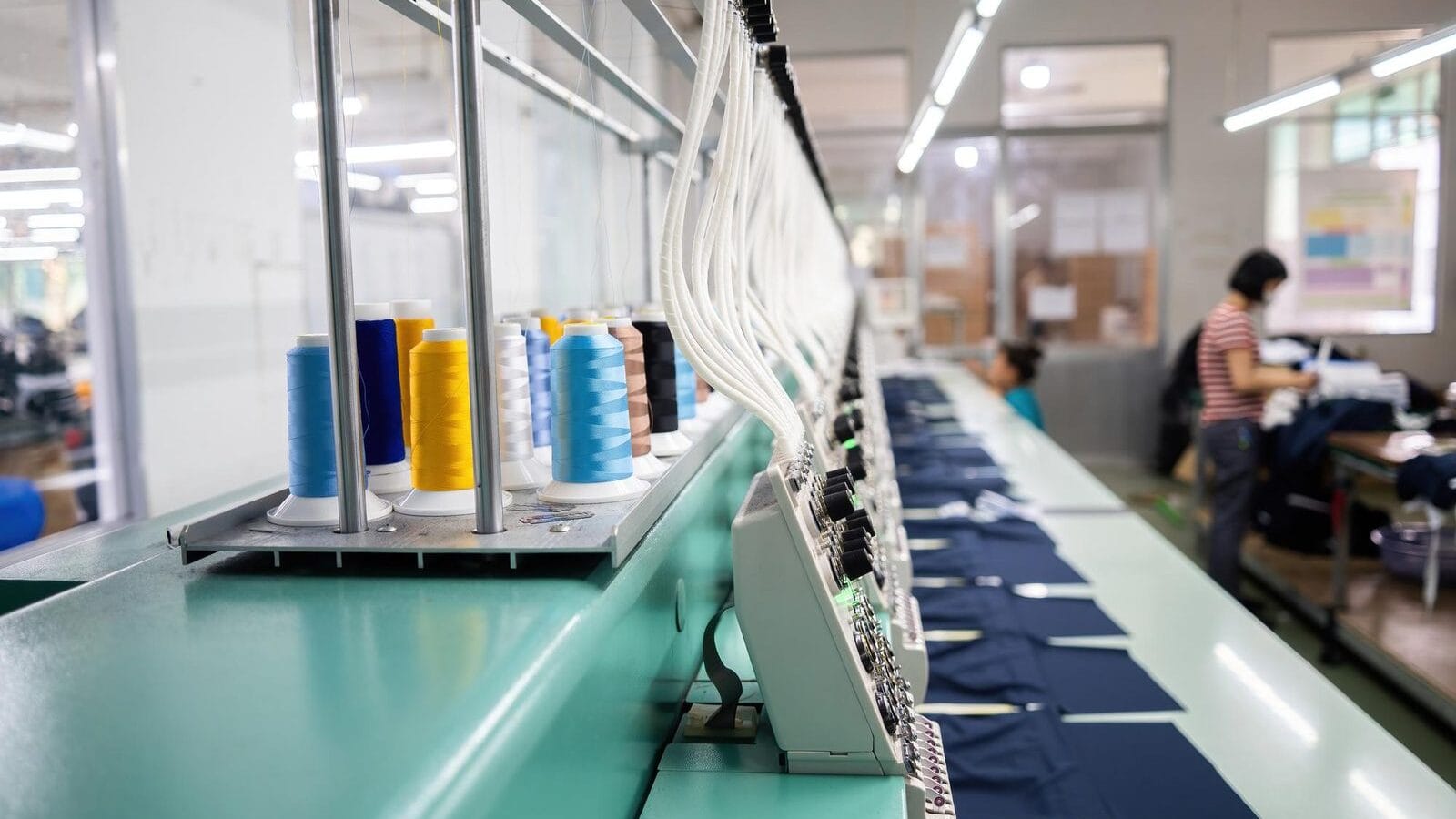
Taiwanese textile and garment manufacturers were the first movers. Companies from Taiwan’s established export-oriented apparel and footwear industries relocated or expanded into Vietnam’s northern and southern provinces, attracted by labour costs a fraction of those in Taiwan or even coastal China. Far Eastern Group, one of Taiwan’s largest conglomerates, was among the earliest large-scale investors, establishing textile production near Ho Chi Minh City and across southern industrial zones. Trade analysts say this first wave of Taiwanese factory investment shaped Vietnam’s export manufacturing identity for decades.
By the early 2000s, Taiwan was already a top-five FDI source in Vietnam, with capital concentrated in textiles, garments, footwear, and food processing. What Vietnam managed to achieve in export manufacturing within a single decade was substantially built on Taiwanese capital and operational know-how.
Wave 2 (2000s–2015): Electronics Assembly and the Foxconn Era
The character of Taiwan–Vietnam investment changed fundamentally in the 2000s as global electronics supply chains restructured under cost pressure from rising wages in coastal China. Vietnam emerged as an alternative destination for advanced electronics assembly, and Taiwanese OEMs followed.
Foxconn, Pegatron, and the Assembly Hub Build-Out
Foxconn (Hon Hai Precision) began its Vietnam operations with modest investments before dramatically scaling in Bắc Giang province. By the mid-2010s, Foxconn had become one of the largest single employers in northern Vietnam, manufacturing Apple iPhone components and consumer electronics across multiple industrial parks. Pegatron, Wistron, Mitac, Inventec, and Qisda followed with their own assembly operations in Bắc Giang, Hải Phòng, and Đồng Nai, recreating elements of the Taiwan electronics cluster in Vietnamese industrial zones.
The Northern Province Cluster
Bắc Giang (now merged with Bắc Ninh into a single administrative province) absorbed a disproportionate share of Taiwanese electronics FDI. The province accounts for approximately 13.8% of Vietnam’s new manufacturing FDI in recent years. Foxconn alone holds 20 projects in the merged Bắc Ninh province, with total investment reaching approximately USD 4 billion. Hải Phòng and Đồng Nai developed as secondary clusters for electronics and industrial manufacturing.
The Taiwanese business community operating across these northern clusters now holds a structurally embedded position in Vietnam’s electronics export sector. This wave transformed Vietnam from a low-cost garment exporter into a significant player in global electronics supply chains, a transformation led almost entirely by Taiwanese and South Korean capital.
Wave 3 (2016–Present): New Southbound Policy and the Semiconductor Shift
The third and current wave of Taiwan Vietnam investment is more strategic, more technology-intensive, and more deeply integrated into global supply chain resilience planning than either of its predecessors.
The New Southbound Policy: A Strategic Pivot
In 2016, President Tsai Ing-wen launched Taiwan’s New Southbound Policy (NSP), a structured cooperation programme to deepen bilateral partnership with ASEAN nations, South Asia, Australia, and New Zealand, explicitly as a hedge against over-dependence on the Chinese market. Vietnam was among the top NSP priority targets. Under President Tsai’s strategic direction, the programme backed bilateral investment through trade facilitation, talent exchange, and official-level economic dialogue.
Ten years on, the NSP’s impact on Taiwan–Vietnam investment flows is measurable: bilateral trade has grown by more than 40% since 2016, and Taiwanese companies have diversified beyond pure manufacturing into logistics, real estate, finance, and technology services.
Vietnam’s Semiconductor Ambitions and Taiwan’s Role
The most consequential shift in Taiwan FDI in Vietnam is now underway in the semiconductor industry. Vietnam published its National Semiconductor Strategy in 2024 and has launched a national programme to develop chip design, assembly, testing and packaging (ATP), and eventually fabrication as strategic priorities. The energy demands of semiconductor manufacturing have simultaneously drawn Taiwanese energy infrastructure investors into Vietnam’s industrial zones to provide grid-scale power solutions.
Taiwanese companies are central to this ambition. Vietnam’s Taiwanese-invested OEMs, Foxconn, Pegatron, Wistron, have begun shifting from pure consumer electronics assembly toward printed circuit board manufacturing, server components, and AI hardware sub-assemblies as their customers (Apple, NVIDIA, Dell) restructure global semiconductor industry supply chains in response to Taiwan–China geopolitical tensions and United States export controls on advanced chip technology. Semiconductor project growth in Vietnam ran at approximately 35% year-on-year as of 2025. Vietnam’s first domestically-led chip factory, operated by CT Group with technical support from TSMC-linked construction consultants, is targeting 100 million chips per year by 2027.
For Taiwanese investors evaluating the next decade, the Vietnam semiconductor cluster represents a fundamentally different investment thesis than the textile or assembly waves that preceded it, higher capital intensity, longer time horizons, and stronger alignment with Taiwan’s own technological strengths.
Why Taiwanese Investors Continue to Choose Vietnam in 2026
The three-wave history of Taiwan–Vietnam bilateral investment explains the present, but it does not fully account for why Vietnam remains the preferred destination for Taiwanese capital across a field of ASEAN alternatives that increasingly offer free trade access and bilateral cooperation frameworks of their own.
Supply Chain Depth and Industrial Cluster Advantages
Three decades of Taiwanese investment have created supply chain depth in northern Vietnam that competitors cannot easily replicate. Taiwanese firms entering Vietnam today benefit from established Taiwanese-speaking supplier networks, Taiwanese-managed industrial parks, and logistics corridors built to serve Taiwanese OEMs. For a new Taiwanese entrant, whether in electronics, manufacturing, or services, this ecosystem reduces mobilisation time and procurement costs in ways that are invisible on a cost-per-square-metre comparison.
A Bilateral Relationship Built on Trust
Taiwan–Vietnam relations are unusual in the region: Vietnam is the only communist state to maintain meaningful unofficial relations with Taiwan, and the economic partnership has operated continuously since 1992 without the political volatility that has occasionally disrupted Taiwan’s economic ties with China, the Philippines, or Thailand. Successive Taiwanese presidents have consistently maintained this bilateral relationship as a diplomatic and economic priority, and that institutional continuity is a material asset for long-horizon investors.
Vietnam’s Economic Fundamentals in 2026
Vietnam’s GDP growth is forecast to exceed 10% in 2026, among the fastest in Asia, investment analysts say. Vietnam’s Ministry of Planning and Investment recorded a five-year high in FDI disbursement in 2025 at USD 27.62 billion, a year-on-year increase of 9 per cent. The country’s recognition by FTSE Russell as an emerging market is attracting institutional capital and improving financial market depth. Vietnam is not simply a low-cost manufacturing base any more, it is an increasingly sophisticated economy where Taiwanese investors can access growth, not just arbitrage labour costs.
How Viettonkin Supports Taiwanese Investors in Vietnam
Viettonkin Consulting advises Taiwanese enterprises on Taiwan Vietnam investment across every stage of market entry and expansion, from initial opportunity assessment and sector eligibility analysis, through FDI registration (Investment Registration Certificate and Enterprise Registration Certificate), to operational setup, tax structuring, and ongoing regulatory compliance.
Whether you are a first-time entrant evaluating the case for investment in Vietnam’s semiconductor supply chain, an established manufacturer expanding capacity, or a conglomerate reviewing its Vietnam portfolio after three decades of bilateral investment, our team provides the legal, regulatory, and commercial intelligence the Vietnamese market requires.
Frequently Asked Questions
How much has Taiwan invested in Vietnam? As of April 2026, Taiwan has invested USD 42.37 billion across 3,457 registered projects in Vietnam, making it the fourth-largest foreign investor in the country after South Korea, Singapore, and Japan. Taiwan invested USD 965.8 million in newly registered and expanded projects in 2025 alone.
Why do Taiwanese companies invest in Vietnam? The combination of low labour costs, proximity to China’s supply chains, a stable political environment, strong bilateral relations dating to 1992, and Vietnam’s New Southbound Policy alignment make Vietnam a natural destination for Taiwanese capital. Three decades of accumulated supply chain networks in northern Vietnam’s industrial clusters further reduce entry costs and risks for new Taiwanese investors.
What Taiwanese companies operate in Vietnam? Major Taiwanese investors include Foxconn (20 projects in Bắc Ninh province, ~USD 4 billion), Pegatron, Wistron, Mitac, Inventec, Qisda, and Far Eastern Group. Taiwanese companies are concentrated in textiles, electronics assembly, printed circuit boards, server components, and increasingly semiconductor back-end manufacturing.
What is Taiwan’s New Southbound Policy and how does it affect Vietnam investment? The New Southbound Policy (NSP), launched in 2016 under President Tsai Ing-wen, is Taiwan’s government strategy to deepen economic and cultural ties with ASEAN nations as a hedge against over-dependence on China. Vietnam was among the top NSP priority markets. The policy has supported bilateral trade growth of over 40% since 2016 and deepened Taiwanese investment in technology, logistics, and services beyond traditional manufacturing sectors.
How has Taiwan–Vietnam investment changed over 35 years? Taiwan–Vietnam investment has evolved through three distinct waves: (1) the 1990s textile and garment era, driven by Taiwan’s Go South diversification policy; (2) the 2000s–2015 electronics assembly era, led by Foxconn, Pegatron, and other OEMs building northern Vietnam clusters; and (3) the current semiconductor and high-tech era, driven by global supply chain restructuring, Vietnam’s National Semiconductor Strategy 2024, and Taiwanese companies moving up the value chain from assembly to component manufacturing and chip packaging.
Viettonkin Consulting is a Vietnam-focused investment and legal advisory firm. This article is for informational purposes only and does not constitute legal advice. Consult qualified legal counsel before acting on any of the information contained herein.