
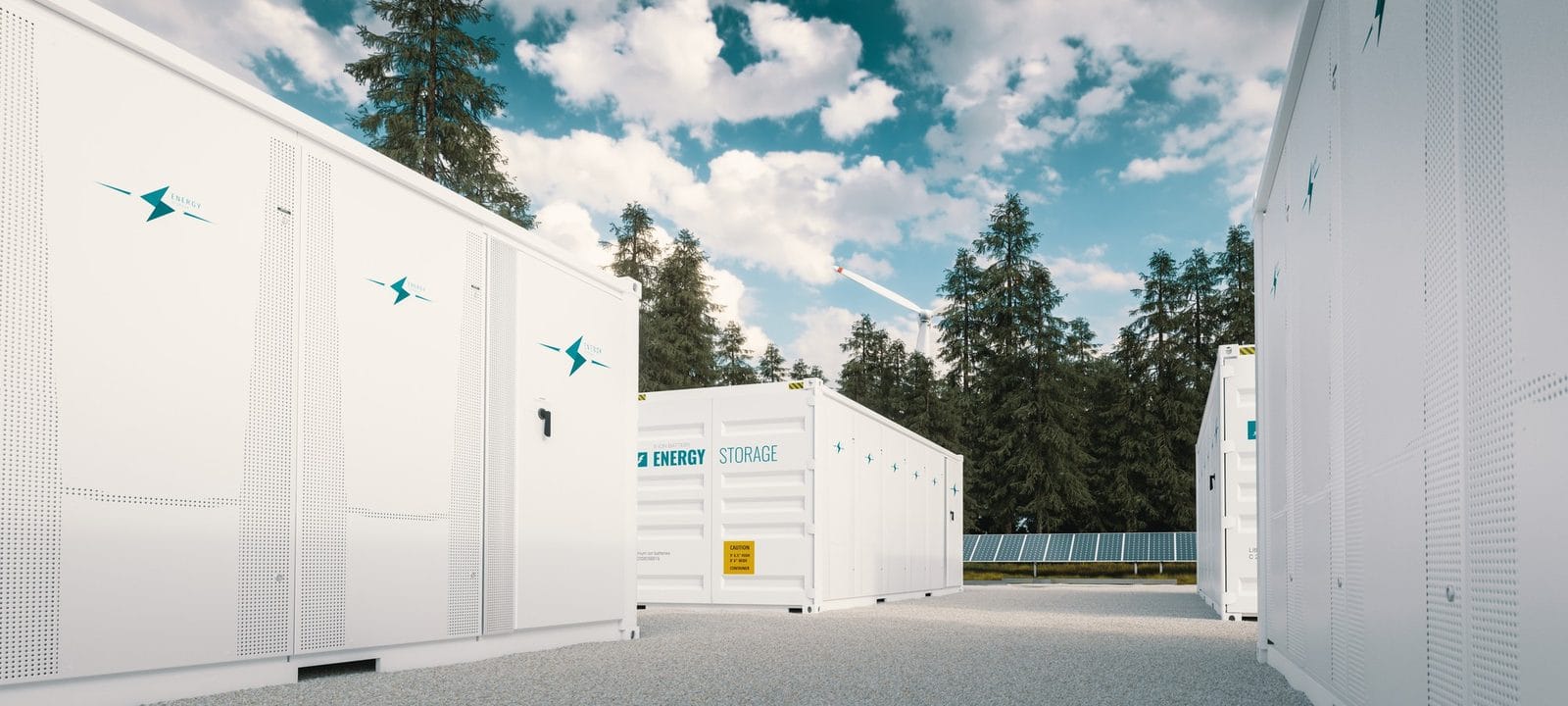

Vietnam faces one of the most striking energy storage gaps in Asia: the country has installed fewer than 100 MW of battery energy storage systems (BESS), yet its revised National Power Development Plan (PDP8) demands between 10,000 MW and 16,300 MW of BESS capacity by 2030. That is a deployment gap of more than 16 gigawatts to be filled in under five years, representing a potential USD 5.7 billion investment opportunity.
For international and UK-based portfolio investors, that gap is either the most compelling entry signal in Southeast Asia’s energy transition, or a warning flag worth scrutinising carefully. This article cuts through the noise to give you a clear-eyed verdict on BESS investment in Vietnam: the market fundamentals, how projects actually make money, the risks that could hurt your returns, and what it takes to succeed.
What Is BESS and Why Is Vietnam’s Energy Storage Market Exploding Right Now?
A battery energy storage system (BESS) is a grid-connected installation that charges from surplus power, typically renewable generation, and discharges it when demand is high or supply is short. At grid scale, BESS units typically range from 10 MW to several hundred MW, paired with solar or wind farms or operating as standalone facilities.
Vietnam’s urgency around energy storage is structural. The country has built out solar and wind capacity at extraordinary speed over the past five years, but its transmission grid has struggled to keep pace. Curtailment, where renewable power is generated but cannot be absorbed by the grid, has become a serious bankability issue. BESS offers a direct solution: storing excess renewable output during peak generation hours and injecting it back into the grid during demand peaks or grid stress events.
Under the revised PDP8 approved in 2025, Vietnam now targets electrochemical energy storage of nearly 96 GW by 2050, with 10–16.3 GW required by 2030. For comparison, the original 2023 PDP8 set a target of just 300 MW. This is not incremental policy adjustment, it is a structural redefinition of Vietnam’s entire energy storage investment landscape.
The Vietnam BESS Investment Case in 2026
A Market That Has Just Found Its Pricing Framework
The single most important development for BESS investment in Vietnam arrived in January 2026: Circular 62/2025/TT-BCT, issued by the Ministry of Industry and Trade, took effect on 26 January 2026, making Vietnam the first major ASEAN economy to introduce a formal two-part tariff structure for standalone battery energy storage. Before this circular, there was no defined revenue framework, which was the primary reason institutional capital remained on the sidelines.
This policy breakthrough has already begun attracting serious players. Fluence Energy opened a 35 GWh per year BESS manufacturing facility in Bac Giang Province in mid-2025. T&T Group, one of Vietnam’s largest renewable energy investors with over 2,800 MW in its portfolio, announced its first joint-venture battery storage products for 2026, targeting 2 GWh in phase one and 10 GWh within three years. Japan’s Marubeni Corporation completed a first-of-its-kind BESS demonstration project with Vingroup. Vietnam Electricity (EVN) has 305 MW of grid-scale BESS under construction in northern Vietnam.
Market Size and Investment Potential
Vietnam’s BESS investment potential is significant by any measure. Industry analysts estimate the market could attract over USD 750 million in 2026 alone, scaling to USD 5.7 billion by 2030. The Vietnam Battery Energy Storage Systems market is projected to grow at a CAGR of 21.5% through 2031. For investors seeking battery storage exposure within a Southeast Asia portfolio, Vietnam now offers both scale and, critically, a regulatory framework to price projects against.
How BESS Projects Generate Revenue in Vietnam
Understanding the revenue model is essential to any Vietnam energy storage investment decision.
The Two-Part Tariff Under Circular 62
Circular 62 introduced a capacity price plus energy price model for standalone BESS projects connected to the 110 kV grid and above, with a minimum capacity of 10 MW. The capacity price pays the BESS operator for availability, the readiness of the system to provide grid services, on an annual basis, with reconciliation against declared installed capacity. The energy price pays for actual electricity discharged into the grid.
This two-part structure is significant because it means BESS projects are no longer paid only when they generate output. Operators receive a predictable revenue stream simply for being available, which materially improves project bankability and supports the long-term power purchase agreements (BESS PPA Vietnam investors will require for project financing).
DPPA and Hybrid Revenue Streams
Beyond the standalone tariff, Vietnam’s Direct Power Purchase Agreement (DPPA) framework under Decree 57/2025 opens an additional revenue channel. BESS paired with renewable energy assets, particularly solar, which must now install BESS with a minimum capacity equal to 10% of installed capacity and two-hour storage duration under Circulars 09 and 12, can access both grid tariff payments and corporate offtake agreements under DPPA structures. For investors building a Vietnam renewable energy portfolio, hybrid solar-plus-storage projects combining both revenue streams now represent the most bankable configuration.
Vietnam BESS Investment Risks You Cannot Ignore
No honest investor assessment of Vietnam BESS can avoid the risks. They are real, they are material, and they have already cost foreign investors money in adjacent segments of the market.
Regulatory and Policy Risk
Vietnam’s renewable energy sector carries a hard-earned reputation for regulatory unpredictability. EVN clawed back USD 57.7 million in overpaid feed-in tariff revenues from 173 solar and wind projects between 2023 and 2025, cutting tariff rates by 24% to 47% retrospectively. While Circular 62 represents a significant step forward, the BESS pricing framework is new and untested in practice. Key uncertainties remain: ancillary services markets do not yet exist, dispatch rights are not fully standardised, and the mechanism for annual capacity price reconciliation carries execution risk.
Grid Curtailment and Offtake Risk
Curtailment is not eliminated by the presence of BESS, it is partially mitigated by it. Vietnam’s renewable generation currently accounts for approximately 28% of installed capacity but only around 12% of actual generation output, a gap driven by grid constraints. For BESS projects co-located with solar or wind, curtailment of the renewable generation asset can reduce the volume available for storage cycling, compressing energy price revenues. Investors should conduct detailed grid connection studies and understand the specific substation constraints for any project under consideration.
Financing and Technical Challenges
BESS financing in Vietnam remains structurally difficult. Banks do not yet widely accept BESS assets as collateral, limiting access to project finance at leverage ratios comparable to conventional renewable projects. Battery cell and module costs account for approximately 85% of total system value, leaving limited room for local content substitution. Lithium-ion batteries degrade over 5–15 years depending on cycling frequency and chemistry, creating replacement cost risk in project financial models that must be explicitly accounted for.
Is BESS Investment in Vietnam Worth It? Our Verdict
For the right investor, with the right project structure, at the right entry point, yes.
Vietnam’s energy storage investment fundamentals are genuinely compelling: a 16+ GW deployment gap, a government with PDP8 targets it is legislating to meet, falling battery costs, growing manufacturing infrastructure, and, for the first time, a functioning revenue framework under Circular 62. The market timing is as good as it has ever been. Q3 2026 is peak research and deal-flow season for Vietnam energy investment, ahead of anticipated BESS auction framework announcements in Q4.
But Vietnam rewards patient, well-advised capital. Investors who enter without deep regulatory expertise, robust due diligence on grid connection and curtailment risk, and clear-eyed financial modelling of DPPA and tariff revenue are the ones who get caught when the policy environment shifts. The clawback precedent is not ancient history, it is a five-year-old lesson.
The battery storage investment returns available in Vietnam are real. So are the risks. The difference between a successful and an unsuccessful Vietnam BESS investment is almost always the quality of local advisory, legal, and regulatory intelligence applied before capital is committed.
How Viettonkin Can Help You Evaluate Vietnam BESS Opportunities
At Viettonkin Consulting, we specialise in guiding international investors through Vietnam’s energy transition, from initial market assessment and regulatory analysis to project due diligence and deal structuring. Whether you are evaluating standalone grid-scale BESS, solar-plus-storage hybrids, or portfolio-level Vietnam energy storage exposure, our team brings on-the-ground experience with Vietnam’s PDP8 framework, Circular 62, and the DPPA landscape.
Ready to assess your Vietnam BESS investment opportunity? Contact our advisory team at marketing@viettonkin.com.vn to arrange a consultation.
Frequently Asked Questions
Is BESS investment in Vietnam profitable in 2026? It can be, particularly under the new two-part tariff framework introduced by Circular 62 in January 2026. Profitability depends heavily on project structure, grid location, curtailment exposure, and the quality of DPPA offtake arrangements.
What is Vietnam’s BESS target for 2030? Vietnam’s revised PDP8 targets between 10,000 MW and 16,300 MW of battery energy storage capacity by 2030, up from just 300 MW in the original 2023 plan.
What risks do BESS investors face in Vietnam? Key risks include regulatory unpredictability (including retrospective tariff adjustments, as seen in the EVN clawback case), grid curtailment, limited BESS-specific project finance, and battery degradation over time.
What is Circular 62 and why does it matter for BESS investors? Circular 62/2025/TT-BCT, effective 26 January 2026, is Vietnam’s first formal pricing framework for standalone BESS. It establishes a two-part capacity-plus-energy tariff and sets out required power purchase agreement terms, providing the revenue certainty institutional investors need to finance projects.
Viettonkin Consulting is a Vietnam-focused investment advisory firm. This article is for informational purposes only and does not constitute financial or legal advice.