

Singapore is the largest foreign investor in Vietnam, accounting for 18% of total FDI in 2023, equivalent to US$6.9 billion, with more than 3,000 Singaporean companies operating across the country. The Singapore energy investment Vietnam corridor has progressively expanded from manufacturing and real estate into clean power, as Vietnam accelerates its capacity transition under the Power Development Plan 8 (PDP8) and the landmark Direct Power Purchase Agreement (DPPA) framework introduced in 2025. Vietnam’s renewable energy market, valued at USD 4.27 billion in 2025, is projected to reach USD 10.6 billion by 2034 at a CAGR of 10.64%.
Vietnam’s Clean Power Market: Scale and Policy Framework
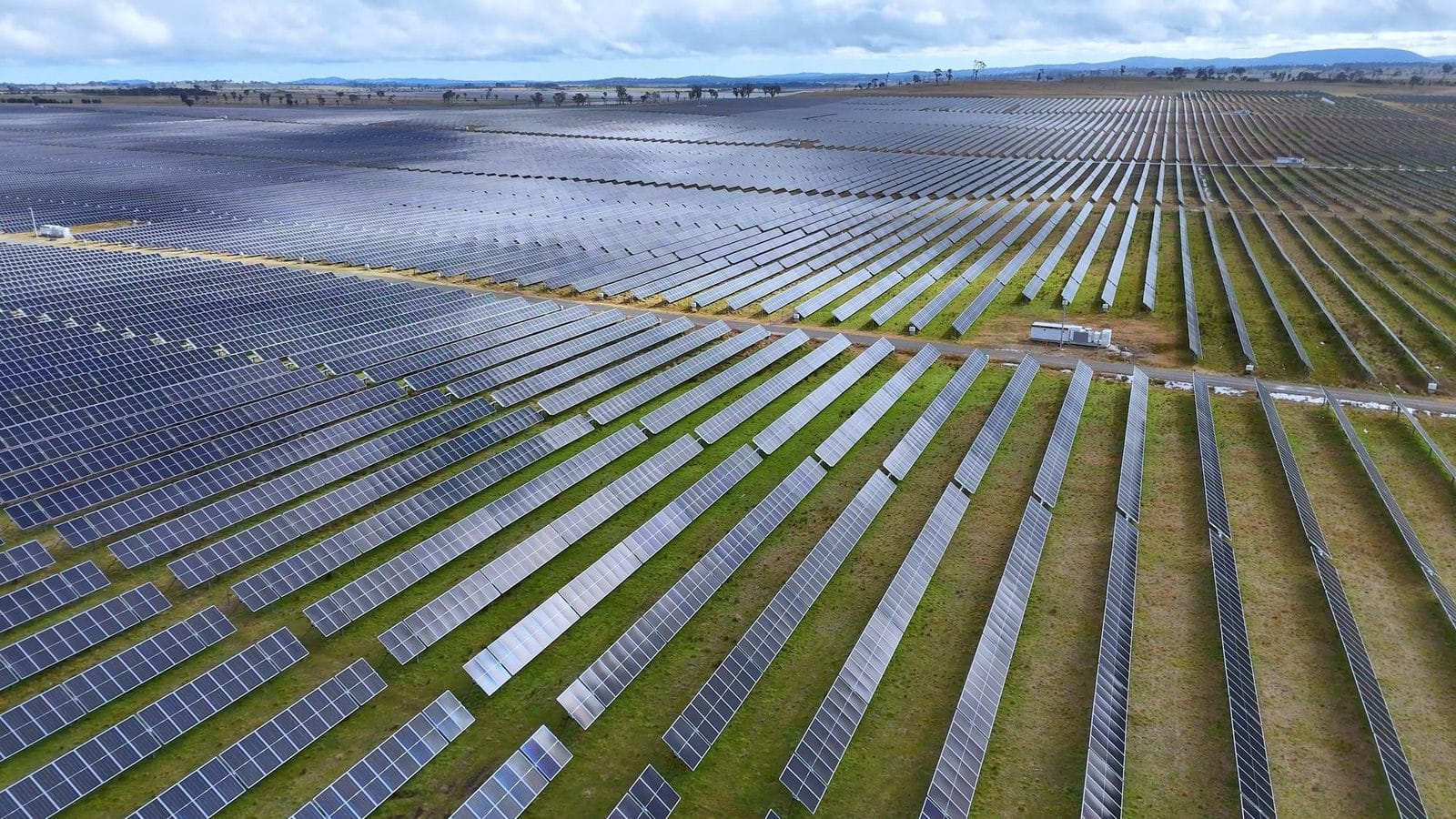
Vietnam has installed more than 16 GW of photovoltaic capacity, among Asia’s largest operational solar bases, with offshore wind now entering its first major buildout phase. PDP8 targets 39-47% solar and wind in Vietnam’s generation mix by 2030. Decree 57/2025 (the DPPA framework) allows large commercial and industrial users to procure clean electricity directly from generators, bypassing state utility EVN, a policy shift that materially improves project bankability for international lenders and Singapore energy investment vehicles.
Key Market Statistics: Singapore and Vietnam Clean Power
- Vietnam installed solar capacity: 16+ GW (2025)
- Vietnam renewable energy market: USD 4.27 billion (2025) → USD 10.6 billion (2034); CAGR 10.64%
- PDP8 target: 39-47% solar and wind by 2030
- Singapore FDI in Vietnam (2023): US$6.9 billion, 18% of total national FDI
- Singaporean companies in Vietnam: 3,000+
- Singapore planned low-carbon electricity imports: up to 4 GW by 2035
Singapore’s Strategic Partnership in Vietnam’s Energy Transition
The Singapore-Vietnam strategic partnership is the structural foundation for bilateral clean power investment. Formalised through the Bilateral Investment Treaty (1992) and Connectivity Framework Agreement (2005), the relationship now encompasses clean generation as a primary investment vertical. Sembcorp Industries has invested more than US$1 billion in Vietnam’s power generation sector since the early 2000s, including Phu My 3, Vietnam’s first independent power project, demonstrating how Singapore operators built generation infrastructure well before the clean power transition began.
Singapore energy investment in Vietnam today flows through MAS-regulated funds, SGX-listed vehicles, and English-law governed holding structures that provide the contractual certainty international lenders require. The Vietnam Singapore Industrial Park (VSIP) network, co-developed by Sembcorp and provincial governments across Binh Duong, Hai Phong, Quang Ngai, and Nghe An, creates the industrial tenant base that drives commercial and industrial (C&I) clean electricity demand. For a foreign investor, the bilateral strategic partnership de-risks market entry in ways unavailable to other capital sources, decades of co-developed legal, commercial, and provincial infrastructure translate directly into project execution advantage.
Solar Investment in Vietnam: Three Entry Points for Singapore Capital
Vietnam’s irradiance levels rank among the highest in Southeast Asia, particularly in the central and southern provinces and around Ho Chi Minh City’s surrounding industrial zones. The photovoltaic market offers three distinct risk-return profiles.
Utility-scale (50 MW+): The post-feed-in-tariff opportunity centres on acquiring, refinancing, or recapitalising operating assets with confirmed generation records and offtake agreements. Singapore-linked funds typically hold positions through SPV structures, targeting mid-to-high single-digit USD returns on assets with grid-confirmed dispatch.
Floating solar: Land scarcity and agricultural protection rules constrain ground-mount development in many provinces. Installations co-located with hydropower reservoirs create hybrid generation profiles, smoothing output and reducing curtailment risk, with several projects advancing in the central highlands and Mekong Delta. This segment remains less contested than utility-scale ground-mount.
Rooftop and C&I distributed solar: Multinationals in Vietnam’s industrial parks, many occupying space within the VSIP network, require clean electricity procurement solutions. Long-term offtake agreements tied to rooftop installations deliver contracted revenue insulated from wholesale price volatility.
Offshore Wind in Vietnam: The Next Wave of Singapore Investment
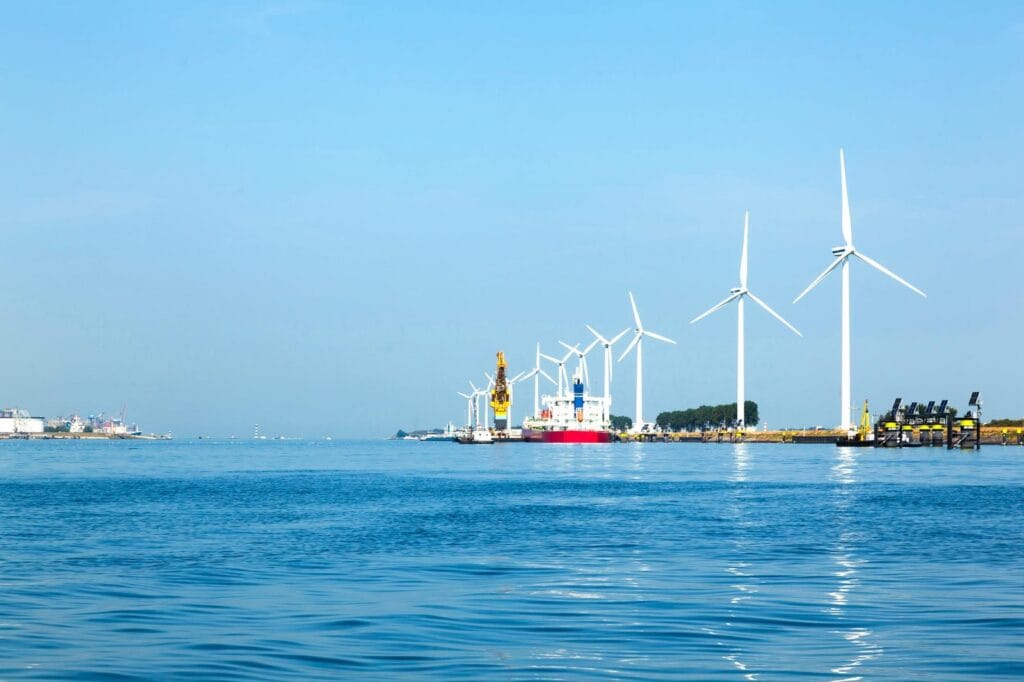
Vietnam’s offshore wind resource profile ranks among Asia’s most favourable. The South China Sea coastline offers sustained wind speeds suited to fixed-bottom and floating installations. A cross-border deal, described by legal experts as a “milestone”, is actively exploring the export of Vietnamese offshore wind power to Singapore and Malaysia via undersea cable, directly linking offshore project economics to Singapore’s 4 GW low-carbon electricity import target for 2035.
Individual offshore projects are measured in hundreds of megawatts. Supply chains spanning turbines, vessels, foundations, substations, and export cables require procurement and project finance capabilities that few domestic players can manage independently, precisely where Singapore’s role as the regional engineering, logistics, and capital hub is most consequential. Onshore wind in Ninh Thuan, Binh Thuan, and the central highlands is more immediately investable; provincial relationship management is the decisive variable for land acquisition and grid connection approvals.
Power Grid and Battery Storage: The Cross-Border Infrastructure Gap
ASEAN Power Grid: Singapore-Vietnam Electricity Trade
Vietnam’s generation build-out has consistently outpaced its power grid infrastructure, creating curtailment risk for operating solar and wind assets. PDP8 designates grid modernisation, transmission corridors, substation upgrades, and smart grid technology, as a national investment priority, opening structured opportunities for Singapore-linked infrastructure funds alongside development finance institutions.
The ASEAN Power Grid framework provides the institutional architecture for Singapore-Vietnam cross-border electricity trade. Both governments have signed memoranda of understanding covering interconnection standards and bilateral power flows, with feasibility work on undersea cable routes advancing under this framework. A functioning cross-border power corridor would be the first long-distance low-carbon electricity trading route in Southeast Asia at commercial scale.
Battery storage systems that capture intermittent solar output and release it during peak demand carry direct commercial value in Vietnam’s curtailment-prone grid environment, and are attracting growing interest from Singapore-based infrastructure allocators.
How Singapore Investors Access Vietnam’s Clean Energy Sector
Three primary structures are used for Singapore energy investment in Vietnam’s clean power sector.
Green bonds and sustainability-linked instruments issued by Singapore-domiciled holding entities, with underlying photovoltaic or wind assets, offer a regulated entry point for foreign investors unable to take on direct project risk in an emerging market. Instruments price at meaningful spreads above SGD or USD risk-free rates, reflecting country and subordination risk.
Infrastructure funds managed from Singapore, including vehicles backed by GIC, Temasek-linked managers, or international platforms with local operations, provide diversified exposure across Vietnam’s renewable energy pipeline without requiring direct operational involvement.
Direct equity and joint ventures deliver the greatest control but require genuine local operating capability and established provincial networks. SPV structures above operating assets function as the financing and contracting hub while generation assets remain subject to Vietnamese regulatory and grid frameworks.
Operating solar assets with confirmed offtake typically target mid-to-high single-digit USD returns. Development-stage offshore wind projects require low-to-mid-teens returns given permitting and grid connection uncertainty.
Key Risks for Foreign Investors in Vietnam’s Power Sector
Grid and curtailment risk is the most material near-term exposure. Congestion must be assessed at the provincial level, a well-sited asset in a congested grid zone earns no revenue regardless of generation output quality.
EVN offtake creditworthiness remains a live concern. The DPPA framework reduces dependency on EVN but does not eliminate it; the state utility’s financial health and government payment support affects all projects without an alternative offtake counterparty.
Regulatory evolution, the transition from feed-in tariffs to competitive bidding, new PPA framework timelines, and DPPA implementation pace, reflects a policy environment still maturing. Decree 57/2025 is a significant step; provincial execution will vary.
Execution risk applies to all structures. SPVs, green bonds, and locally governed funds do not change the fact that grid connections, land rights, and generation revenues remain subject to Vietnamese law and provincial administration. Foreign investors who price risk at its actual location, not where headline policy suggests it should be, consistently outperform in this corridor.