
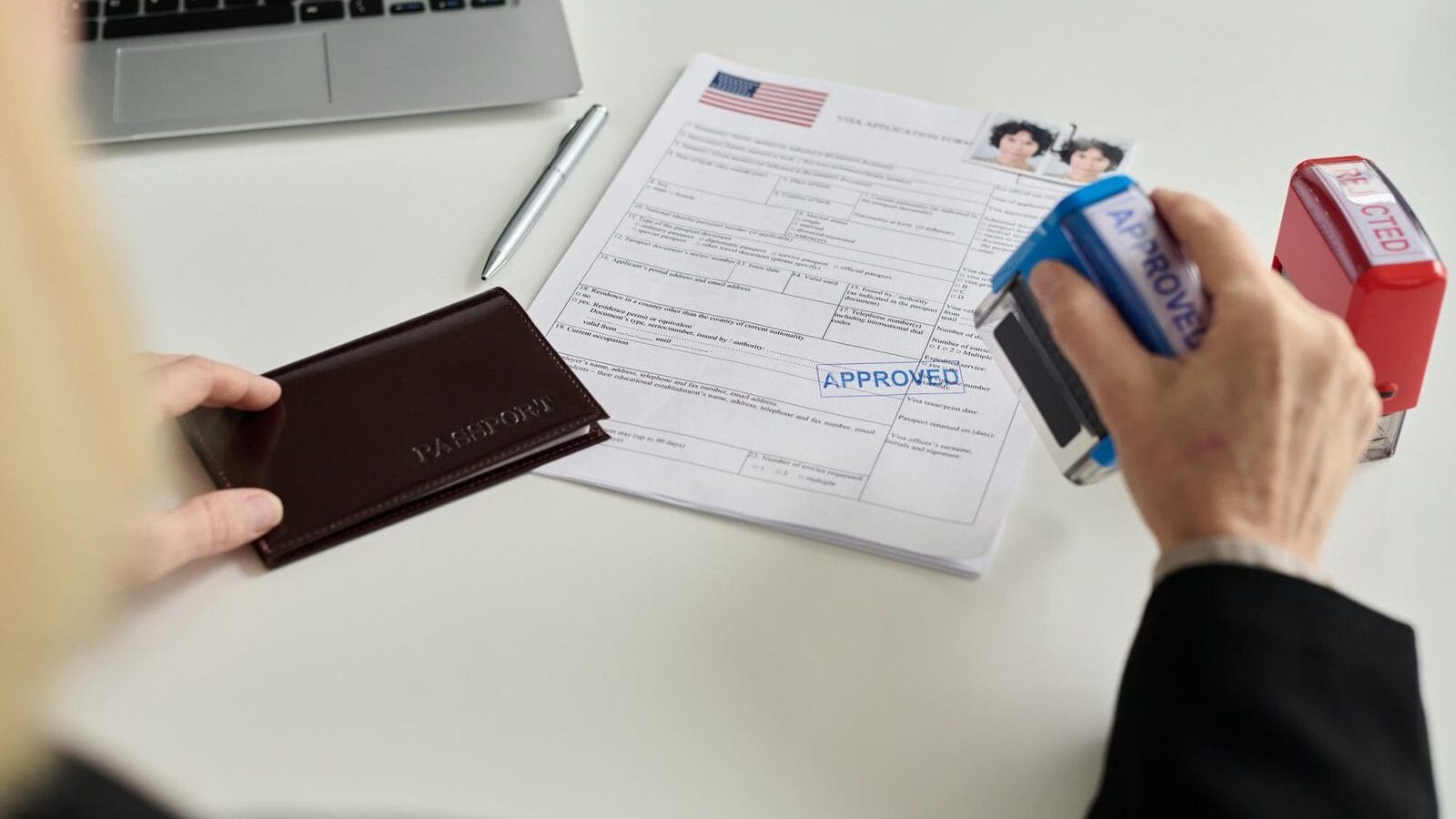

A business visa, tourist visa, or 90-day E-visa issued under Law No. 23/2023/QH15 does not authorise employment in Vietnam. Under the Labor Code 2019 and Decree 219/2025/ND-CP, a foreign national must hold a valid work permit or work permit exemption certificate before beginning any employment activity. This obligation applies to every individual engaged under a labor contract with a Vietnamese entity, regardless of salary level, seniority, or nationality.
Employers who allow foreign hires to start work on a business visa face fines of VND 30–75 million per worker. When the employer is an organisation rather than an individual, that fine is doubled: VND 60–150 million per worker. For a company onboarding five foreign employees simultaneously during a trial period on business visas, the penalty exposure reaches VND 300–750 million before the organisational doubling applies. Vietnam does not issue warnings before enforcement. Labour authority inspections require no prior notice and are common in Hanoi and Ho Chi Minh City. The work permit is a legal prerequisite, not a formality to be completed after employment begins.
Vietnam’s Four-Layer Immigration System for Foreign Employees
Vietnam’s immigration framework for foreign workers follows a mandatory four-layer sequence. Each layer is a prerequisite for the next. Employers must understand the full chain before extending an offer to a foreign national.
Layer 1, Foreign Labor Demand Approval
Under Decree 219/2025/ND-CP, effective August 7, 2025, the foreign labor demand approval has been integrated into the work permit application. Previously a separate prior step under Decree 152/2020, the demand approval now forms part of a single combined submission. Employers apply through the National Public Service Portal. The Department of Home Affairs assesses whether the role can be filled by a Vietnamese national and, within 10 working days of receiving a complete dossier, issues the combined approval. This integration is the most practically significant improvement for employers under the current framework, it eliminates one procedural stage and reduces the number of separate submissions required.
Layer 2, Vietnam Work Permit
The work permit (giấy phép lao động) is the core authorisation document. It is issued by the provincial-level Department of Home Affairs or the Ministry of Home Affairs depending on the employing organisation. The initial work permit is valid for up to two years, with one permitted extension of a further two years, a four-year maximum total. After four years, the employer must submit a new application from the beginning. The work permit is employer-specific and position-specific: a foreign employee who changes employer or job title requires a new work permit before the change takes effect.
Layer 3, LD Work Visa
After the work permit is issued, the foreign employee applies for an LD visa, Vietnam’s work visa category, to enter or reside in Vietnam legally. Two LD visa types apply. An LD2 visa is issued to foreign workers who hold a standard work permit. An LD1 visa is issued to foreign workers who hold a work permit exemption certificate. Both LD visa categories support validity of up to two years, tied to the duration of the underlying work permit or exemption certificate. A business (DN) visa or E-visa cannot be converted into an LD visa without first obtaining the work permit, a planning error that results in foreign employees being unable to work legally despite already being present in the country.
Layer 4, Temporary Residence Card
For stays of one year or more, the foreign employee applies for a Temporary Residence Card through the immigration agency under the Ministry of Public Security after arriving in Vietnam. The TRC replaces the need for repeated visa stamps and allows multiple entries to Vietnam without applying for new visas at each departure and re-entry. For LD1 and LD2 visa holders, the TRC is valid for up to two years, tied to the underlying work permit or exemption certificate duration. Processing takes approximately five working days. The TRC is the document that makes long-term employment in Vietnam logistically manageable: it eliminates monthly visa renewal administration and reduces the risk of accidental overstay during periods of frequent travel. On each arrival at a lodging establishment, the foreign national must register temporary residence through the establishment manager, who is obligated to notify the local police authority within 12 hours.
Who Is Exempt from the Vietnam Work Permit Requirement
Under Decree 219/2025/ND-CP, the following categories of foreign national are exempt from the work permit requirement. Each exempt individual must instead obtain a work permit exemption certificate and provide five working days’ advance notice to the provincial Department of Home Affairs before commencing employment.
- Capital-contributing members or owners of a limited liability company with a contribution value of at least VND 3 billion
- Intra-company transferees assigned to work on specific projects within a multinational enterprise operating in Vietnam
- Workers in priority sectors confirmed by the relevant authority: finance, science, technology, innovation, and digital transformation
- Heads of representative offices or project managers of registered foreign NGOs
- Foreign journalists accredited by the Ministry of Foreign Affairs
- Education professionals confirmed by the Ministry of Education and Training
- Foreign nationals married to Vietnamese citizens and residing legally in Vietnam
- Foreign lawyers holding a practising certificate and sponsored by a law firm registered in Vietnam
- Foreign nationals entering Vietnam for less than three months to resolve urgent technical issues that Vietnamese experts cannot address
The work permit exemption certificate is valid for up to two years and serves as the basis for LD1 visa and TRC applications. It must be renewed on the same timeline as a standard work permit.

Employer Document Checklist and the Realistic Planning Timeline
Documents the Employer Must Prepare
The employer is responsible for compiling and submitting the application dossier via the National Public Service Portal. Employer-prepared documents include: the work permit application form under Decree 219/2025, a certified copy of the company’s business registration certificate, the employment contract or letter of appointment confirming the position and annual salary, a written explanation of why the role cannot be filled by a Vietnamese national, and supporting documentation establishing the employee’s job category, manager, executive director, expert, or technical worker, with relevant qualification and experience evidence.
Employee-prepared documents, which the employer must verify before submission, include: a criminal background check certificate (must not exceed six months’ validity at the date of submission), a health certificate from a recognised medical facility, an authenticated degree or professional qualification certificate, certified Vietnamese translations of all overseas-issued documents, and consular legalisation or apostille for documents issued in a foreign country. Degree-level qualification is required for experts with at least three years’ relevant experience, or five years’ experience with a practice certificate in lieu of degree.
The Realistic Planning Timeline: 3–4 Months
The most consistent planning error among UK-based employers and multinationals establishing Vietnam operations is underestimating the time from hiring decision to legal employment start. The 10 working days processing time under Decree 219/2025 applies only to the formal permit review after a complete, accepted application is received. Document preparation, degree authentication, criminal background check, health certificate, certified translations, and consular legalisation, typically requires two to three months. Adding formal processing and the TRC application, the realistic timeline from offer acceptance to permit-in-hand is three to four months. Employers planning on a two-week onboarding schedule, consistent with UK or Singapore hiring practice, routinely find foreign employees unable to begin work on schedule. The planning baseline for all standard work permit applications should be set at four months from hiring decision.
Penalties for Non-Compliance
Employer Fines Under Decree 219/2025
| Violation Employee Fine Employer Fine Employer Fine (Organisation) | |||
|---|---|---|---|
| Working without valid work permit | VND 15–25M | VND 30–75M | VND 60–150M |
| Hiring without verifying work permit status | N/A | VND 30–75M | VND 60–150M |
| Using an expired work permit | VND 15–25M | VND 30–75M | VND 60–150M |
| Failure to notify DOHA of permit changes | N/A | VND 5–10M | VND 10–20M |
Beyond financial penalties, non-compliance consequences include deportation of the foreign employee, potential blacklisting from future Vietnam visa and work permit applications, and, where violations are systemic, suspension of the employer’s foreign labor quota. Inspections are conducted without prior notice.
Temporary and Permanent Residency Options
Temporary Residence Card: The Standard Long-Stay Solution
The TRC is issued by the Immigration Department within five working days of application. For LD1 and LD2 visa holders, it is valid for up to two years, matching the underlying work permit. The TRC eliminates repeated visa stamp requirements. It supports multiple entries without separate visa applications at each departure. Foreign nationals who serve as the legal representative of a Vietnamese enterprise must also hold a Level 2 VNeID account, a separate requirement detailed in Viettonkin’s VNeID compliance guide, which requires a valid TRC or permanent residence card as a prerequisite for biometric registration.
Permanent Residence Card: Long-Term Eligibility
A foreign national who has resided legally in Vietnam for three or more consecutive years may apply for a Permanent Residence Card, provided they are sponsored by a Vietnamese citizen parent, spouse, or child who holds permanent residence in Vietnam. Foreign scientists and experts recommended by the head of a ministerial or government agency also qualify. The PRC is valid for ten years, renewable, and allows the holder to reside without a visa. Processing takes five working days with a fee of approximately US$100. PRC holders remain subject to work permit requirements unless their employment falls within an exemption category under Decree 219/2025.
UK Employers: The 45-Day Visa Exemption Does Not Cover Employment
UK citizens entering Vietnam under the 45-day visa exemption provided by Law No. 23/2023/QH15, which removed the previous requirement for a 30-day gap between entries, may enter freely for tourism and short-term business activities. This exemption does not authorise employment. A UK national who begins working for a Vietnam subsidiary, FDI enterprise, or project under the visa exemption, even in a management, oversight, or board capacity, is in violation of the Labor Code 2019 and subject to the same penalty and deportation risk as any other foreigner without a valid work permit.
UK employers establishing Vietnam operations should apply for work permits for all foreign management hires at the point of the hiring decision, not after the employee has arrived in country. The four-month planning timeline applies regardless of nationality. The 45-day visa exemption may be used during the document preparation phase, but employment cannot begin until the work permit is issued.
Frequently Asked Questions
What is the difference between a Vietnam work permit and a work visa? A work permit authorises employment. A work visa (LD1 or LD2) authorises entry and residence. Both are required for legal long-term employment. The work permit must be obtained before the LD visa is issued.
Can a foreign national work in Vietnam on a business visa or E-visa? No. A business (DN) visa or 90-day E-visa issued under Law No. 23/2023/QH15 does not authorise employment. Foreign nationals who begin work without a valid work permit face fines of VND 15–25 million and deportation. Employers face fines of VND 30–75 million per worker, doubled for organisations.
What did Decree 219/2025 change about Vietnam work permits? Decree 219/2025/ND-CP integrated the foreign labor demand approval into the work permit application, standardised processing at 10 working days, mandated online submission via the National Public Service Portal, enabled electronic criminal background check coordination, and expanded the work permit exemption categories to include digital transformation and priority technology sectors.