
Vietnam’s retail sector has become one of the most compelling expansion destinations in Southeast Asia for fast-moving consumer goods brands, and Hong Kong businesses are positioning early to claim market share. With a total retail market valued at USD 163.44 billion in 2025, a FMCG sector growing at 8.9% CAGR through 2032, and a Vietnam middle class forecast to reach 26 million consumers by 2026, the scale of this opportunity is difficult to overstate, and the window for establishing strong brand presence is now.
Why Vietnam’s Retail Market Is the Next Big Stage for Hong Kong FMCG Business
A Vietnam Retail Market That’s Hard to Ignore: USD 163B and Growing
Vietnam’s total retail market reached USD 163.44 billion in 2025 and is forecast to sustain a CAGR of 4.87% to 2031, reaching USD 217 billion. Retail sales grew 10.9% year-on-year in Q1 2026 (GSO Vietnam), confirming that this rapid growth trajectory is not softening. The FMCG segment, which recorded 8.9% CAGR for 2026-2032, outpaces the broader retail sector and signals where the highest commercial intensity lies.
For Hong Kong brands with established product lines in food, personal care, or health and nutrition, this is a Vietnam retail market that demands attention. The personal care segment alone is projected to expand from USD 2,450 million in 2025 to USD 3,301 million by 2030 (CAGR 4.6%), while health and nutrition products are growing at 9.5% annually, categories where Hong Kong consumer goods carry strong regional recognition.
Growing Consumer Demand: What’s Driving Vietnam’s Retail Sector in 2025-2026
Household incomes are rising at approximately 8.5% year-on-year, and the combination of income growth, urbanisation, and a digitally active youth population is driving demand for premium brands, imported products, and health-conscious consumer goods. The grow-middle-class dynamic, with Vietnam’s middle class expanding toward 50% of the population by 2030 (World Bank/McKinsey), is the structural driver that makes this retail sector increasingly high-value for Hong Kong FMCG brands targeting the aspirational consumer segment.
Demand for premium and imported products is particularly intense in personal care, packaged food, and functional beverages, categories where Hong Kong consumer goods have an established quality reputation that domestic Vietnamese brands cannot yet match.
Southeast Asia’s High-Growth Retail Opportunity: What Vietnam Offers Hong Kong Brands
Vietnam’s fast-moving consumer goods sector occupies a rare position in Southeast Asia: rapid growth in modern trade, simultaneous e-commerce expansion, and a consumer base actively seeking imported brand alternatives. Compared to more saturated markets like Thailand and Malaysia, Vietnam’s retail landscape remains structurally open for Hong Kong FMCG brands with the distribution capability and localisation strategy to compete at scale.
Vietnam’s Retail Landscape: How Market Channels Work for Global FMCG Business
Traditional Trade: Vietnam’s Retail Sector Giant Still Holds 59-65% of FMCG Volume
Traditional trade, wet markets, mom-and-pop retailers, and independent small-format grocers, still accounts for 59-65% of total FMCG volume in Vietnam, particularly outside Hanoi and Ho Chi Minh City. For Hong Kong brands planning Vietnam market entry, skipping traditional trade means surrendering the majority of the market to domestic competitors and Chinese brands with established general trade distribution networks.
This is a retail sector where distribution depth matters as much as brand strength. FMCG companies that invest in general trade infrastructure from entry consistently build the unit-volume base that supports profitable modern trade expansion later.
Modern Trade Retail Market Expanding Fast: Vietnam’s Supermarket and Store Sector Grows
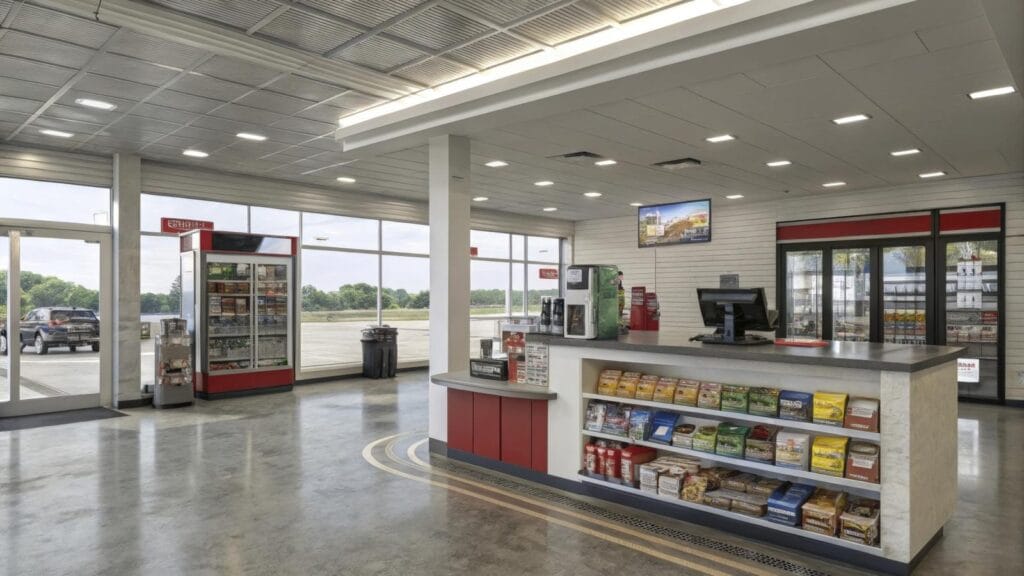
Vietnam’s supermarket market reached USD 5.45 billion in 2025 and is forecast to grow to USD 5.85 billion in 2026 at a CAGR of 10.2% through 2031 (Ken Research). More significantly for FMCG brand managers, convenience store outlets are growing at 23.89% year-on-year, reaching 9,671 locations by 2026. WinCommerce, Bach Hoa Xanh, GS25, Circle K, and FamilyMart collectively represent the fast-expanding modern trade retail network where imported Hong Kong consumer goods can compete on shelf.
This modern trade retail market expansion is concentrated in urban centres but is spreading rapidly into provincial cities, accelerating the geographic opportunity for Hong Kong FMCG brands to grow Vietnam retail presence beyond the Hanoi and HCMC primary markets.
Online Shopping and E-Commerce Driving Vietnam’s Digital Retail Market Expansion
Vietnam’s e-commerce market reached USD 31 billion in 2025, growing 25.5% year-on-year (Vietnam Briefing). Online shopping now represents a primary discovery and conversion channel for FMCG categories including personal care, food supplements, and packaged beverages. Social commerce, Vietnam’s fastest-expanding digital retail sector, is projected to reach USD 20.98 billion by 2026 at a CAGR of 9.7% (GlobeNewswire), driven almost entirely by TikTok Shop and Shopee Live integration.
This digital retail market expansion is not separate from physical retail strategy, it is increasingly the most cost-effective route to building high-velocity brand awareness among Vietnam’s 26 million-strong and growing urban middle-class consumer base.
Hong Kong FMCG Brand Presence in Vietnam’s Retail Market: Who’s Already There
FMCG presence in Vietnam from Hong Kong-origin brands is already established across multiple consumer goods categories. Understanding which Hong Kong companies have built Vietnam retail presence, and through what channels, provides a practical framework for brands assessing their own entry options.
Global Hong Kong Consumer Brands with Vietnam Retail Presence
Lee Kum Kee, the Hong Kong oyster sauce and soy condiment company founded in 1888, has achieved broad Vietnam retail presence through licensed importers and specialist food distributors, leveraging high brand recognition in Vietnamese cuisine. Vitasoy, the Hong Kong-founded soy milk and beverages company (established 1940), exports to more than 40 countries and has built Vietnam retail exposure through Asian food specialty channels. Swire Pacific’s beverage operations, which include Coca-Cola bottling across parts of Southeast Asia, represent a third category of Hong Kong FMCG presence in Vietnam’s consumer goods market.
Dairy Farm International (Jardine Matheson Group, HK-origin) operates health and beauty retail formats across Southeast Asia with FMCG product ranges, and provides a further example of Hong Kong global retail companies with an active Vietnam consumer goods footprint.
Expanding Hong Kong Brand Presence Through Asia Retail Distribution Partners
The most structurally important distribution intermediary for Hong Kong FMCG expansion into Vietnam’s retail market is DKSH Vietnam. DKSH, a Swiss-HK hybrid market expansion services company, provides end-to-end distribution infrastructure connecting international FMCG brands to both general trade and modern trade channels across Vietnam. For Hong Kong consumer goods companies lacking on-the-ground distribution capability, DKSH offers a proven pathway to rapid, scalable Vietnam retail presence.
Li & Fung, the HK-based global supply chain management company, provides FMCG sourcing and distribution logistics across Asia including Vietnam, offering a complementary supply chain capability for brands that require sourcing as well as market distribution support.
Growing Hong Kong FMCG Business on Vietnam’s Online Retail Market Platforms
TikTok Shop Vietnam: Driving Retail Market Growth for FMCG Business
TikTok Shop’s GMV in Vietnam grew 148% year-on-year in H1 2025 (Social Commerce Report Q1 2026), and its market share reached 41% of the social commerce sector, making it the fastest-growing FMCG retail market channel in the country. Live-selling and shoppertainment formats drive high conversion rates for beauty, personal care, food, and functional beverage categories, precisely the FMCG categories where Hong Kong consumer goods brands are strongest.
The KOL-to-managed-creator model is shifting: brands that move beyond one-off influencer activations to sustained creator partnerships and algorithmic content strategies are generating disproportionate retail market growth. Hong Kong FMCG business teams should treat TikTok Shop Vietnam as a performance marketing channel, not a brand awareness experiment.
The Shopee Vietnam Retail Market Playbook for Consumer Goods
Shopee remains Vietnam’s dominant e-commerce platform at 56% market share (Social Commerce Report Q1 2026), and it maintains particular strength in FMCG categories including healthcare, personal care, and packaged food. Shopee Live integration, branded storefronts, platform voucher mechanics, and campaign spikes around the 11.11 and 12.12 shopping events offer Hong Kong consumer goods brands a high-volume channel for repeat purchase and subscription-style consumer acquisition.
Running Both Platforms on Vietnam’s Retail Market: A Dual-Channel Strategy for HK Brands
Hong Kong brands should not choose one platform over the other, the strategic logic is to use Shopee for volume and repeat purchase (a high-frequency, value-driven retail market dynamic) and TikTok Shop for discovery and premiumisation (where imported brand storytelling and product demonstration drive trial at premium price points). Different SKU strategies for each platform further optimise margin and volume simultaneously.
Winning in Vietnam’s Modern Trade Retail Sector: What HK Brands Need to Know
Securing distribution in Vietnam’s competitive modern trade retail sector requires more than product quality. Shelf competition is intensive, and local FMCG giants, Masan Consumer, Acecook, and Vinamilk, hold significant retail market presence that makes undifferentiated market entry strategies high-risk.
Getting on the Shelf in Vietnam’s Competitive Retail Market, Costs and Requirements
Circle K, GS25, and FamilyMart are the highest-priority convenience retail targets for imported Hong Kong FMCG brands, particularly in personal care, functional beverages, and health food. Each retailer has distinct listing requirements: slotting fees, bilingual packaging compliance, minimum order quantities, and promotional activity commitments. The total cost of modern trade market entry, including distribution margin, listing fees, promotional spend, and logistics, is routinely underestimated by Hong Kong brands new to Vietnam, and drives the higher failure rate of underfunded direct-market-entry attempts versus distributor-led approaches.
Pricing Strategies to Grow Middle Class Vietnam Retail Sales
Most Vietnamese consumers still prioritise value for money, but imported brand status matters significantly in personal care, functional food, and premium beverages, and is growing as middle class purchasing power rises. Hong Kong FMCG brands should position products in the premium-accessible tier: visibly superior to domestic alternatives but within reach of the grow-middle-class consumer income bracket. Tết gifting is a high-value SKU opportunity, with FMCG gift searches spiking 180-240% in December-January (per SEO demand data). Premium packaged gift sets from recognisable Hong Kong brands outperform generic FMCG bundles in this seasonal retail market window.
Global Retail Giants vs. HK Brands: The Competitive Vietnam Market Landscape
Vietnam’s FMCG retail landscape is increasingly competitive. Global multinational brands (Nestlé, Unilever, P&G) hold deep modern trade presence; local conglomerates (Masan, Vinamilk) control traditional trade distribution; and Chinese brands are expanding digital retail market reach through aggressive pricing on TikTok Shop. Hong Kong FMCG brands occupy a differentiated position, perceived as premium-Asian rather than mass-global, but must invest in localised marketing to communicate that distinction to Vietnamese shoppers unfamiliar with Hong Kong consumer brand origins.
Navigating Vietnam Retail Sector Regulations, Costs, and Market Entry Options
Import Rules, Compliance Cost, and FMCG Labelling in Vietnam’s Retail Market
The Ministry of Health (MoH) requires food safety registration for all imported food and beverage FMCG products. Bilingual labelling (Vietnamese and the language of origin) is mandatory, as is compliance with product category-specific duty rates, which range from 5-40% depending on FMCG category. The 2025-2026 e-commerce import rule changes have removed low-value shipment exemptions, affecting direct-to-consumer digital retail market strategies that previously bypassed formal import procedures. Hong Kong brands using DKSH or a formal distributor import structure will generally clear compliance requirements faster and at lower aggregate cost than direct-import models.
Choosing Your Entry Mode to Expand in Asia’s Fast-Growing Vietnam Retail Sector
Under Vietnam’s 2026 Investment Law framework, Hong Kong FMCG companies can choose among three primary entry modes: appointed distributor (lowest cost, fastest market access, suitable for brands with established product lines and no need for direct Vietnam retail control); hybrid/trading company (moderate cost, greater market presence control, suitable for brands committing to multi-year Vietnam expansion); and joint venture with a local Vietnamese company (highest cost, maximum distribution depth, suitable for brands targeting both modern trade and general trade retail at scale). The right mode depends on the brand’s scale, margin structure, and long-term commitment to Vietnam market development.
The Three-Move Vietnam Retail Market Playbook for Hong Kong FMCG Brands
Expand Business Across Vietnam’s Retail Market: The Channel Distribution Framework
The most successful Hong Kong FMCG market entries follow a consistent three-move framework: (1) Anchor general trade and modern trade distribution through a specialist intermediary such as DKSH, ensuring supply chain reliability, bilingual compliance, and nationwide retail reach from launch. (2) Run TikTok Shop and Shopee as co-primary digital discovery and conversion channels, investing in creator content and platform campaigns to build brand presence with Vietnam’s digital retail market consumer cohort. (3) Localise for Tết and seasonal retail peaks, developing dedicated SKUs and gifting sets that drive high-margin sales in Q4-Q1 and position Hong Kong consumer brands as premium-choice gifts during Vietnam’s highest-spend retail period.
What Vietnam’s Retail Market Data Needs Tell Us About Long-Term Growth Timing
The data is unambiguous: Vietnam’s retail market will reach USD 217 billion by 2031, the middle class will represent over 50% of the population by 2030, and social commerce is compounding at nearly 10% annually on top of an already rapid growth base. Hong Kong FMCG brands that establish retail market presence now, in both modern trade and digital channels, will benefit from compounding consumer familiarity and distribution relationships that late entrants will need years and significant cost to replicate.
Why Global Hong Kong FMCG Brands Need to Expand in Southeast Asia’s Retail Market Now
Vietnam’s consumer goods market offers a rare combination: high-growth retail sector dynamics, a consumer base actively shifting toward premium and imported brands, and a competitive retail market landscape where Hong Kong FMCG companies still have genuine first-mover positioning opportunities, particularly in TikTok Shop, premium modern trade shelf space, and the Tết gifting segment. That window will narrow as global FMCG giants increase their Vietnam market investment and as domestic Vietnamese retailers develop private-label alternatives. Hong Kong brands with a long-term Asia retail growth orientation should treat Vietnam market entry not as a future option, but as a 2025-2026 operational priority.