
Vietnam electronics manufacturing has undergone one of the fastest industrial transformations in modern Asian economic history. In under three decades, a country that exported almost no electronics now ships more than USD 165 billion in electronic goods annually, accounts for approximately 30 per cent of all smartphones sold into the United States market, and ranks among the world’s top ten electronics exporters. The engine of that transformation is concentrated in three northern provinces, Bắc Ninh, Bắc Giang, and Hải Phòng, in contrast to Ho Chi Minh City’s consumer goods and textile manufacturing base in the south, and it was built largely by Taiwanese capital, Taiwanese operational expertise, and a cluster of Taiwanese OEMs whose investment decisions reshaped the entire northern Vietnam manufacturing landscape.
This article maps the cluster, explains what makes it one of Asia’s most compelling manufacturing destinations, and outlines what Taiwanese and international manufacturers need to know before entering it.
Vietnam Electronics Manufacturing: Scale, Growth, and Global Rank
Electronics Manufacturing Services (EMS): Market Size and Growth
The Vietnam electronics manufacturing services (EMS) market was valued at USD 9.91 billion in 2025 and is projected to reach USD 11.15 billion in 2026, expanding to USD 18.88 billion by 2031 at a compound annual growth rate of 11.11 per cent.
Vietnam’s Electronic Production, Exports, and Global Rank
Electronics is Vietnam’s largest single export category. Computers, components, and electronic goods surpassed USD 100 billion in annual exports for the first time in 2025, contributing to total export revenues exceeding USD 165 billion. Vietnam’s broader economy expanded at 8.02 per cent in 2025, with manufacturing growing at 9.97 per cent, its highest rate since 2019. Vietnam is now the second-largest smartphone exporter to the United States, behind only China, and holds a structurally entrenched position in the global consumer technology supply chain.
Why Northern Vietnam Became Asia’s Electronics Cluster
The concentration of Vietnam’s electronics industry in the north is not accidental. It reflects deliberate industrial park development, strategic proximity to southern China’s component networks, the ability to source parts from a deepening local supply base, access to Hải Phòng port for export logistics, and the gravitational pull of anchor investors, most of them Taiwanese, who chose northern Vietnam for their first factories and created the supplier ecosystems that attracted subsequent waves of investment.
Northern provinces Bắc Ninh, Bắc Giang, and Hải Phòng together account for more than 70 per cent of Vietnam’s total EMS revenue. At the provincial level, Bắc Ninh leads with USD 42 billion in annual net revenue, nearly one-third of national totals, followed by Thai Nguyên (USD 25 billion) and Hải Phòng (USD 16 billion).
The Bắc Ninh–Bắc Giang Merger and Its Manufacturing Implications
In July 2025, the Vietnamese government merged Bắc Giang province into Bắc Ninh, creating a combined administrative unit of 3.6 million people across approximately 4,800 square kilometres and 21 operational industrial parks covering over 8,200 hectares. The merger consolidates what was already the highest-density electronics manufacturing zone in Southeast Asia into a single governable unit, streamlining land use approvals, infrastructure investment decisions, and industrial park development planning. For manufacturers evaluating a northern Vietnam entry, the merged Bắc Ninh province now offers a single administrative counterpart for project approvals that previously required coordination across two provincial governments.
Hải Phòng: The Port-Logistics Anchor of the Northern Cluster
Hải Phòng functions as the export infrastructure backbone of the northern electronics cluster. The city’s deep-water port handles the majority of electronics export cargo from Bắc Ninh and Bắc Giang, and its VSIP Hải Phòng industrial parks have attracted Pegatron, LG, and multiple tier-two electronics suppliers. Road and rail connectivity between Hải Phòng and the Bắc Ninh–Bắc Giang manufacturing core has been substantially upgraded since 2020, reducing transport time for finished goods from production line to port to under two hours. For manufacturers requiring rapid export cycle times, a critical factor for Apple and other US brand supply chains, Hải Phòng’s logistics infrastructure is a material competitive advantage over inland manufacturing alternatives in Thailand or Indonesia. Manufacturers can also source bonded components through Hải Phòng’s free trade zone facilities, reducing import duty exposure on parts destined for re-export.
What Taiwan Built: The Foxconn–Pegatron–Wistron Ecosystem
Taiwan’s contribution to northern Vietnam’s manufacturing revolution is not simply financial. Taiwanese OEMs brought entire operational models, industrial park design philosophies, tiered supplier recruitment processes, quality management systems, and precision engineering standards, that structured how the cluster functions. That structural legacy now benefits any manufacturing company entering the cluster, Taiwanese or otherwise.
Foxconn’s Vietnam Operations: Quang Chau and Beyond
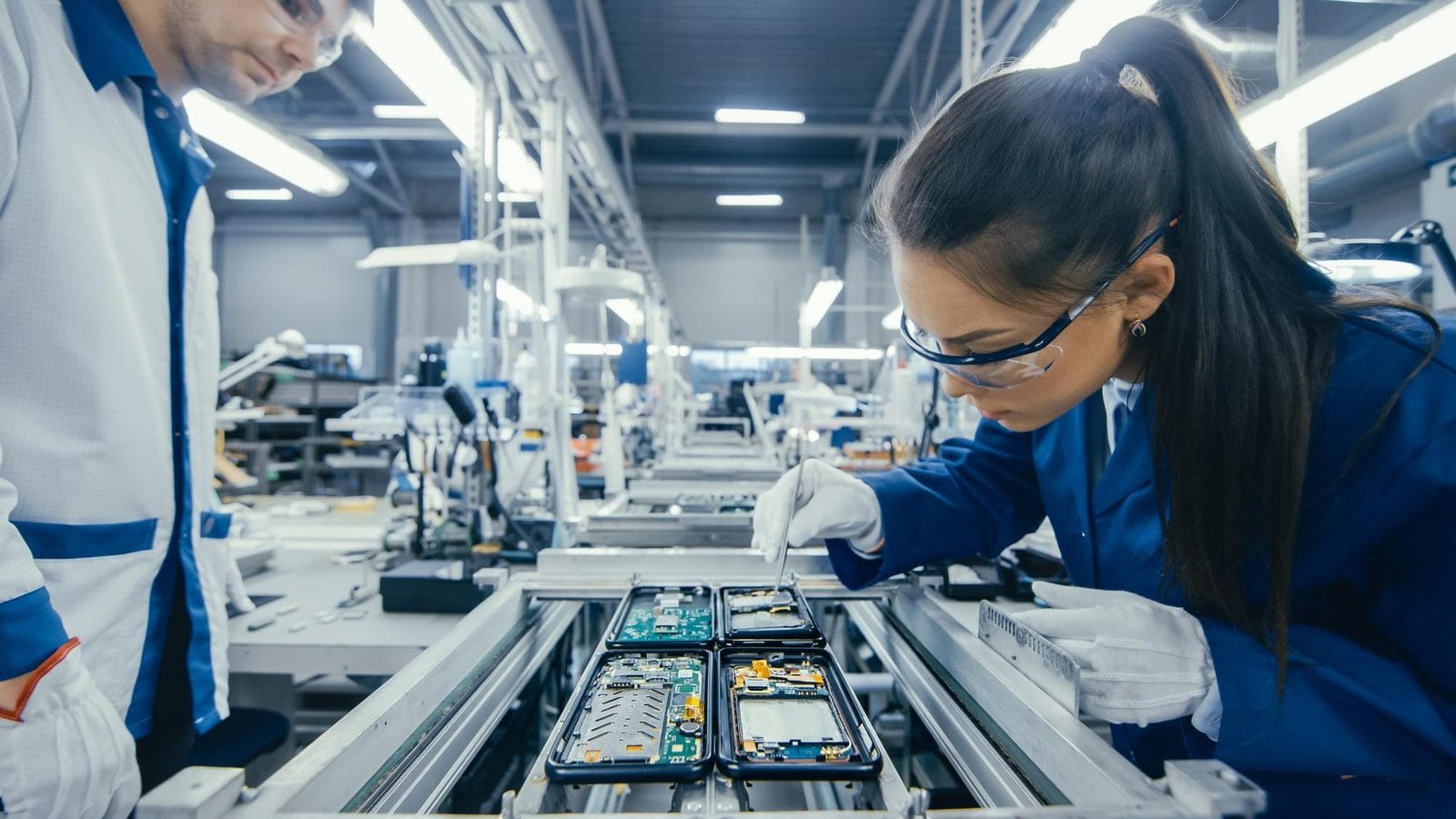
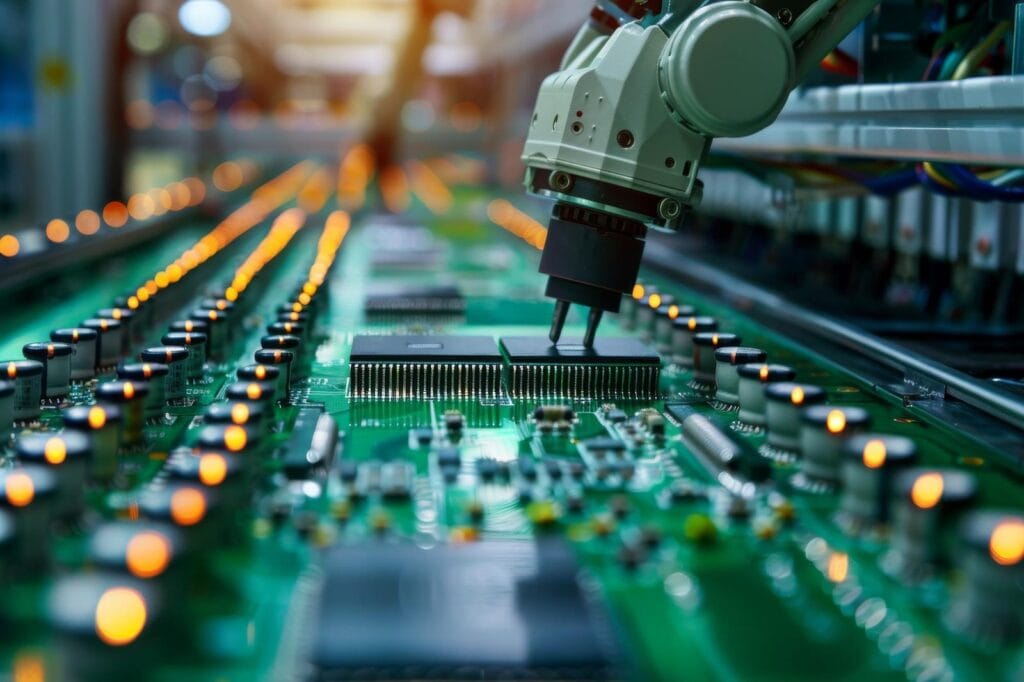
Foxconn (Hon Hai Precision Industry) is northern Vietnam’s largest single employer and its most important anchor investor. The company holds 20 projects in the merged Bắc Ninh province with total committed investment of approximately USD 3.2–4 billion, and employs more than 70,000 workers across facilities in Bắc Giang and Bắc Ninh. Its primary hub is the Quang Chau Industrial Park in Bắc Giang, where Foxconn subsidiaries Fukang Technology and Precision Component run high-volume PCB assembly operations, manufacturing iPads, MacBooks, printed circuit boards, and telecom devices for Apple and other global brands. The park hosts multiple circuit board production lines, with PCB engineering and quality inspection processes handled to Apple’s Supplier Quality standards.
Foxconn’s expansion into Vietnam has not plateaued. In 2025, the company increased investment in two Quang Chau projects by a combined USD 320 million, and subsidiary Shunsin committed USD 80 million to produce integrated circuits in northern Vietnam, including advanced PCB-level packaging and circuit board testing infrastructure, marking a meaningful step up the semiconductor value chain beyond pure assembly.
Pegatron, Wistron, and the Tier-One OEM Layer
Pegatron, Apple’s second-largest assembly partner, has established a multi-phase manufacturing presence in Hải Phòng, with investment scaling across three phases totalling over USD 1 billion. As a contract manufacturing company, Pegatron operates PCB assembly and consumer product production lines that directly mirror its Taiwan and China operational model. Wistron, another major Taiwanese contract manufacturing company, operates in Ninh Bình, focusing on notebook assembly and PCB manufacturing. Together with Foxconn, these three companies form the tier-one OEM layer of the northern Vietnam electronics manufacturing ecosystem, around which hundreds of Taiwanese and Vietnamese component suppliers, tooling manufacturers, and logistics operators have built supporting businesses.
New entrants need not build supplier relationships from scratch, the Taiwanese business community’s three-decade accumulation of industrial relationships, Mandarin-language supplier networks, logistics service company agreements, and operational knowledge of Vietnamese labour practices and regulatory requirements gives Taiwanese manufacturers a practical on-the-ground advantage over Korean, European, or US competitors arriving without that institutional context.
Tax Incentives and FTA Advantages for Electronics Manufacturers
Vietnam’s appeal as a destination for manufacturing investment is reinforced by one of the most competitive tax incentive frameworks in Southeast Asia, combined with an unusually broad network of free trade agreements.
High-Technology Zone Corporate Income Tax Incentives
Manufacturers operating in Vietnam’s designated high-technology zones qualify for a corporate income tax rate of 10 per cent for 15 years, combined with a four-year full tax holiday and a nine-year 50 per cent tax reduction, a package that reduces the effective tax burden substantially relative to standard Vietnamese CIT rates of 20 per cent and below tax rates in comparable manufacturing jurisdictions.
FTA Advantages: CPTPP, EVFTA, and RCEP
On the trade side, Vietnam’s ratification of the CPTPP, EVFTA, and RCEP means that goods manufactured in Vietnam benefit from reduced or zero tariffs on exports to the European Union, United Kingdom, Japan, Australia, Canada, and eleven other major markets. For Taiwanese manufacturers whose China-origin production currently faces US Section 301 tariffs of 25 per cent or higher, Vietnam-origin production under CPTPP or EVFTA eliminates a material cost disadvantage and opens EU and UK markets at preferential rates unavailable from Chinese production.
How to Set Up an Electronics Manufacturing Operation in Vietnam
FDI Registration: IRC and ERC Requirements
Foreign manufacturers enter Vietnam through a straightforward FDI registration process overseen by Vietnam’s Ministry of Planning and Investment.
The core steps are: (1) obtain an Investment Registration Certificate (IRC) from the provincial Department of Planning and Investment or the relevant industrial park management board; (2) obtain an Enterprise Registration Certificate (ERC) to establish the legal entity; (3) register for tax, social insurance, and import-export codes; and (4) obtain sector-specific licences where required, particularly for high-technology zone status. Required documents for each stage include corporate registration certificates, audited financial statements, an engineering feasibility study outlining production line layout and capacity, and an environmental impact assessment.
Industrial Park Selection for Manufacturing Companies
Industrial park selection is the most consequential early decision for any manufacturing company entering Vietnam’s electronics cluster. Quang Chau Industrial Park (Bắc Giang) is the preferred option for EMS operators and PCB manufacturers entering the Foxconn supplier ecosystem. Yên Phong Industrial Park (Bắc Ninh) is anchored by Samsung and suits component manufacturers in the mobile device supply chain. VSIP Hải Phòng offers port-adjacent land with established logistics infrastructure. Each park has different land pricing, utility tariff structures, and management board responsiveness, factors that any company in Vietnam needs to evaluate carefully before signing a land lease.
How Viettonkin Supports Electronics Manufacturers Entering Vietnam
Viettonkin Consulting provides end-to-end advisory services for Taiwanese and international manufacturers evaluating Vietnam electronics manufacturing as a market entry or expansion strategy. Our work covers industrial park selection and due diligence, Investment Registration Certificate and Enterprise Registration Certificate filing, high-technology zone incentive structuring, EMS sector registration, supply chain partner identification, and ongoing regulatory compliance support.
Whether you are a tier-one OEM establishing a greenfield factory, a component supplier following an anchor customer into the northern cluster, or a contract manufacturing company evaluating Vietnam for electronic production and assembly against Thailand or Indonesia, our team provides the commercial and legal intelligence to make the right entry decision.
Frequently Asked Questions
Where is Vietnam’s electronics manufacturing concentrated?
More than 70 per cent of Vietnam’s electronics manufacturing services revenue is generated in three northern provinces: Bắc Ninh (USD 42 billion in annual net revenue, 21 industrial parks), Thai Nguyên (USD 25 billion), and Hải Phòng (USD 16 billion). The July 2025 merger of Bắc Giang into Bắc Ninh consolidated what was already the highest-density manufacturing zone in Southeast Asia into a single administrative unit.
Why do manufacturers set up factory operations in Vietnam?
Vietnam offers competitive labour costs, a high-technology zone CIT incentive of 10 per cent for 15 years (plus a 4-year holiday and 9-year 50 per cent reduction), and access to preferential tariffs in the EU, UK, Japan, and ASEAN markets through CPTPP, EVFTA, and RCEP. The northern cluster’s established OEM ecosystem, anchored by Foxconn, Samsung, and Pegatron, also provides immediate access to component suppliers, product assembly partners, and contract service providers.
How big is Vietnam’s electronics manufacturing industry?
The Vietnam EMS market was valued at USD 9.91 billion in 2025 and is projected to reach USD 18.88 billion by 2031, growing at 11.11 per cent CAGR. Total component and technology exports exceeded USD 165 billion in 2025, with computers and electronics surpassing USD 100 billion for the first time. Vietnam now accounts for approximately 30 per cent of US smartphone imports and ranks among the world’s top ten exporters.
Viettonkin Consulting is a Vietnam-focused investment and legal advisory firm. This article is for informational purposes only and does not constitute legal advice. Consult qualified legal counsel before acting on any of the information contained herein.