
Vietnam’s economy delivered one of Asia’s strongest performances in 2025. GDP grew 8.02%, peaking at 8.46% in Q4, pushing total GDP to approximately USD 514 billion and lifting GDP per capita to USD 5,026, formally placing Vietnam in the upper-middle-income bracket for the first time. For 2026, the Vietnamese government has set a 10% growth target. The World Bank projects 6.8%. Independent economists at the Vietnam Investment Forum 2026 forecast 8-10%. Even at the conservative end, Vietnam remains among the fastest-growing economies in Asia.
This Vietnam economic outlook 2026 covers the macro fundamentals, four structural growth drivers, landmark policy shifts, priority investment sectors, and practical FDI entry pathways for global investors.
Vietnam’s 2026 GDP Forecasts: Reading the Numbers
Government Target vs International Projections
The forecast divergence reflects different analytical frameworks. The Vietnamese government targets ~10% GDP growth, rooted in the 2026-2030 Socio-Economic Development Strategy requiring at least 10% annual growth to reach USD 8,500 per capita income by 2030. The World Bank projects 6.8%, citing Vietnam’s ~170% trade-to-GDP ratio as a vulnerability to global demand shifts. Standard Chartered remains optimistic, pointing to strong FDI momentum and domestic consumption as stabilising forces. Independent economists project 8-10%.
Dr. Le Duy Binh of Economica Vietnam summarised the investor consensus at the Vietnam Investment Forum 2026: “stay optimistic in spirit but calculated in action.”
For foreign investors, the operative question is not which forecast proves accurate but whether Vietnam’s structural growth drivers remain intact, and the evidence suggests they do.
Four Structural Growth Drivers Shaping Vietnam’s Economic Outlook
Driver 1, Global Trade Recovery and the FTA Network
Vietnam’s trade integration is unmatched among ASEAN peers. Sixteen implemented FTAs provide preferential market access to 60+ countries representing ~60% of global GDP, including CPTPP, EVFTA, RCEP, and UKVFTA, the last particularly relevant to UK investors assessing post-Brexit tariff exposure.
Total import-export turnover exceeded USD 930 billion in 2025 (+18.2% YoY). Vietnam maintained a trade surplus of over USD 20 billion. Merchandise exports reached approximately USD 475 billion, led by electronics, consumer goods, and industrial manufacturing.
Driver 2, Public Investment and Infrastructure
Vietnam’s five-year public investment plan for 2026-2030 allocates VND 8.31 quadrillion (~USD 330 billion). By end of 2025, 3,345 km of expressways were completed, exceeding the national target, alongside 1,711 km of coastal roads. Public investment spending reached VND 1.1 quadrillion in 2025, the highest level ever recorded. These investments reduce logistics costs, expand industrial land into second-tier provinces, and improve market connectivity for foreign firms.
Driver 3, FDI Rebound and Resolution 68
Foreign direct investment hit record levels. Registered FDI reached USD 33.7 billion in 2025. Disbursed FDI reached an estimated USD 27-38 billion, signalling long-term capital commitment. Over one million active enterprises by end of 2025, up 160,000 vs 2024, reflects growing private sector confidence in Vietnam’s long-term economic growth prospects.
Driver 4, Domestic Consumption and Demographics
Domestic consumption is growing at 9-11% annually, anchored by a 100-million-strong population and rising disposable incomes. Manufacturing value added has risen to approximately 24% of GDP. Vietnam’s young demographic profile and expanding middle class create durable structural demand across retail, healthcare, financial services, and consumer goods.
Resolution 68: The Policy Shift That Changes Vietnam’s FDI Landscape
What Resolution 68 Does for Foreign Investors
Politburo Resolution 68 on private sector development is Vietnam’s most significant pro-investment policy reform since Doi Moi. The specific provisions for foreign investors include corporate income tax (CIT) exemptions for up to two years, followed by 50% CIT reductions for four subsequent years. Personal income tax exemptions apply to experts in innovative sectors. The business licence tax is removed from 2026. Localities must allocate at least 20 hectares per industrial park, or 5% of total land, for high-tech firms, SMEs, and startups.
Why This Matters for Long-Term Capital Allocation
For institutional investors and multinationals with multi-year capital allocation horizons, Resolution 68 signals a structural shift toward private-sector-led, high-value growth. Combined with the 2026-2030 strategy’s explicit prioritisation of semiconductors, digital technology, automotive, rail, and shipbuilding, the policy environment in 2026 is the most investor-aligned in Vietnam’s modern economic history.

Vietnam’s Provincial Restructuring: What Investors Must Know
Vietnam has consolidated 63 into 34 provincial-level administrative units, the largest administrative restructuring since Doi Moi. Industrial zone jurisdictions are being reassigned. Some investment licences require reissuance under the new framework, though reissuance fees are waived during the transition under a Resolution 68 provision. Some merged provinces are creating larger, better-capitalised industrial hubs. Others remain in governance transition. Investors conducting location strategy analysis in 2026 must account for the new provincial map before committing capital.
Priority Investment Sectors: Where Capital Is Flowing in 2026
Electronics and Semiconductor Manufacturing
Vietnam is the world’s third-largest electronics exporter. The government has identified semiconductors, precision electronics, and digital technology as core priorities of the 2026-2030 development strategy. Intel, Samsung, and LG anchor the existing ecosystem. For investors in electronics components, contract manufacturing, and supply chain integration, Vietnam’s industrial infrastructure and expanding high-tech workforce are compelling entry factors.
Digital Infrastructure and Data Centres
The digital economy accounts for 14-22% of national GDP. The data centre market is projected to reach USD 8 billion by 2026 at 6-8% CAGR through 2030. New data localisation laws are driving demand for domestic server infrastructure. Average power density has surged from 6-10 kW/rack to over 15 kW/rack, reflecting the transition toward AI-grade infrastructure. Foreign investors in cloud computing, edge infrastructure, and AI platforms are actively expanding in Vietnam.
Industrial Manufacturing and Ready-Built Facilities
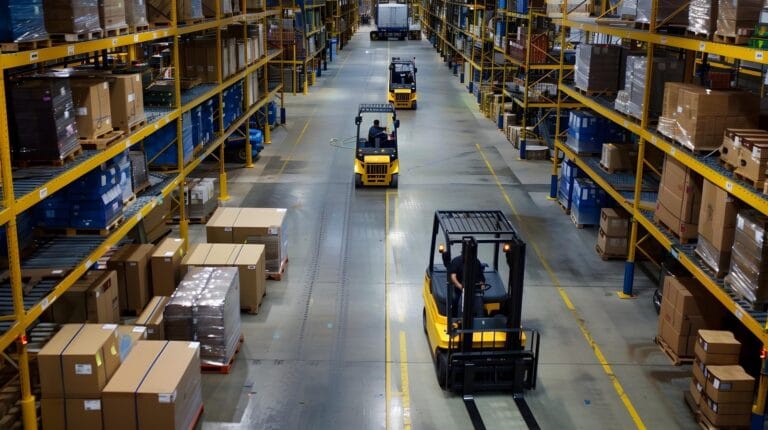
Ready-built factories (RBF) and ready-built warehouses (RBW) are the fastest-growing industrial property formats in 2026. RBF reduces speed-to-market from 18+ months to 3-6 months. Net land absorption reached approximately 7,180 hectares in 2025, reflecting ongoing manufacturing expansion. Vietnam remains the top-tier China-Plus-One destination, competitive labour costs, FTA coverage, geographic proximity to Chinese supply chains, and political stability make it the preferred dual-location manufacturing hub in Southeast Asia.
Vietnam’s FTA Network and China-Plus-One Positioning
Sixteen implemented FTAs provide a structural trade advantage that regional competitors cannot easily replicate. For UK companies post-Brexit, UKVFTA creates preferential access making Vietnam a competitive manufacturing base for goods destined for both Asian and European markets. Registered FDI of USD 33.7 billion in 2025 confirms Vietnam as the primary beneficiary of China-Plus-One capital reallocation. For institutional investors and private equity assessing Southeast Asian exposure, Vietnam’s supply chain positioning is a durable structural advantage.
Risks and Headwinds to Monitor
Trade Dependency and Tariff Exposure
Vietnam’s ~170% trade-to-GDP ratio creates vulnerability to external demand shocks, particularly US tariff policy shifts. Export growth remains concentrated among foreign-invested enterprises, limiting domestic linkage effects on the broader economy.
Labour Cost Inflation
Labour costs are rising. High-tech ambitions require significant human capital investment to match infrastructure development pace. Businesses entering Vietnam in 2026 should plan for increasing automation investment to maintain long-term cost competitiveness.
How to Enter Vietnam as a Foreign Investor in 2026
Foreign investors register through a wholly foreign-owned enterprise (WFOE) or joint venture structure. Most manufacturing and technology activities allow 100% foreign ownership. The investment registration process runs through the Department of Planning and Investment (DPI). Industrial zone location selection is critical given ongoing provincial restructuring. Ready-built factory options significantly reduce setup time. Viettonkin’s Vietnam FDI advisory services provide end-to-end support covering investment strategy, company formation, industrial zone selection, and compliance management.
Frequently Asked Questions
What Is Vietnam’s GDP Growth Forecast for 2026?
The government targets ~10% growth. The World Bank projects 6.8%. Independent economists forecast 8-10%, reflecting strong 2025 momentum and the expected FDI rebound from Resolution 68.
Why Is Vietnam a Top FDI Destination in Asia?
Vietnam combines high GDP growth, 16 FTAs covering 60% of global GDP, competitive manufacturing costs, political stability, and a 100-million-strong population. Disbursed FDI hit a record USD 27-38 billion in 2025.
What Is Resolution 68 and How Does It Affect Foreign Investors?
Resolution 68 introduces CIT exemptions of up to 2 years, 50% CIT reductions for 4 subsequent years, PIT exemptions for innovative sector experts, and mandatory industrial land access for high-tech firms and SMEs.
What Are Vietnam’s Priority Investment Sectors in 2026?
Semiconductors, electronics manufacturing, digital infrastructure, data centres, and industrial logistics, all aligned with the 2026-2030 Socio-Economic Development Strategy’s high-tech industrialisation goals.
How Does the Provincial Merger Affect FDI Location Strategy?
The 63-to-34 consolidation is reassigning industrial zone jurisdictions and creating larger provincial hubs. Investors should conduct updated location analysis before committing capital, as some licences require reissuance.