
By the end of 2025, 780 buildings across Vietnam held green certification, covering 18.69 million square metres of floor area. In that year alone, 196 new buildings were certified, a 20 per cent increase on 2024, adding 4.4 million square metres of certified space. The country entered the global top 10 LEED markets, ranked eighth with 2.6 million square metres of Leadership in Energy and Environmental Design-certified space across 100 projects. Two years earlier it ranked 28th. That rate of acceleration does not emerge from market forces alone, it is the product of a policy-driven national transition that has created a green real estate landscape unlike anything else in Southeast Asia, and a well-timed opportunity for Australian sustainability firms.
Vietnam Green Real Estate: Legal Regulation, the Construction Framework, and Market Growth
The green building market in Vietnam was valued at USD 3.85 billion in 2024 and is projected to reach USD 8.89 billion by 2032, growing at a compound annual growth rate of 10.99 per cent. That growth is underpinned by three converging forces: tightening legal regulation, rising corporate demand for certified space from multinational tenants with ESG reporting requirements, and a government construction programme that increasingly requires sustainability compliance as a condition of project approval.
The Ministry of Construction administers the country’s green building legal framework, which rests on two primary instruments. The National Technical Regulation on Energy Efficiency Buildings (QCVN 09) sets mandatory energy performance standards for all civil construction with a gross floor area of 2,500 square metres or larger, covering offices, hotels, hospitals, and apartment buildings. Compliance is a condition of the construction permit. The amended Law on Construction, effective July 1, 2026, strengthens this, incorporating sustainability principles across all construction activities and requiring use of local, recyclable, and energy-efficient building materials. Decree 30/2026/ND-CP establishes a Fund for Promoting Energy Saving and Efficiency and formalises energy audit obligations for key facilities. Together, these instruments create a legal regulation environment that makes professional green building advisory commercially valuable at every stage of the development green project lifecycle.
LEED, LOTUS, EDGE, and Green Mark: Design Construction Criteria, Performance Standards, and the Rating System
Four green building rating systems operate concurrently in Vietnam, each targeting a different construction segment and design priority. EDGE, from the IFC/World Bank, holds the largest share of the certified pipeline at 38.4 per cent, recognised for its cost-efficient pathway across residential and mid-market construction. LEED (Leadership in Energy and Environmental Design) holds 37.3 per cent, concentrated in premium commercial and mixed-use construction where international tenants require globally recognised certification. Green Mark (Singapore BCA) holds 18.5 per cent, while LOTUS, from the Vietnam Green Building Council, holds 5.9 per cent, carrying significance for government and institutional buildings where alignment with national design construction standards is a regulatory requirement.
Each rating system evaluates buildings against shared performance criteria: energy consumption and efficiency, water use and conservation, indoor air quality, use of natural light and ventilation, building material sourcing and embodied carbon, transport accessibility for occupants, and operational management practices. LEED’s energy environmental design criterion framework is the most internationally recognised; LOTUS’s criterion set is the most locally calibrated to Vietnamese legal regulation. The key issue for any project team is identifying which rating system to target, and ensuring the design and construction process is structured from the outset to meet the relevant performance threshold. For Australian sustainability consultants entering the market, the ability to evaluate a client’s project against multiple green building rating systems simultaneously is a significant competitive advantage.
Green Office Buildings, Material Efficiency, and Natural Resource Standards
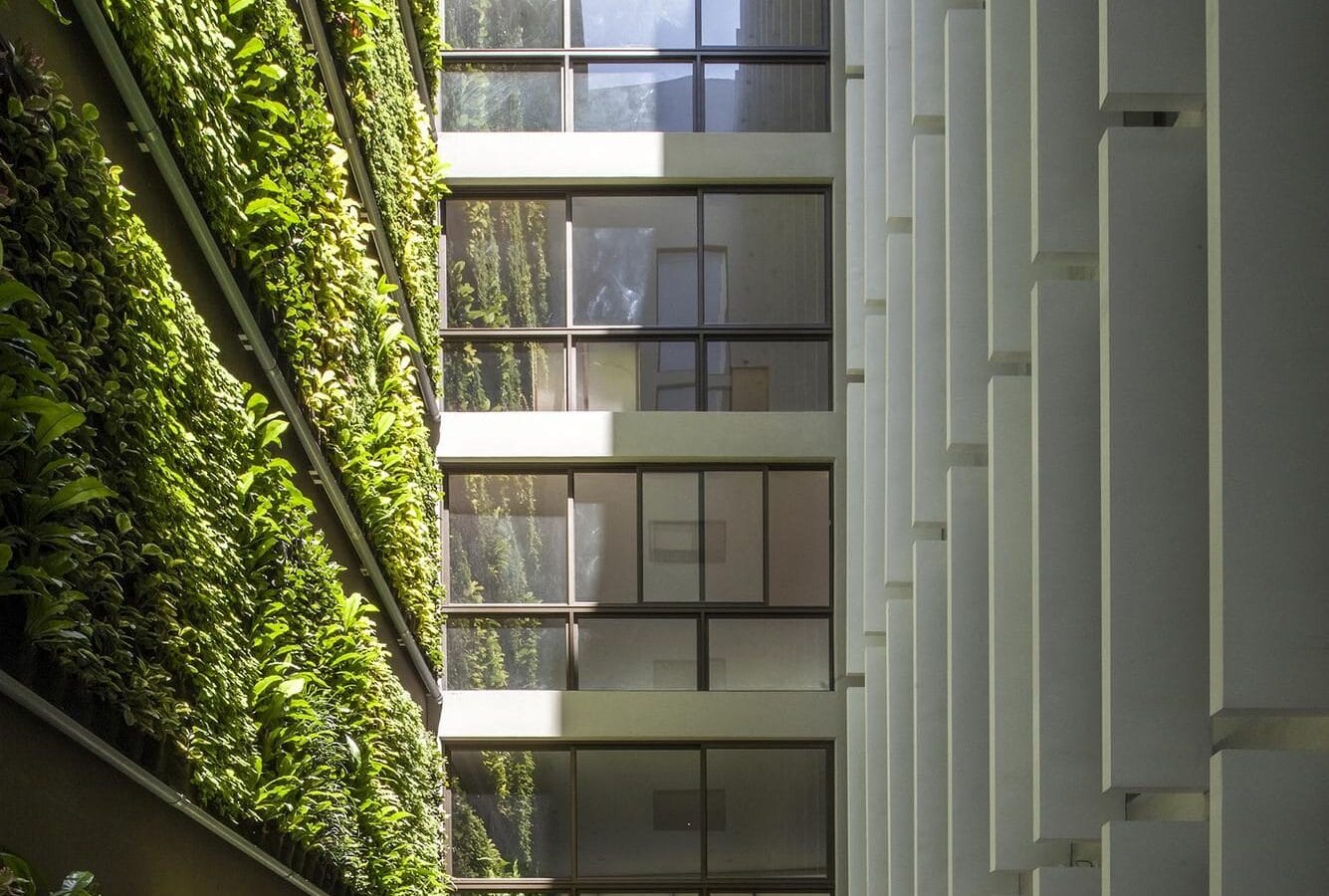
Green office buildings represent the largest certified sub-segment by floor area in the Vietnamese market, driven by demand from financial institutions, technology firms, and manufacturing tenants with group-level ESG obligations. The Ministry of Construction’s design standards for green office buildings specify minimum performance thresholds across air quality, natural light penetration, water recycling, and building material recyclability, standards that go beyond the mandatory energy code and require specialist advisory to meet.
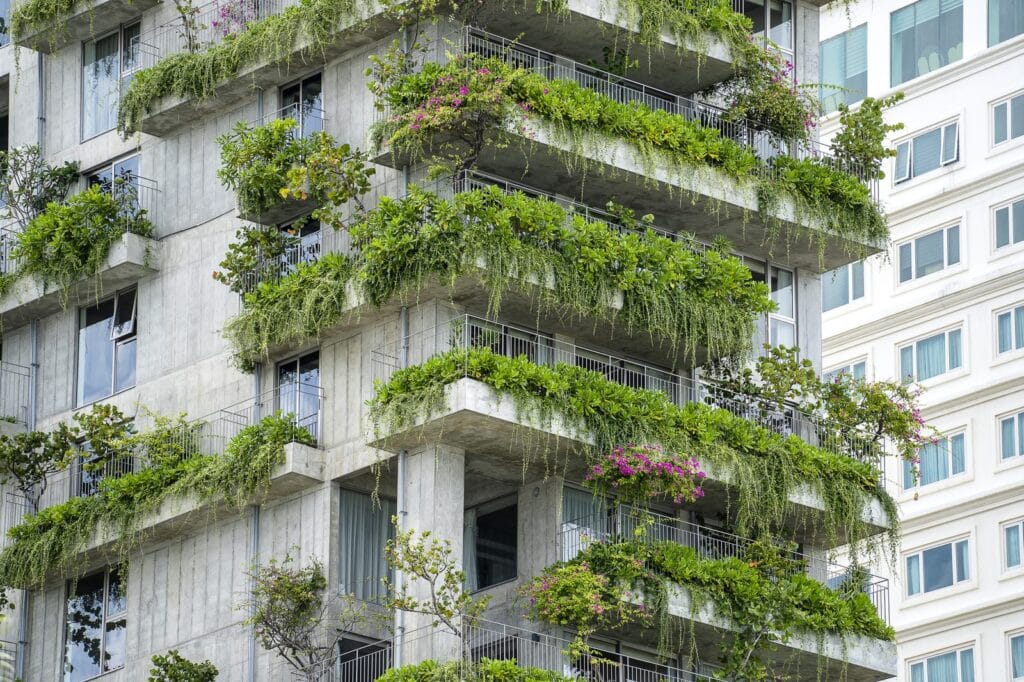
Material selection is a critical tool in building green offices and other certified structures. Low-embodied-carbon building material choices reduce construction-phase carbon emission, support local supply chains, and ensure projects meet green certification criterion requirements from the ground up. Natural ventilation design, water-efficient fixtures, and transport-oriented site selection all reduce a building’s operational carbon profile. What makes a green building green, and what keeps it green through its operational life, is the combination of these resource efficiency measures evaluated systematically across each criterion in the applicable rating system.
Reducing Gas Emissions and Climate Change: Vietnam’s Net-Zero JETP, NDC, and 2050 Roadmap
Construction and building operation together account for a significant share of national greenhouse gas emission. Reducing that emission at the design, build, and operational stage of the building lifecycle is not an optional sustainability practice, it is a defined criterion of Vietnam’s national climate strategy and a legal regulation obligation under the amended Law on Construction.
Vietnam’s net-zero 2050 target, announced at COP26 in November 2021, is backed by three policy instruments that reduce climate change risk and create clear investment signals. The Just Energy Transition Partnership (JETP) mobilises USD 15.5 billion in public and private finance over three to five years, targeting a reduction in peak power sector gas emission from 240 to 170 megatons of CO₂ by 2030. Vietnam’s updated NDC commits to cutting total emissions by up to 43.5 per cent by 2030 with international support. The Green Classification System (Decision 21/2025/QD-TTg, operative 2026) standardises the definition of green projects and directly links green building certification to green finance access and government incentive programmes, a tool that ensures certified construction attracts the low-cost capital it needs to be viable at scale.
Together these instruments set a clear policy direction: reduce gas emission across all sectors, with construction and energy transition leading the process.
Solar, Wind, and Transport: Low-Carbon Solutions, Tools, and the 2030 Renewable Energy Process
Power Development Plan 8 operationalises the net-zero roadmap at the infrastructure level. The revised plan targets combined solar capacity of 46,459 MW by 2030, making solar the single largest power source in the national grid, and mandates that 50 per cent of office buildings incorporate self-generation rooftop solar, a provision that creates direct service demand for solar integration design, energy management tools, and commissioning specialists.
Onshore and nearshore wind is targeted at 26,066–38,029 MW; offshore wind at 17,032 MW. Transport infrastructure is an often-underestimated dimension of the low-carbon solution set: metro line expansion, bus rapid transit, and transport-oriented siting of new green building precincts all reduce occupant-related emission. For Australian clean energy engineering firms, the PDP8 pipeline represents a solution toolkit spanning wind assessment, solar integration, grid management, transport planning, and energy storage, each a discrete service opportunity with identifiable clients and defined procurement processes.
ESG Tools, Green Finance Solutions, and Incentive Benefits for Investors in 2026
Vietnam’s green finance environment transformed materially in 2026. The Green Classification System gives businesses and investors a standardised, government-endorsed tool to verify whether a construction or infrastructure project qualifies as green for financing purposes. Outstanding green credit reached approximately VND 680 trillion (USD 24.9 billion) by mid-2024, representing 4.5 per cent of total bank lending, a resource pool that continues to grow as 80–90 per cent of commercial banks have adopted ESG criteria in some form.
Green bond issuance increased by 171 per cent in 2024. The Ministry of Finance is piloting green government bond issuance from 2026 to raise capital for national infrastructure. A pilot carbon trading platform launched in 2025. The incentive framework for green office building and sustainable construction is strengthening: the amended Law on Construction and Decree 30/2026 include financing incentives for buildings that meet certified green performance standards, directly reducing the effective cost of building green and improving the return on certification. Resource efficiency obligations also ensure that certified buildings command rental premiums from ESG-committed corporate tenants, a commercial benefit that investors can include in their project return modelling. Eighty-nine per cent of Vietnamese businesses have made or plan to make a formal ESG commitment, ensuring that occupier-side demand for green real estate will continue to increase.
How Australia’s Sustainability Expertise Meets Vietnam’s Green Building and Construction Needs
Australia’s bilateral commitment to Vietnam’s sustainability transition is the most substantive of any country outside the JETP partners. The AUD 105 million support package, including AUD 75 million channelled through Export Finance Australia and VPBank for sustainable infrastructure, the Future of Electricity–Vietnam (FE-V) programme, and the Vietnam–Australia Green Transition Forum 2026 (Ho Chi Minh City, April 2026) together provide the institutional framework through which Australian sustainability expertise reaches the country’s green building and construction sector.
The Climateworks Centre’s Green Economy Academy trained 28 Australian businesses as green economy ambassadors, firms spanning energy efficiency, carbon services, and sustainable design and construction. These companies represent best practice in the disciplines that Vietnam’s green building and net-zero infrastructure market needs: performance commissioning, green material specification, energy management operation, and low-carbon building construction. The CPTPP trade agreement provides investment protection and services trade access that allows Australian firms to offer these capabilities into Vietnam on commercially competitive terms, with legal regulation protection that non-signatory competitors cannot access.
Entry routes include direct technical advisory contracts with developers seeking LEED, EDGE, or LOTUS certification; joint ventures for solar integration and energy management tools across large construction projects; green finance advisory supporting Vietnam’s expanding green bond and carbon credit market; and direct infrastructure investment via private equity vehicles and the VIFC. Each route benefits from a bilateral policy environment designed to ensure Australian sustainability expertise reaches Vietnam efficiently, and from a certified green building sector growing at 10.99 per cent a year with no structural reason to slow before 2032.
Contact Viettonkin for further consulting on Vietnam green building market entry, LEED and LOTUS certification advisory, JETP-aligned net-zero infrastructure opportunities, ESG investment structuring, and bilateral sustainability partnership frameworks for Australian firms.