
Two structural forces are shaping Vietnam’s economy in 2026: a government-led infrastructure programme spanning transport, energy, and digital connectivity, and a technology sector that shipped over US$165 billion in electronics in 2025, more than 35% of total outbound trade. Together these explain Vietnam’s high-growth 8.02% Vietnam GDP in 2025, one of Asia’s strongest results, and why the World Bank projects 6.8% growth in 2026 against a government target of 10%. These are not parallel stories but one transformation viewed from different angles, and understanding their interaction separates a surface-level outlook from an investment-grade assessment.
Macro Position in 2026
From Assembly Hub to High-Value Economy
Vietnam’s GDP reached US$514 billion in 2025, lifting per-capita income to US$5,026 and confirming reclassification as an upper-middle-income economy. FDI inflow disbursements hit a record US$38.4 billion, with manufacturing and processing accounting for nearly 60 percent of newly registered capital, evidence that global corporations are committing for the long term.
The China Plus One strategy remains the structural tailwind, drawing capital from the United States, South Korea, Japan, China, Singapore, and Taiwan. Dezan Shira & Associates’ Asia Manufacturing Index 2026 ranks Vietnam among Asia’s top three manufacturing hubs across economy, political risk, trade, tax policy, and infrastructure. Vietnam’s total trade reached US$930 billion in 2025, a rise of 18.2%, pushing its trade-to-GDP ratio toward 170%.
The 10% Growth Target: Ambition and Reality
Vietnam’s 10% GDP growth target for 2026 is the most ambitious macroeconomic goal in a generation. The gap against a 6.8% projection reflects strong economic momentum, export performance, record FDI, and rapid restructuring, viewed through different assumptions. UOB revised its forecast upward from 7% to 7.5%, citing resilient trade and sustained FDI inflow despite tariff uncertainty, including US duties averaging 15.3% on Vietnamese goods. Whether the outcome lands at 7%, 8%, or beyond, for long-term investors trajectory matters more than the precise quarterly figure.
Force One: Infrastructure Investment
Scale, Policy, and the Legislative Accord
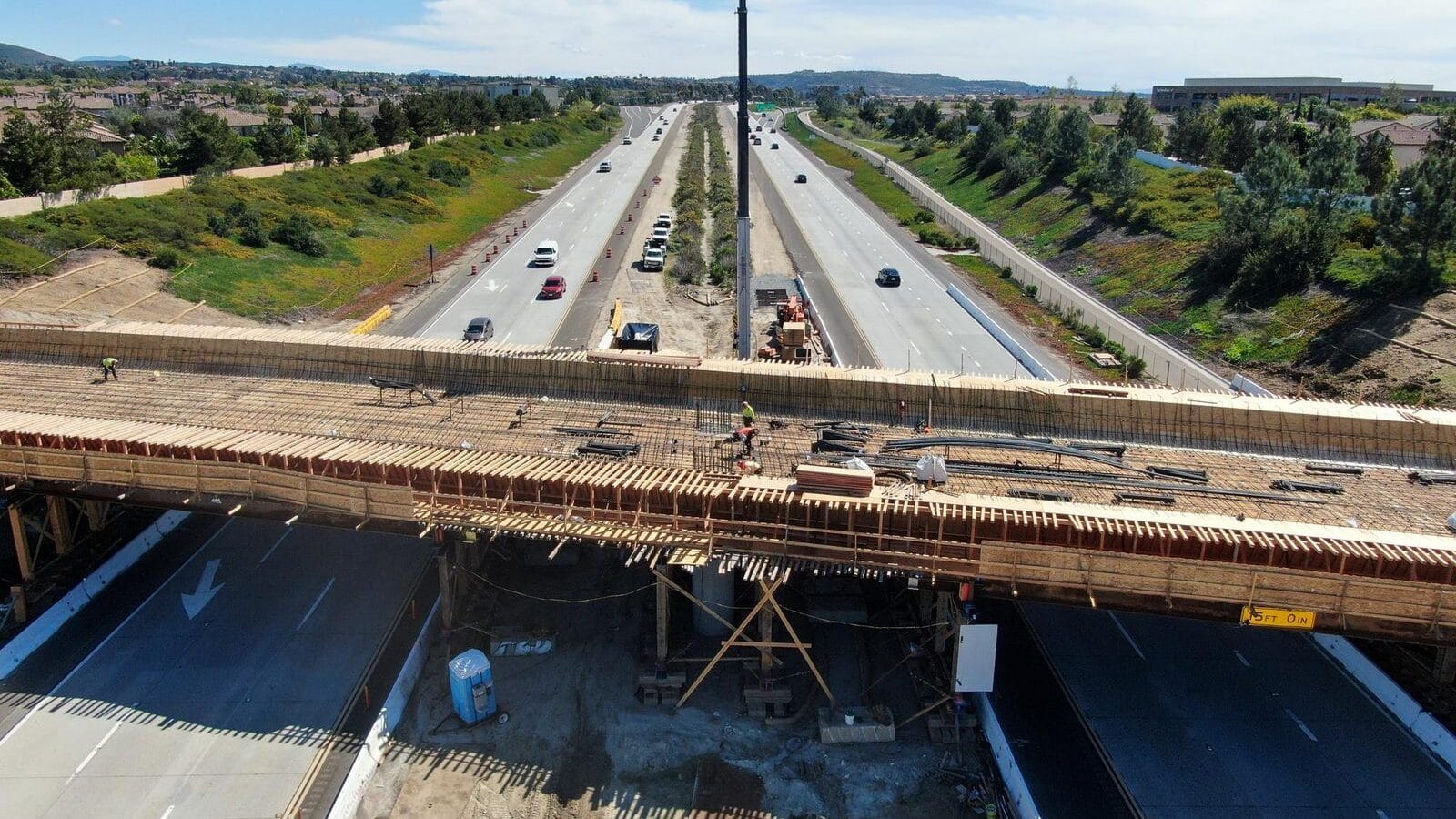
Vietnam launched more than 564 infrastructure investment projects in 2025, totalling VND 5.14 trillion, with the majority funded by private capital, a shift from public investment that signals a maturing environment. Politburo Resolution 79-NQ/TW formalised state-owned enterprises as the pioneering force behind new energy, transport, and digital infrastructure. This policy accord continues to reinforce Vietnam’s institutional investment environment.
The National Assembly passed 51 laws and 39 resolutions in its 10th session, including the Investment Law, VAT Law, and Personal Income Tax Law, the most substantial rewrite of the economic legal framework in years, reducing political risk. The FTSE Russell emerging-market upgrade is opening public markets to pension and sovereign wealth fund capital for the first time.
Transport: The North-South Spine
The North-South High Speed Railway connecting Hanoi and Ho Chi Minh City is the most transformative commitment in the infrastructure programme, cutting transit times, unlocking industrial development, and reinforcing Vietnam’s position as a manufacturing hub. An expressway programme is closing the connectivity gap between northern clusters and Cai Mep-Thi Vai, while Long Thanh Airport and expansions at Noi Bai and Tan Son Nhat reinforce international connectivity.
Ports, Energy, and Digital Infrastructure
At Cai Mep-Thi Vai, port expansion is benefiting from maritime traffic redirected following Red Sea shipping disruptions tied to the Middle East conflict, an east conflict development that has strengthened the commercial case for deep-water capacity and driven fresh seaport investment in 2026. In energy, offshore wind and LNG projects including Nhon Trach 3 and 4 reduce fossil-fuel dependence while meeting the power demands electronics manufacturing and data centres generate. In digital infrastructure, capital continues to flow into cloud and data centres as Vietnam’s digital economy scales toward US$8 billion, with domestic demand for digital services adding a further layer of growth alongside export-led channels.

Force Two: Technology Exports
Electronics as the Dominant Export Engine
Electronics is the clearest driver of Vietnam’s outbound growth. Computers and components generated US$107.7 billion in 2025, up 48.4% year-on-year per the General Statistics Office report, while phones and components added US$56.7 billion; combined, the categories exceeded US$164 billion, cementing status as the second-largest smartphone supplier to the US. In Q1 2026, electronics shipments grew more than 40% year-on-year, with phone shipments up 23.1 percent, a quarterly increase that underscores continuing sector momentum.
Electronics overtook garments as the leading US-bound category for the first time in 2025, a report-confirmed outcome rather than a forecast. Northern Vietnam drives this: Samsung’s Bac Ninh and Thai Nguyen facilities, Intel’s Ho Chi Minh City operations, and Foxconn and Pegatron’s Hai Phong bases form one of Asia’s most concentrated electronics clusters. FDI enterprises account for roughly 98 percent of shipments, high volumes that underscore the need to deepen domestic supply chain linkages and broaden enterprise participation long term.
Manufacturing Growth and the Semiconductor Ambition
Manufacturing growth continues to be anchored by electronics, but Vietnam’s semiconductor strategy is now the key driver of longer-term positioning, targeting 50,000 trained engineers by 2030 through university chip-design programmes and incentives targeting Japan, South Korea, and the United States. The high-value-chain upgrade is substantive: Vietnam’s production is shifting from final assembly toward printed circuit boards, sensors, optical components, and integrated circuit packaging. High-tech projects qualify for up to 15 years of corporate income tax reduction under Decree 57/2021/NĐ-CP, supporting continued enterprise investment in advanced production.
Trade Agreements as Export Amplifiers
Vietnam’s network of 17 free trade agreements provides an export amplifier few peers can match. CPTPP and RCEP grant preferential tariff access to the US, EU, Japan, South Korea, and ASEAN simultaneously, a multi-market accord no comparable manufacturing economy in Southeast Asia has replicated at scale. Five years after the EVFTA entered force, bilateral trade with the EU reached US$300 billion, making Vietnam the EU’s top ASEAN trading partner. FTA utilisation ranks among the top five markets for Japanese businesses, above 50%, durable positioning for export-oriented capital.
How the Two Forces Interact
Infrastructure investment and technology export growth are causally linked. The Cai Mep expansion cuts transit times for components from South Korea and Japan and goods bound for the US and EU. The North-South expressway lowers logistics costs linking Hanoi’s electronics cluster to Ho Chi Minh City’s ports. Offshore wind and LNG supply the power semiconductor facilities demand, while digital infrastructure attracts R&D centres and cloud operations forming the value chain’s next layer. For long-term institutional investors, the two exposures are complementary, together reinforcing Vietnam’s positioning in global supply chains.
Risks and Structural Challenges
Talent, Energy, and Trade Exposure
A credible 2026 assessment requires weighing three structural constraints. First, talent: nearly 47% of electronics employers report difficulty finding skilled workers, and the semiconductor programme will not reach its 2030 target for several years, a near-term bottleneck constraining high-value manufacturing growth. Second, energy: grid capacity in northern clusters faces demand pressure that infrastructure spending has not fully resolved, leaving power reliability a live risk. Third, trade exposure: with trade-to-GDP near 170%, sensitivity to trading-partner policy is structural. The current 15.3% US tariff rate is manageable within the FTA network, but further escalation remains a material risk to export forecasts and manufacturing growth projections.
Conclusion: Vietnam in 2026
Two Forces, One Transformation
A conclusion on Vietnam in 2026 must acknowledge what the data confirm: this is not simply a Vietnam growth story, it is a restructuring of Vietnam’s position in the global economy on multiple fronts simultaneously. Infrastructure builds the platform on which technology export growth depends; tech exports generate the FDI inflows and industrial sophistication that justify further infrastructure commitment, reinforcing Vietnam’s standing as the primary China Plus One beneficiary in Southeast Asia.
The strong economic foundations now in place, Resolution 79 for infrastructure deployment, Resolution 68 to support enterprise expansion, FTSE Russell classification, and the semiconductor strategy, represent a durable economy accord between state policy and private capital that makes the long-term case more compelling than at any point since the Doi Moi reform era. Investors who read infrastructure investment and technology exports as two expressions of one transformation are best positioned to identify where durable value continues to be created.
Frequently Asked Questions
What is driving Vietnam’s economic growth in 2026?
A large-scale infrastructure programme spanning transport, energy, and digital connectivity, paired with a technology sector that shipped over US$165 billion in electronics in 2025. Strong economic policy support and record FDI inflow continue to reinforce both drivers.
How large are Vietnam’s technology and electronics exports?
Computers and components generated US$107.7 billion and phones US$56.7 billion in 2025 per General Statistics Office data, exceeding 35 percent of total export value, and overtaking garments as the top US-bound category for the first time.
What infrastructure projects is Vietnam investing in?
The North-South High Speed Railway, Cai Mep-Thi Vai port expansion, Long Thanh Airport, LNG plants at Nhon Trach, offshore wind, and a national digital infrastructure programme, more than 564 projects launched in 2025 alone.
Is Vietnam a good investment destination in 2026?
Vietnam ranks among Asia’s top three manufacturing hubs per the Asia Manufacturing Index 2026, backed by record FDI, 17 free trade agreements, and 8.02% Vietnam GDP growth in 2025. The World Bank projects 6.8% growth in 2026, with talent, energy capacity, and trade-policy sensitivity remaining the primary risks.
What is Vietnam’s semiconductor strategy?
Vietnam’s semiconductor strategy targets 50,000 trained engineers by 2030 through university programmes and FDI incentives, continuing the shift from assembly toward printed circuit boards, sensors, and IC packaging, supported by up to 15 years of corporate income tax reduction for qualifying enterprises.