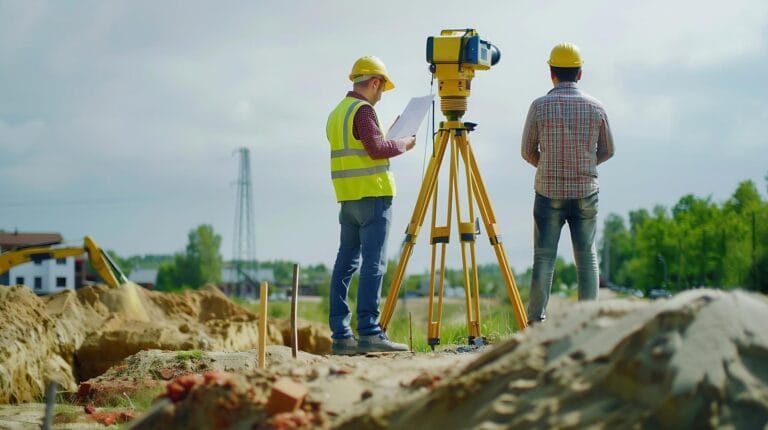

Many beginners fail to obtain a construction permit in Thailand because they fundamentally misunderstand the legal process and documentation requirements, which are governed by Thai law. The reality of building in a foreign land can be harsh if you are unprepared. You might face projects being halted by authorities, significant project delays, or even heavy financial penalties. Constructing without a valid construction permit in Thailand can lead to severe penalties, including fines up to 60,000 THB and potential imprisonment for up to three months. Obtaining a valid construction permit is crucial to avoid these legal issues. This article serves as the most practical step by step guide for beginners. We will cover the essential process, required documents, common mistakes, and the specific strategies you need to get your approval quickly.
Understanding Construction Permit Thailand Basics Before You Apply
What is a construction permit and why it is legally required for building construction
A construction permit is an official authorization granted by the relevant government department, such as the Department of Public Works or local authority, that allows you to start a building project on your land. Legally known as a building permit, it ensures that your structure meets safety and environmental standards. For beginners, it is vital to understand that this permit is mandatory for new builds, major renovations, and even demolition. If you attempt to build without it, the local OrBorTor or municipality will likely issue a stop work order, leaving your investment in a state of legal limbo. The permit ensures your project is in accordance with Thai law and safety standards.
Building regulations in Thailand that every beginner must understand before starting
Before you even sketch a design, you must grasp the foundational building regulations in Thailand, especially those concerning building height and total floor area, which are key regulatory factors. These laws dictate zoning restrictions, maximum building heights, total floor area limits, and specific setback requirements – the distances between your building and the land boundaries. Residential buildings are subject to specific rules regarding these aspects. Detailed requirements are set out in ministerial regulations, which provide precise criteria for construction permits. Zoning regulations in Thailand dictate permissible land use, including the types of buildings that can be constructed in specific areas, as outlined in the Ministerial Regulations under the Town Planning Act B.E. 2518 (1975). Before purchasing or renting land in Thailand, it is essential to check the zoning regulations to ensure that the intended construction project complies with local laws and permissible uses. Construction must comply with local zoning regulations regarding building height, environmental restrictions, and required distances from roads or neighbors. Data shows that a majority of projects fail during the initial review because they violate local zoning laws. Each province may have unique rules, so what works in Bangkok might be illegal in Phuket or Koh Samui.
When a building permit is required and when it is not for small projects
There is often confusion regarding small projects. While minor renovations such as painting, changing floor tiles, or basic repairs usually do not require a formal permit, a building modification permit may be required for certain types of modifications, especially those involving structural changes. Some minor changes may be exempt, but any structural change such as adding a room, moving a load bearing wall, or changing the roof structure is considered a major renovation and requires a permit. Understanding this distinction early prevents you from wasting time on unnecessary paperwork or, conversely, building illegally.
Types of building construction permits based on project size and purpose
The permit process changes significantly depending on whether you are building a private villa, a commercial shop, or an industrial warehouse. Obtaining the appropriate permission from the relevant department, such as the Department of Public Works or the Land Department, is required for all construction projects. A private residential home usually follows a more straightforward path compared to commercial buildings, which require stricter fire safety and accessibility compliance. For public or large buildings, structural safety plans and fire safety systems are mandatory. The type of permit you apply for will directly dictate the complexity of the approval process and the level of scrutiny from the local authorities.
Step by Step Process to Get a Construction Permit in Thailand for First Time Builders
Step 1 Verify your land title deed before any permit application
The foundation of any construction permit application is the land title deed, which must be verified by the land office as they are responsible for confirming land ownership and property rights. In Thailand, the Chanote or Title Deed No. 4 is the highest form of property ownership and is most preferred for construction permits. Other titles like Nor Sor 3 Gor may allow building but involve more steps. The location of the property is crucial, as it determines which regulations and authorities, such as the relevant land office and municipal bodies, apply to your permit application. Beginners often find this to be a bottleneck because if the land title is not clear or if the property is not properly subdivided, the municipality will reject the application immediately. Always verify your land legality and property documentation first.
Step 2 Prepare a compliant building plan that meets Thai building regulations
Once the land is verified, you must create a building plan. This is not just a simple drawing. The plan must be a technical blueprint prepared in accordance with applicable Thai laws and regulations, including compliance with safety and environmental standards regarding the choice of materials. It must be created and signed by a licensed architect and a certified engineer. Most revisions and rejections stem from initial design errors where the architect failed to account for Thai specific setbacks or structural safety codes. Your plan must be technically perfect before it reaches the government desk.
Step 3 Submit your permit application to the local authority correctly
With your blueprints and land documents ready, you must submit your construction permit application to the local municipality office or the OrBorTor. This is the local government organization responsible for your specific district. Obtaining the necessary permission, such as land use and building permission, is a key part of the process. You will need to fill out the standard Thai application forms and attach all technical drawings and ownership documents. Ensuring everything is organized in the exact format required by that specific office is key to a smooth submission.
Step 4 Review process and how long it takes in reality versus theory
While the law might suggest a shorter timeframe, the realistic timeline for permit approval in Thailand usually ranges from 30 to 120 days. This depends on the complexity of the building and the current workload of the local department, such as the Department of Public Works. During the review, a site inspection may be conducted by the department to verify that the actual site conditions match the submitted plans. Officers may ask for multiple clarifications, small changes to the blueprints, or, if any additional requirements are identified, further documentation. Do not expect an overnight approval; patience and constant follow ups are part of the process until the construction permit is formally granted by the relevant department.
Step 5 Receiving full permit approval and starting building construction legally
Once the review is complete, you will receive your valid construction permit. Commencing construction is only legal after you have obtained this permit. The permit and approved plans must be kept at the construction site for inspection by authorities. It is critical that you do not move a single shovel of dirt before this document is in your hand. Starting early can lead to the permanent revocation of your permit and legal action against both the owner and the contractor. If construction is carried out without a permit, local authorities may order the demolition of the unauthorized structure, resulting in significant financial loss. Building without a permit can also result in daily fines of up to 10,000 THB until the issue is resolved, compounding the financial consequences of non-compliance.
Documents and Requirements for Building Permit Approval in Thailand
Complete checklist of documents for building permit required for beginners
To avoid multiple trips to the government office, you should have a complete checklist ready for your building construction permit application. Essential documents include the original land title deed, a full set of signed building plans, the ID and house registration of the land owner, and the professional license copies of your Thai architect and engineer. If the land is owned by a company or other juristic person, you will also need the company registration documents and the authorized directors’ signatures, as additional documentation may be required for juristic persons.
Environmental regulations and how they affect your construction permit
Thailand has strict environmental regulations, especially in coastal areas or near national parks. For larger projects or projects in sensitive zones, certain types of projects require a full Environmental Impact Assessment (EIA), while others may only need to submit an Initial Environmental Examination. The Department of Industrial Works may be involved for certain types of industrial projects, ensuring compliance with environmental standards. While most small private villas avoid the full EIA, you must still comply with local environmental laws regarding waste water management and soil erosion.
Common compliance mistakes that cause permit rejection and how to avoid them
Compliance with applicable laws and building control regulations is essential to avoid rejection of your construction permit application. The most frequent mistakes include designing buildings that are too close to the neighbor’s wall or the public road, violating setback rules that are strictly enforced under building control ordinances. Another common error is submitting incomplete engineer certifications for the structural integrity of the building. Beginners should use a validation checklist to ensure that every single page of the blueprint is signed by the appropriate professional before submission.
Hidden requirements that most beginners overlook during permit application
There are often hidden requirements that are not explicitly stated in the basic guides. For example, you must prove that your site has adequate road access for emergency vehicles and a proper drainage plan that does not flood neighboring properties. Obtaining the necessary permission for road access and drainage is required, and failure to do so can result in permit denial. Compliance with local regulations is essential for these aspects, as it helps avoid delays, penalties, and legal issues during the construction permit process. If your land does not have a formal entrance from a public road, your permit might be denied regardless of how beautiful your building design is.
Practical Tips to Get Your Construction Permit Approved Faster and Avoid Delays
Why working with licensed professionals increases approval success rate significantly
The fastest way to get a permit is to hire a Thai architect and engineer who have a history of working with your local municipality. These professionals understand the specific preferences and local interpretations of the building code. When a project is designed by a local expert, it is often seen as more credible, leading to a much higher and faster approval rate compared to designs imported from abroad.
How to reduce delays in building permit approval process as a beginner
To minimize delays, you should request a pre check of your documents. Many local offices are willing to take a quick look at your plans before you officially submit them. This allows you to fix major errors early. Remember this transformative insight: speed approval is about preparation not submission. If you submit a perfect folder, the officer has no reason to delay your project.
Realistic timeline and cost expectations for construction permit thailand
The costs for the permit itself are usually quite low, often just a few thousand Baht based on the square meterage of the building. However, the real costs lie in the professional fees for the architects and engineers who must sign the documents. Budgeting for these professional fees and allowing at least three to four months for the entire process will save you from financial stress and project management headaches.
Final checklist before submitting your building permit application
Before you head to the municipality office, run through this quick checklist. Are the land titles original and up to date? Has the architect signed every page? Do you have the structural engineer’s calculations? Is your drainage plan included? Having a tidy, professional, and complete application package is the final step to ensuring your dream home in Thailand starts on the right legal footing.
Conclusion
Navigating the construction permit process in Thailand does not have to be a nightmare if you approach it with the right information. The process is straightforward when you respect Thai law, adhere to local regulations, and follow the step by step requirements. Foreigners cannot own land in Thailand directly, but they can build on someone else’s land through leasehold agreements or superficies rights, which grant the right to use and own buildings on the land for a specified period. A building permit can be issued in a foreigner’s name, allowing ownership of the building constructed on leased land. Foreigners must comply with Thai law and local regulations, and may need to work with local partners or representatives to navigate the permit process. Success depends on three pillars: perfect documentation, strict compliance with zoning rules, and a proactive strategy. Use the checklists provided in this article and consult with local professionals to ensure your project stays on track. Now that you understand the process, take the first step and verify your land title today to turn your construction vision into a legal reality.
You might also like: Thailand EEC 2026: Infrastructure Developments Every Foreign Investor Should Understand