
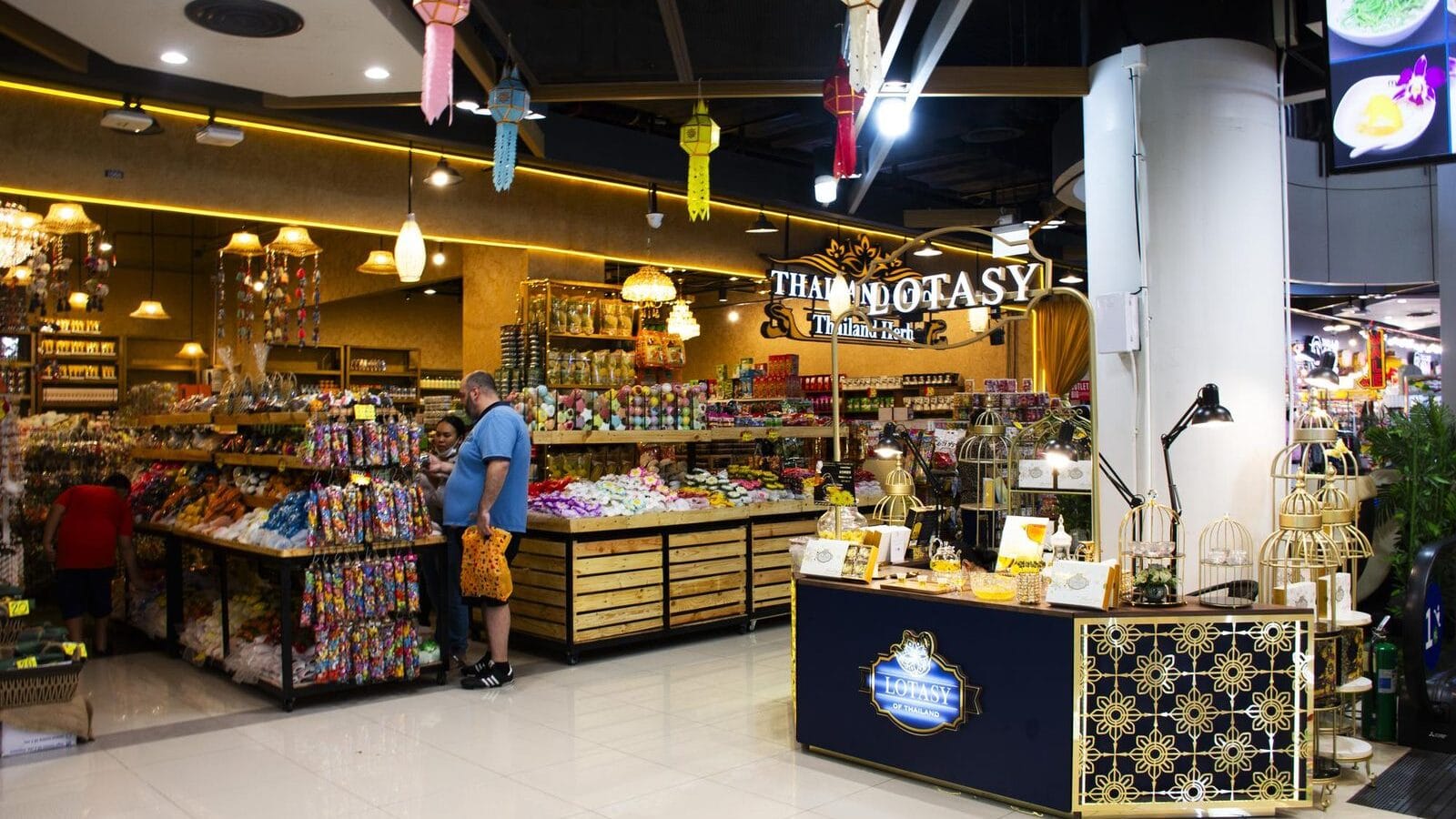

Thailand’s retail market is projected to reach USD 150 billion, growing at 6.9% CAGR through 2033. The country combines Southeast Asia’s most developed modern trade industry with one of the region’s fastest-growing social commerce ecosystems.
The Thailand retail market offers foreign brands a rare combination: a 70-million-person consumer economy with high digital connectivity, a mature offline retail infrastructure, and a tourism sector that adds seasonal demand spikes across key shopping districts. However, Thailand retail market entry is not a purely commercial exercise. The Foreign Business Act (FBA) restricts foreign retail ownership through a layered regulatory framework. Brands that treat entry strategy as logistics-only often encounter legal obstacles too late.
This playbook covers distribution channel strategy, regulatory pathways, product localisation, and omnichannel execution for consumer brands entering the Thai market.
Why Thailand Is a Priority Market for Consumer Brands
A 70-Million-Person Consumer Economy
Thailand’s economic fundamentals support sustained retail sale growth. The country has a large and increasingly affluent middle class. Consumer demand is rising across food and beverage, personal care, fashion, beauty, and lifestyle categories. Thai consumers allocate approximately 40% of total expenditure to food and drink, the largest retail sector by value.
Bangkok hosts some of Southeast Asia’s largest shopping complexes. Resort cities including Phuket, Pattaya, and Chiang Mai add year-round tourism-driven retail demand. Foreign tourist arrivals reached 13.74 million in 2024, up 18% year-on-year. Chinese tourists account for over one-third of total foreign tourist shopping expenditure, providing a significant demand layer for consumer brands in the beauty, fashion, and lifestyle categories.
E-Commerce and Social Commerce Growth
Thailand’s e-commerce revenue is projected to reach THB 910 billion by 2026. Average daily screen time exceeds 8 hours across a population of mobile-first digital consumers.
TikTok Shop has experienced exponential growth in fashion, beauty, and lifestyle segments through short video and live-selling formats. This shift in consumer behaviour makes social commerce a viable primary channel for Thailand retail market entry, not merely a supplement to traditional retailing.
Thai customer behaviour reflects a distinctive pattern: price-conscious yet brand-aware. Consumers research extensively before purchasing and rely heavily on creator recommendations, reviews, and social proof. Verified market research consistently shows that brand trust is built through platform presence and creator endorsement rather than traditional advertising alone.
Thailand’s Distribution Channel Landscape
Modern Trade: Hypermarkets, Supermarkets, and Department Stores
Modern trade remains the backbone of the Thailand retail market for consumer goods distribution. Key major player groups include Lotus’s (formerly Tesco Lotus), Big C, Makro (wholesale), Central Group and Robinson (department stores), and The Mall Group.
The modern trade industry is growing at 5.0-5.5% annually through 2026. These channels serve as the primary distribution pathway for FMCG, grocery, personal care, household goods, and food and beverage brands seeking national coverage.
Central Group, Thailand’s largest retailer, operates department stores, shopping centres, and online platforms across the country. The group’s competitive advantage lies in its integrated offline and online retailing model, combining physical store experience with digital commerce infrastructure.
Convenience Stores: The 7-Eleven Factor
Thailand’s convenience store channel is uniquely dominant in the competitive landscape. 7-Eleven operates over 14,000 stores, the highest density in the world outside Japan. Family Mart, CJ Express, and Lawson 108 provide additional coverage across both urban and provincial areas.
For FMCG, snack, beverage, and ready-to-eat brands, convenience store listing is often the single most impactful distribution milestone. Getting listed with a major convenience retailer requires specific packaging formats, trade terms, and promotional support commitments. The convenience channel is not merely a retail touchpoint, it functions as a logistics network, a marketing platform, and a customer acquisition channel simultaneously.
E-Commerce and Social Commerce Platforms
Shopee and Lazada provide volume and national reach across all consumer categories. TikTok Shop drives discovery and conversion through live-selling, short-form video, and creator-led marketing campaigns, particularly effective for beauty, fashion, and lifestyle brands. LINE Shopping attracts loyal customers through localised campaigns and direct merchant chat integration. Central Online and niche verticals such as Konvy (beauty) serve the premium and mid-to-high-income customer segment.
Each platform requires distinct content strategy, pricing architecture, and marketing investment. Market analysis of platform-specific consumer demand patterns is essential before committing resources.
Traditional Trade and Offline Retail
Traditional trade, wet markets, grocery stores, and independent offline retailers, still accounts for a significant share of FMCG retail sale volume outside Bangkok. This channel is fragmented and requires distributor partnerships for effective coverage.
For consumer brands with long term growth ambitions in provincial Thailand, traditional trade cannot be ignored. Local distributors with established retailer relationships and regional logistics capabilities are the practical pathway into this channel.

Regulatory Framework: Foreign Business Act and BOI Promotion
FBA List Three Restrictions for Retail
Retail trade sits on List Three of the Foreign Business Act (FBA B.E. 2542). A company with 50% or more non-Thai shareholding is classified as a foreign business and normally requires a Foreign Business Licence (FBL) to sell directly to consumers.
Government policy under the FBA reflects a strategic approach to balancing foreign market access with domestic industry protection. The FBL application process involves review by the Department of Business Development and typically takes 60-90 days.
Capital Threshold Exemption
The most practical entry strategy for most international consumer brands involves the capital-based exemption. A company meeting the required capital threshold takes retail out of the restricted category entirely, no FBL required.
This pathway provides the most predictable and time-efficient route for Thailand retail market entry. The capital must be registered and maintained, but the exemption removes the licensing dependency that otherwise creates uncertainty for foreign brand expansion planning.
BOI Promotion and Treaty Protections
The Board of Investment (BOI) promotes selected trade-related and distribution activities. A BOI-promoted company structure grants ownership and operational privileges that standard FBA-restricted retail does not provide.
Treaty protections offer additional pathways based on investor nationality. The US Treaty of Amity, Japan-Thailand Economic Partnership Agreement, Australia-Thailand Free Trade Agreement, and ASEAN framework agreements may grant preferential treatment. Each pathway carries specific conditions, brands should map these against their ownership and product strategy early in the market entry planning process.
Product Localisation for the Thai Market
Thai FDA Registration
Food, cosmetics, supplements, and health products require Thai FDA registration before retail sale. Registration timelines and documentation requirements vary by product category. Brands that begin FDA registration before securing distribution partnerships avoid a common 3-6 month bottleneck that delays market entry.
Packaging, Labelling, and Pricing Strategy
Mandatory Thai-language labelling applies to all consumer products sold in the country. Packaging formats must align with channel requirements, particularly convenience store shelf dimensions and modern trade planogram specifications.
Thai consumers are price-sensitive. Imported premium brands require distinct positioning and cannot compete on price alone against strong local incumbents. Market research into category pricing, competitive landscape dynamics, and customer willingness-to-pay is essential before finalising the pricing architecture.
Omnichannel Expansion Strategy
Phase 1: E-Commerce and Social Commerce Entry
Consumer brands entering the Thai market should begin with marketplace and social commerce presence. Testing product-market fit through Shopee, Lazada, or TikTok Shop generates consumer data, builds brand awareness, and validates demand at lower risk than immediate modern trade entry. Creator-led marketing and live-selling campaigns drive initial customer acquisition and tracking of early performance metrics.
Phase 2: Convenience and Modern Trade Distribution
Once e-commerce validates consumer demand, brands can approach convenience and modern trade channels with proven retail sale data. Thai retail buyers respond to demonstrated market traction. Distributor partnerships, working with established Thai distributors who hold relationships with 7-Eleven, Big C, Central Group, and Lotus’s, are the practical pathway for foreign brands entering offline retailing without existing trade relationships.
Phase 3: Omnichannel Integration
Long term competitive advantage in the Thailand retail market requires integration of online and offline channels. This includes unified inventory management, digital payment integration (PromptPay, TrueMoney, mobile wallet), and consistent pricing across marketplace, social commerce, and physical store touchpoints. Brands that provide a seamless customer experience across all channels build stronger loyalty and higher lifetime value.
Challenges and Risk Factors
Established Local Competition
Thailand’s retail sector is dominated by well-capitalised domestic conglomerates. Central Group, CP ALL (7-Eleven), TCC Group/Big C, Berli Jucker (BJC), Siam Piwat, and The Mall Group are major player incumbents with decades of market intelligence, supply chain infrastructure, and customer relationships.
Foreign brands entering without local partner networks, distributor relationships, or differentiated positioning face significant competitive risk from these established groups.
Regulatory and Tariff Complexity
The average MFN applied tariff rate stands at 10.2%, with agricultural products facing 29.3%. Approximately 30% of tariff lines are duty-free. Brands must map tariff classification and FDA registration requirements early, these directly affect landed cost, pricing strategy, and long term margin viability.
Government policy change regarding foreign business restrictions, export regulations, and consumer protection standards can shift the competitive landscape. Ongoing regulatory tracking is essential for brands with multi-year Thailand market entry commitments.
How Viettonkin Supports Thailand Retail Market Entry
For consumer brands navigating FBA compliance, BOI promotion, distribution channel strategy, and product localisation in Thailand, cross-border advisory expertise reduces risk and accelerates market entry timelines. Viettonkin’s ASEAN market entry services provide strategic support covering regulatory navigation, distributor identification, and corporate structure planning for consumer brands expanding across Southeast Asia.
Frequently Asked Questions
Can Foreign Brands Sell Directly to Consumers in Thailand?
Retail trade is restricted under the Foreign Business Act. Foreign-majority companies must obtain a Foreign Business Licence or meet capital threshold exemptions. BOI promotion and treaty protections offer additional entry pathways depending on investor nationality.
What Is the FBA Capital Threshold for Retail?
Companies meeting the specified capital threshold take retail out of the restricted category without requiring a Foreign Business Licence. This capital-based exemption is the most common entry strategy for international consumer brands.
Which E-Commerce Platforms Are Best for Entering Thailand?
Shopee and Lazada provide volume reach. TikTok Shop drives discovery through live-selling and creator marketing. LINE Shopping offers localised loyalty campaigns. Platform selection should align with product category, target customer segment, and brand positioning strategy.
Do Consumer Products Need Thai FDA Registration?
Food, cosmetics, supplements, and health products require FDA registration before retail sale in Thailand. Registration timelines vary by category. Early initiation avoids delays in distribution channel onboarding.
How Long Does Thailand Retail Market Entry Take?
Timeline depends on the entry strategy selected. E-commerce entry can launch within 4-8 weeks. FBA licensing or BOI promotion typically adds 2-4 months. Modern trade distribution partnerships require 3-6 months of negotiation and onboarding after regulatory setup is complete.