
Capital commitment
The investment has cleared the Pre-FS go/no-go threshold and is moving toward capital commitment, board approval, or funding application.
BEFORE YOU COMMIT CAPITAL
Turn an investment concept into a detailed decision and implementation plan, with financial modelling and on-the-ground assessment.
Define the evidence you need for the next investment decision, then connect research, financial assumptions and implementation requirements in one study.
Vietnam recorded an estimated USD 27.62 billion in disbursed foreign direct investment in 2025, up 9 percent year on year, according to the National Statistics Office. That national total provides context, but an individual investment still depends on its demand, location, cost structure and regulatory pathway.
For U.S., EU, and Asian investors, the questions that remain are specific: Is Vietnam the right market for this particular project? What legal and operational constraints will we face? What is the expected ROI and risk profile? How should the company structure its market entry for the best result? A Pre-Feasibility Study tells you whether the investment concept is worth pursuing. A Feasibility Study tells you exactly how to pursue it.
At this stage, an investor needs to test the project at the level where commitments will be made: site selection, entity structure, funding, employment, environmental obligations and capital expenditure. A positive initial screen is a starting hypothesis, not a conclusion that the full study must defend. Primary research and financial modelling can confirm the proposal, identify conditions for proceeding, or show that it should be redesigned or stopped. The study should expose inconsistencies before they become embedded in leases, financing arrangements or implementation schedules.
Viettonkin's Feasibility Study practice combines financial modelling with on-the-ground research, stakeholder engagement and legal and regulatory analysis. The work connects the investment case to the practical requirements of implementation. At scoping, we agree who will use the study, what evidence they need, and which specialist reports or submission requirements must be addressed separately.

Pre-Feasibility and full Feasibility Studies answer different questions and can be commissioned separately or in sequence. Pre-FS screens the investment concept and its critical assumptions. A full FS adds the depth needed for a specific investment decision, including a detailed model and agreed primary research. The appropriate starting point depends on the evidence already available and the decisions still unresolved.
Swipe across to compare both studies.
| Your decision | Pre-Feasibility Study | Full Feasibility Study |
|---|---|---|
| Recommendation | Directional recommendation with conditions and unresolved questions | Detailed viability assessment and implementation options |
| Financial detail | Conceptual capital, operating-cost and break-even estimates | A project-specific financial model, typically covering 5 to 10 years as scoped |
| Research | Desk research plus targeted validation where agreed | Primary research, site assessment and stakeholder interviews as scoped |
| Location | Comparative location or country screening | Site-specific assessment of shortlisted options |
| Regulatory scope | Initial regulatory pathway and key dependencies | Detailed regulatory roadmap and separately scoped submission support |
| Planning range | Indicative planning range: 2 to 4 weeks, subject to agreed scope | Indicative planning range: 6 to 12 weeks, subject to agreed scope |
| Intended use | Internal screening and investment prioritisation | Board and financing review, with recipient requirements agreed in advance |
When a Pre-FS has returned a positive go decision, the Feasibility Study is the natural next step. When an investor is entering a high-capital, regulated, or technically complex sector, such as manufacturing, energy, infrastructure, healthcare or financial services, and the investment quantum justifies the depth of analysis, a Full FS may be the appropriate starting point even without a prior Pre-FS.
When the next decision calls for deeper evidence.
The investment has cleared the Pre-FS go/no-go threshold and is moving toward capital commitment, board approval, or funding application.
The project needs a detailed investment proposal or supporting analysis for an approval process. The relevant authority, project category and current rules determine the required dossier; the name of this advisory service does not make its report a statutory submission.
External financing is involved: lender due diligence, development finance institution requirements, or equity investors requiring an investor-grade financial model.
The sector involves significant capital expenditure, technical complexity, or environmental obligations requiring on-the-ground validation, not desk-research estimates.
The investor needs a comprehensive, site-specific implementation plan, structured by phase with cost schedules and regulatory milestones, to begin project execution.
A Market Research engagement or Pre-Feasibility Study is the appropriate starting point if the directional question has not yet been answered: whether Vietnam is the right market and whether the investment concept has merit.
Viettonkin differentiates its Feasibility Study practice by combining three analytical layers, and by applying them through a structured, on-the-ground delivery process rather than as a desk exercise.
PESTLE: the external forces shaping your investment.
Layer 1: Macro Environment (PESTLE). This layer covers the political, economic, social, technological, legal, and environmental factors that could affect the investment: state-business relations and trade agreements; GDP growth, inflation, and tax incentives; demographics and consumer trends; digital-economy readiness; investment law and foreign ownership rules; ESG commitments and climate resilience.
Porter's models: competitiveness, national advantage and the value chain.
Layer 2: Industry & National Advantage (Porter's Models). Five Forces analysis assesses industry-level competitiveness in sectors such as manufacturing, logistics, digital, and renewable energy, covering new entrants, supplier/buyer power, substitutes and rivalry. The Diamond Model assesses Vietnam's national advantage through factor conditions, demand, supporting industries, and government role. Value Chain mapping assesses operational feasibility across inbound logistics, operations, marketing, service, and support activities.
Seven connected perspectives on operating in Vietnam.
Layer 3: Viettonkin's FDI Intelligence Lens. Legal & Policy, Accounting/Tax/Financial, HR & Labor, Market, Cultural & Linguistic, Digital & Analytics, and ESG & Sustainability Intelligence form the same seven-area lens used in Viettonkin's Pre-Feasibility Study, applied here with full analytical depth.
Agree the decision, boundaries and assumptions to test.
A structured scoping session defines the investment concept, research boundaries, key assumptions, and the specific questions the study must answer. This prevents the common failure mode of a broad study that produces volume without decision relevance. We identify the regulatory approval pathway, data sources, and stakeholders (government authorities, zone officials, sector experts, potential partners) for the primary research phase.
Build the evidence base and financial model framework.
Structured desk research across government data, industry statistics, regulatory filings, and market databases, applying the PESTLE and Porter layers above. In parallel, we build the financial model framework, covering key assumptions, revenue and cost drivers, and scenario parameters, so primary research findings integrate directly as they're gathered, rather than being tacked on at the end.
Validate locations, costs and operating assumptions on the ground.
This is where a Viettonkin Feasibility Study creates material differentiation from a desk-research study: in-person site visits to candidate locations, direct meetings with industrial zone authorities and provincial officials, supplier and distributor interviews to validate cost and availability assumptions, and access to industry expertise not available through secondary sources. For 17 years, Viettonkin has built the in-market relationships that make primary research in Vietnam substantive rather than ceremonial.
Stress-test the investment case and review the recommendation.
Findings from the research phases are synthesised into the full financial model and analytical narrative. We stress-test assumptions, review regulatory risks against the implementation plan, and produce a structured position on viability, critical risks, and recommended path forward. The final report is reviewed with the client in a presentation session with full Q&A before delivery.
Scope is calibrated to the specific investment concept, sector, and regulatory pathway. A full-scope engagement typically covers:
Select an area to see the full scope.Detailed investment structure and entity analysis covers legal vehicle selection with full ownership analysis, the IRC/ERC pathway, conditional sector approvals, and shareholder structure documentation.
Site evaluation and on-site field assessment cover shortlisted site visits, industrial zone and provincial comparison on infrastructure, utilities, logistics, labour, land lease rates, and zone authority engagement.
The full financial model covers a 5 to 10 year P&L, capital expenditure schedule, working capital model, revenue and cost assumptions, break-even analysis, IRR, NPV, and payback period under base, optimistic, and stress-test scenarios.
Tax and incentive analysis covers the applicable corporate income tax regime and preferential periods, import tariff treatment, VAT structure, land rental incentives, and applicable special economic zone benefits.
Technical and operational assessment covers capacity, equipment, input sourcing, utilities and infrastructure needs. Environmental constraints are screened and the need for specialist environmental or engineering work is identified. Any formal assessment, technical design or statutory report must be expressly included with the appropriate expertise and review requirements.
Labour and HR planning covers provincial labour market analysis, workforce availability and skill profile, salary benchmarking, organisational structure, and a Vietnamese labour law compliance framework.
The regulatory roadmap and authority engagement plan sets out the complete permitting pathway, including IRC, ERC, construction permits, fire safety, environment, food safety, or sector licences as applicable, with issuing authorities, sequence, and indicative timelines.
The risk identification and mitigation framework maps regulatory, commercial, operational, geopolitical, and supply chain risks against likelihood and impact, with mitigation measures for each material risk category.
The implementation plan sets out a phased project timeline from regulatory submission through construction or setup to commercial operations, with milestones, critical path, and resource requirements.
The core deliverables are a Feasibility Study Report in PDF and/or PowerPoint and an agreed financial model workbook. The package is structured for the intended decision-makers. If a lender, investor or authority will rely on it, their evidence, format and specialist-review requirements are confirmed at the start; acceptance and financing remain their decisions.
Executive Summary with investment recommendation and key parameters
Investment structure and regulatory pathway analysis
Site selection matrix and on-site evaluation findings
Full 5 to 10 year financial model with scenario analysis
Tax incentive and cost structure summary
Technical and operational assessment
Labour market and HR planning section
Risk register with mitigation framework
Phased implementation roadmap with milestones
Annexes: regulatory checklists, site visit records, interview summaries, financial model workbook.
Where scope requires, Viettonkin can extend the engagement into the project implementation phase: investment registration, IRC and ERC submission, authority engagement, and ongoing regulatory compliance management.
A clear entry strategy provides a data-driven roadmap for market entry. Risk reduction comes from proactive identification and mitigation of legal, financial, and operational risk. Financial viability assessment uses documented assumptions and scenario analysis to test potential returns, funding needs and downside exposure. Projections support judgement; they are not guaranteed results.
Research, modelling and implementation requirements, considered together.
Integrated legal, financial and operational assessment connects the proposed business model with the practical requirements of implementation. The engagement defines who owns each workstream, how findings enter the financial model, and which specialist inputs are needed. This reduces the risk of a site assumption, licensing dependency or workforce estimate being analysed in isolation.
On-the-ground primary research can include site visits, discussions with zone representatives and expert interviews. The research plan defines the questions to validate and records the basis of the evidence. A quotation, an interview estimate and an official requirement should be identified as different kinds of input, with their dates and limitations retained.
Integrated analytical frameworks. PESTLE, Porter's models, and Viettonkin's FDI Intelligence lens applied together, not as a checklist exercise but embedded in the four-phase delivery process above.
Regulatory planning connects the proposed activity, ownership, location and implementation schedule. Findings that affect the financial model are carried into the regulatory roadmap, while unresolved questions remain visible for follow-up before a filing or capital commitment.
From study to implementation, Viettonkin can extend the engagement into investment registration and setup where agreed. The handover carries forward the model assumptions, research findings, open issues and implementation milestones. The scope, team responsibilities and required approvals are confirmed before the next phase begins.
The following documented engagement illustrates relevant research capability. It is described under its original market-research scope, without relabelling it as a completed Pre-FS or full FS.
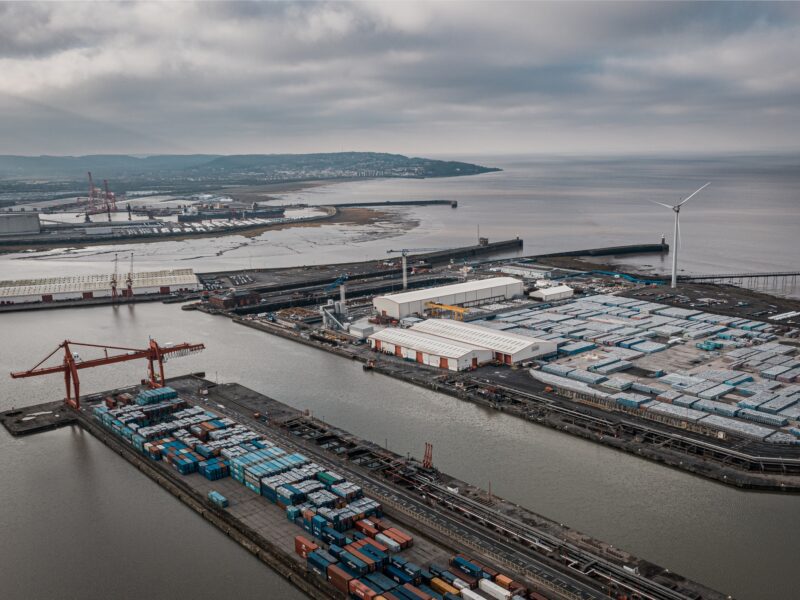
Vietnam · Market research
Viettonkin researched three shortlisted industrial zones in Hai Phong and Quang Ninh, comparing infrastructure, rental and utility costs, labour availability and logistics. The engagement also examined raw-material availability, local suppliers and export-related considerations.
Read the original case studyPractical answers for planning your investment study.
Start with the decision and evidence already available. A comparative screen or initial investment test may be enough for the next decision. Detailed site, funding and implementation questions can justify a full FS directly. The scoping discussion identifies the work required rather than prescribing a mandatory sequence.
No. It supports an investment decision with documented evidence, assumptions and recommendations. A lender or authority applies its own requirements. Statutory technical, environmental or other specialist reports are identified and scoped separately where needed.
The draft planning ranges are 2 to 4 weeks for a Pre-FS and 6 to 12 weeks for a full FS. The agreed schedule depends on the number of markets or sites, data readiness, interviews, field access and the required model depth. Timing is confirmed for the engagement.
Share the proposed activity, target customers, investment range, candidate locations, operating model and decision deadline. Existing market research, internal financial assumptions and any lender or board requirements help define the scope. Identify which inputs are established facts and which still need validation.
Tell us what you plan to invest in, which decisions remain open and who will use the findings. We will confirm the research scope, deliverables and next steps.