
Tier 01
Country still undecided?
ASEAN Regional Screening
For investors who have not yet selected a country and want a comparative view across Southeast Asian markets before narrowing down.
A comparative view of markets and industries.Explore tier 1
BEFORE YOU COMMIT CAPITAL
Compare ASEAN markets or validate a specific Vietnam investment concept before committing capital.
Choose ASEAN Regional Screening when the country is undecided, or Vietnam Investment Validation when you need to test the project itself.
Investors reach pre-feasibility at two different decisions. Some are still comparing Southeast Asian markets; others have selected Vietnam and need to test a particular investment concept. These require different evidence and different recommendations. Viettonkin offers two tiers that can be commissioned separately or in sequence, so the research starts with the decision the investor actually needs to make.
Country still undecided?
For investors who have not yet selected a country and want a comparative view across Southeast Asian markets before narrowing down.
Vietnam already selected?
For investors who have already identified Vietnam as the target market and need to validate whether a specific investment concept is commercially and operationally viable, and on what terms.
Investors who have already selected Vietnam can enter directly at Tier 2. Tier 1 is a preceding option for those comparing countries, and its shortlist provides a basis for a country-specific next step. If another market is selected, the scope and delivery arrangements for further validation are agreed separately. Neither tier requires a client to purchase the other.

Vietnam recorded an estimated USD 27.62 billion in disbursed foreign direct investment in 2025, up 9 percent year on year, according to the National Statistics Office. That national total provides context, but an individual investment still depends on its demand, location, cost structure and regulatory pathway.
View the source ↗A regional screen for investors evaluating Southeast Asia as a whole before committing to a country. It enables decision-makers to:
Screen ASEAN as a whole to identify macro-trends and opportunities
Compare the advantages of individual countries head-to-head
Identify high-potential industries for entry
Shortlist the most promising markets for a deeper, country-specific Feasibility Study.
Identify regional risks and opportunities.
A PESTLE analysis of ASEAN's political, economic, social, technological, legal, and environmental factors, identifying macro risks and region-wide opportunities.
Compare candidate markets using consistent criteria.
Benchmark candidate ASEAN markets, including Vietnam, Thailand, Indonesia and others as scoped, across a consistent set of criteria, producing a comparative investment-competitiveness matrix.
Assess competitiveness in shortlisted sectors.
Apply Porter's Five Forces to assess industry-level competitiveness within the shortlisted countries, identifying the most attractive sectors for the client's business.
Turn the findings into a country and industry shortlist.
A Go/No-Go recommendation and a final shortlist of countries and industries aligned to the investor's objectives.
Tier 2 focuses on a specific Vietnam investment concept. It uses market evidence alongside financial, operational and regulatory analysis to test whether that concept is viable and under what conditions. Selecting the country does not predetermine the answer: the recommendation may be to proceed, revise the proposal, gather further evidence or stop.
The project still needs to prove its viability.
The decisions a Tier 2 study informs concern capital allocation: the initial commitment, location options, entry structure, potential incentives and the operating-cost assumptions before a lease or hiring plan is finalised. Assessing these together makes dependencies visible. A low-cost location may require additional logistics investment, while an attractive incentive may depend on conditions the proposed project does not meet.
Viettonkin's Pre-Feasibility practice combines structured financial and regulatory analysis with targeted on-the-ground assessment where agreed. The research boundaries follow the proposed investment, including its sector, candidate provinces, industrial zones and operating requirements. Fieldwork is proportionate to the screening decision; a full site-specific validation programme can be scoped in a subsequent Feasibility Study.
A Vietnam Investment Validation engagement is the right fit when you are asking:
Should we establish our own entity, or enter through a local partner or distributor?
How much capital do we need to commit, and what does the ramp-up cost structure look like?
Which province, industrial zone, or location best fits our operational requirements and cost targets?
What tax incentives, land rental subsidies, or investment support programmes are available for our sector?
What are the material legal, regulatory, and operational risks, and how do we mitigate them?
If you are still asking whether Vietnam (or ASEAN generally) is the right region, start with Tier 1 or a standalone Market Research engagement. Tier 2 assumes the country decision has been made and focuses on how to execute the investment soundly.
Scope is calibrated to the specific investment concept. A typical engagement covers:
Select an area to see the full scope.Investment structure options compare ownership arrangements, the proposed legal vehicle and entry routes such as a local partner or distributor. Wholly foreign-owned and joint-venture structures must be assessed against the proposed activities. A representative office is assessed for its permitted functions rather than treated as interchangeable with a revenue-generating operating company.
Location and site evaluation compares industrial zones and provinces across infrastructure quality, land rental rates, labour availability and cost, proximity to ports and suppliers, and zone-specific incentive packages.
Capital and cost modelling estimates setup cost, working capital requirements, operating cost structure, and breakeven parameters based on the client's proposed business model.
The tax and incentive landscape covers applicable corporate income tax rates and preferential periods, import tariff treatment for equipment and materials, VAT implications, and sector- or zone-specific incentive programmes.
Supply chain and logistics assessment covers the availability of key inputs, the supplier ecosystem in the target region, logistics infrastructure, and import/export cost modelling.
Legal and regulatory risk mapping covers licensing requirements, sector-specific conditions on foreign ownership, environmental assessment obligations, and labour law compliance parameters.
The preliminary go/no-go recommendation gives a structured view on whether the investment concept is viable as proposed, what conditions would improve viability, and what the critical path to implementation looks like.
The primary deliverable is a Pre-Feasibility Report in PDF and/or PowerPoint format, structured for senior leadership review and board-level decision-making. Depending on scope, it includes:
Executive Summary with go/no-go recommendation and key parameters
Investment structure analysis with recommended entry route
Location comparison matrix across evaluated sites or zones
Cost model and capital requirement estimate
Incentive and tax benefit summary
Risk register with mitigation recommendations
Preliminary implementation roadmap and indicative timeline.
Where scope requires it, Viettonkin can extend the engagement into a full Feasibility Study covering detailed financial modelling, site visits, authority engagement, and partner identification, or directly into investment registration and incorporation.
Both tiers draw on the same underlying analytical lens, organised into seven areas of intelligence that Viettonkin applies across market screening, investment validation, and full feasibility work:
laws, regulations, trade agreements, and FDI incentives
tax regimes, financial flows, and capital costs
workforce demographics, productivity, and wage competitiveness
demand drivers, industry growth, and customer behaviour
local business culture, negotiation styles, and branding considerations
digital economy maturity, Industry 4.0 adoption, and innovation ecosystems
climate commitments, environmental regulations, and green FDI opportunities.
The following documented engagement illustrates relevant research capability. It is described under its original market-research scope, without relabelling it as a completed Pre-FS or full FS.
Vietnam · Market research
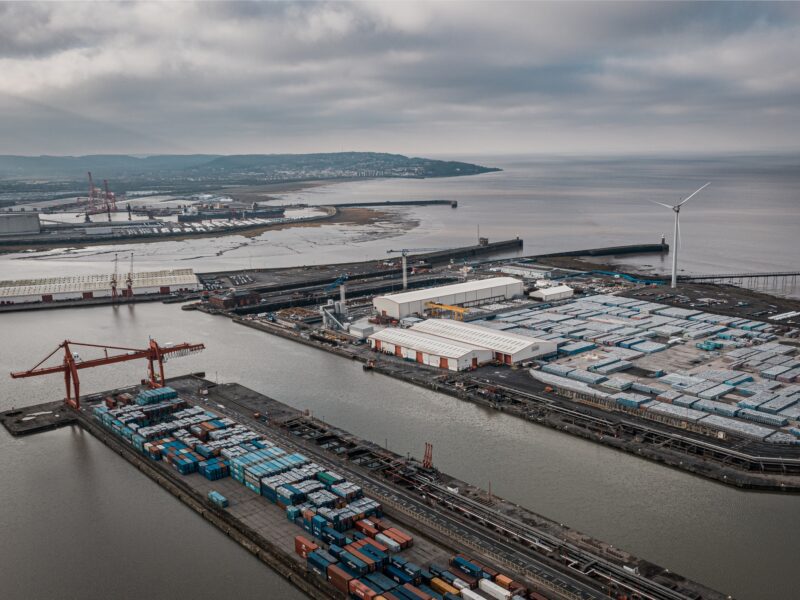
Viettonkin researched three shortlisted industrial zones in Hai Phong and Quang Ninh, comparing infrastructure, rental and utility costs, labour availability and logistics. The engagement also examined raw-material availability, local suppliers and export-related considerations.
Read the original case studyPractical answers for planning your investment study.
Start with the decision and evidence already available. A comparative screen or initial investment test may be enough for the next decision. Detailed site, funding and implementation questions can justify a full FS directly. The scoping discussion identifies the work required rather than prescribing a mandatory sequence.
No. It supports an investment decision with documented evidence, assumptions and recommendations. A lender or authority applies its own requirements. Statutory technical, environmental or other specialist reports are identified and scoped separately where needed.
The draft planning ranges are 2 to 4 weeks for a Pre-FS and 6 to 12 weeks for a full FS. The agreed schedule depends on the number of markets or sites, data readiness, interviews, field access and the required model depth. Timing is confirmed for the engagement.
Share the proposed activity, target customers, investment range, candidate locations, operating model and decision deadline. Existing market research, internal financial assumptions and any lender or board requirements help define the scope. Identify which inputs are established facts and which still need validation.
Tell us what you plan to invest in, which decisions remain open and who will use the findings. We will confirm the research scope, deliverables and next steps.