


Malaysia is entering a pivotal period in its economic and environmental development. Rising electricity demand, industrial expansion, climate commitments, and changing investor expectations are reshaping how the country produces and consumes power. For business leaders, investors, and sustainability professionals, understanding the malaysia energy transition means looking beyond emissions reduction to examine competitiveness, infrastructure, financing, and long-term growth.
The National Energy Transition Roadmap published by Malaysia’s Ministry of Economy in August 2023 provides a national framework for this transformation. It connects decarbonisation objectives with investment opportunities, technological development, and industrial modernisation. However, achieving its ambitions will depend on more than policy announcements. Effective implementation, reliable infrastructure, and cooperation between government and industry will determine whether Malaysia can turn its plans into measurable results.
Understanding Malaysia’s National Energy Transition Roadmap
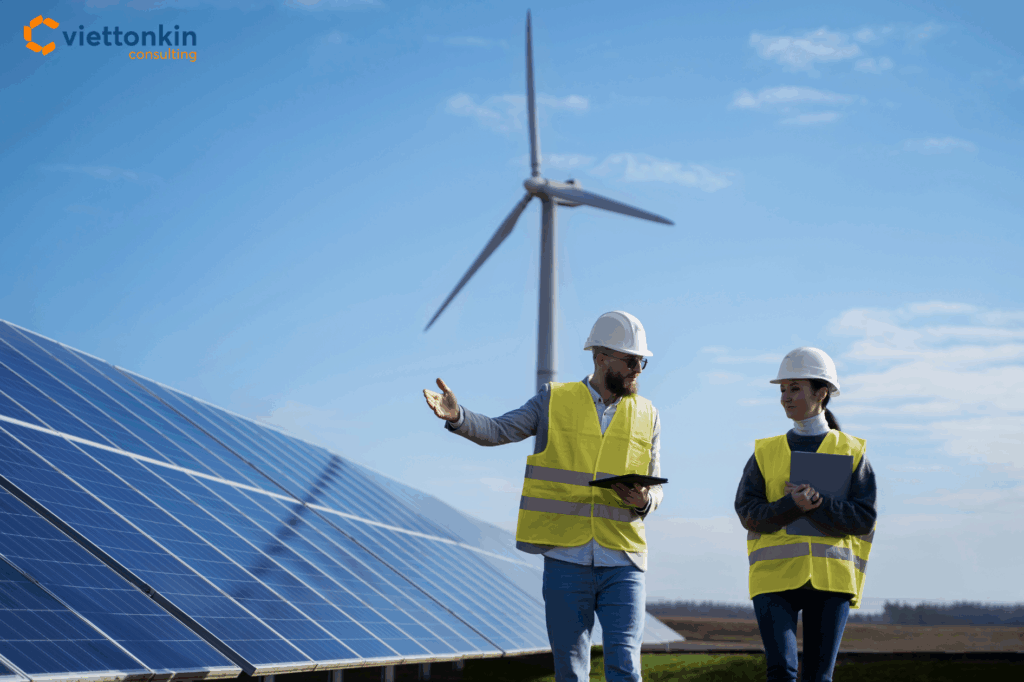
The NETR establishes a framework for moving towards a lower-carbon economy while supporting economic resilience. Its six strategic levers cover energy efficiency, renewable energy, hydrogen, bioenergy, green mobility, and carbon capture, utilisation and storage (CCUS).
According to the Malaysian Investment Development Authority (MIDA), the roadmap’s ten flagship catalyst projects were projected to attract more than RM25 billion in investment, generate approximately 23,000 jobs, and reduce greenhouse gas emissions by over 10,000 gigagrams of carbon dioxide equivalent annually. These figures represent expected outcomes, not proof that every target has already been achieved.
The roadmap also identifies five enabling areas: financing and investment, policy and regulation, human capital, technology and infrastructure, and governance.
This structure is important because industrial decarbonisation cannot be achieved through isolated initiatives. Companies need access to capital, skilled workers, dependable electricity networks, and consistent regulatory frameworks. The national plan therefore links environmental objectives with economic development rather than treating them as separate priorities.
Renewable Energy and Solar Development
Renewable energy is central to Malaysia’s long-term electricity strategy. The NETR sets an ambition for renewable sources to account for 70% of installed power generation capacity by 2050. Reaching this milestone requires substantial investment in generation assets, grid infrastructure, storage, and system flexibility.
Solar offers considerable potential because it can be deployed across utility-scale facilities, commercial rooftops, and industrial properties. Malaysia also has an established photovoltaic manufacturing ecosystem, creating opportunities that extend beyond electricity generation to equipment production, engineering, and supply chain development.
For businesses, solar installations can help diversify electricity procurement and manage exposure to future price volatility. However, the financial case depends on installation costs, consumption patterns, contract terms, and the availability of suitable grid connections.
A solar project should therefore be evaluated using expected generation, system degradation, maintenance costs, financing charges, and the proportion of output consumed on-site. Battery storage may improve flexibility where demand patterns justify its additional expense.
Wind power, meanwhile, should be assessed according to site-specific resource quality and project economics rather than assumed to offer the same potential as solar in every location.
The wider opportunity lies in combining generation with storage, efficient consumption, and better demand management. These measures can strengthen reliability while supporting Malaysia’s wider decarbonisation objectives.
Investment Opportunities and Private Sector Participation
Successful implementation requires significant capital and broader participation from businesses. Public funding can help establish early projects, but private investment is essential for expanding proven technologies and developing commercially viable infrastructure.
The government announced a RM2 billion seed fund for the National Energy Transition Facility in 2023. Its purpose was to support catalytic blended finance for projects that might struggle to secure conventional funding because of relatively low returns or uncertain commercial prospects.
This approach can help reduce early-stage risks and encourage investment in emerging technologies. Nevertheless, public support does not remove the need for rigorous due diligence, transparent governance, and credible revenue models.
Companies should assess opportunities across several areas.
- Solar and storage: Evaluate commercial rooftops, utility-scale generation, and battery systems according to local demand and financing conditions.
- Industrial efficiency: Identify equipment upgrades, heat recovery, and process improvements that can reduce operating costs.
- Green mobility: Examine charging infrastructure, fleet electrification, and supporting services for the electric vehicle supply chain.
- Low-carbon industrial technology: Assess hydrogen, bioenergy, and carbon capture where technical feasibility and customer demand justify investment.
Public-private cooperation can accelerate deployment when responsibilities, risk allocation, and performance indicators are clearly defined. For investors, the strongest opportunities will be those supported by credible contracts, suitable infrastructure, and a realistic path to profitability.
Technology, Infrastructure, and Industrial Competitiveness
A successful transition depends on the ability to integrate new generation capacity without compromising electricity reliability. As more variable sources enter the system, grid planning, storage, forecasting, and flexible demand become increasingly important.
For industrial operators, efficiency improvements can offer immediate benefits while larger infrastructure projects develop. Energy audits, automated controls, efficient motors, and improved cooling systems can reduce consumption without requiring a complete redesign of production facilities.
Hydrogen may support selected industrial applications where direct electrification is difficult. However, its commercial viability depends on production costs, access to low-carbon electricity, transport infrastructure, and reliable buyers.
Carbon capture can also contribute to emissions reduction in industries with difficult-to-abate processes. Yet projects require careful assessment of capture performance, transport arrangements, storage capacity, monitoring, and long-term liability. They should complement broader emissions reduction measures rather than become a substitute for avoidable fossil fuel consumption.
Malaysia’s industrial base and manufacturing capabilities could support new supply chains for clean technologies. Realising this potential will require technical expertise, workforce development, and coordination between producers, utilities, research institutions, and policymakers.
Economic Development and the Challenges Ahead
The benefits of decarbonisation extend beyond lower emissions. New infrastructure can stimulate employment, attract investment, encourage technological innovation, and strengthen industrial capabilities.
Nevertheless, the pace of progress will depend on several challenges. Financing costs can affect project viability, while lengthy approval processes and uncertainty over implementation can delay investment decisions. Grid constraints may also prevent otherwise viable generation assets from connecting when needed.
Another consideration is the distribution of costs and benefits. Smaller companies may lack the capital or technical expertise to adopt new systems, while workers in carbon-intensive industries may require retraining as production methods evolve.
The government and industry must therefore focus on an equitable approach that supports affected communities, develops transferable skills, and improves access to financing.
Businesses should also recognise that the lowest-cost solution is not necessarily the most resilient. Procurement strategies need to account for operational continuity, exposure to regulation, supplier emissions, and future customer requirements.
A credible assessment should distinguish announced targets from operational capacity, committed capital from completed expenditure, and projected emissions savings from independently verified reductions.
How Businesses Can Prepare
Companies do not need to wait for every national initiative to mature before taking practical action. A structured plan can help organisations identify achievable improvements and prepare for future requirements.
First, establish a reliable emissions baseline covering direct operations and purchased electricity. Where material, examine supply chain emissions and document the methodology used to estimate them.
Second, prioritise measures according to financial return and environmental impact. Efficiency improvements may provide an attractive starting point, while solar procurement, electrification, or new industrial technology can be evaluated through detailed feasibility studies.
Third, assign clear responsibilities for implementation. Sustainability teams should work with finance, procurement, engineering, and senior management to ensure that climate objectives influence capital allocation and operational planning.
Finally, track performance through measurable indicators, including electricity consumption, emissions intensity, project expenditure, and verified reductions. Regular reporting helps management identify delays and adjust investment priorities.
Conclusion
Malaysia’s roadmap provides a framework for connecting climate objectives with industrial development, investment, and technological progress. Its success will depend on whether policy commitments translate into reliable infrastructure, viable projects, and measurable improvements.
For companies and investors, the priority is to understand both the opportunities and the practical constraints. Solar generation, efficiency improvements, green mobility, hydrogen, and carbon capture each have different technical and commercial requirements.
By combining disciplined investment decisions with transparent reporting and collaboration across the public and private sectors, Malaysia can strengthen its competitiveness while progressing towards a lower-carbon economy. The Ministry of Economy’s announcement on the NETR launch in July 2023 highlights the roadmap’s intended role in transforming the national economy. The most meaningful measure of success will not be the ambition of the roadmap alone, but the delivery of lasting economic and environmental outcomes.
Read more: Malaysia’s Semiconductor Industry and Its Expanding Role in the Global Chip Supply Chain