

The Malaysia semiconductor sector has become an important part of the global electronics ecosystem, connecting manufacturers, technology developers, and customers across international markets. From components used in consumer electronic products to advanced computing infrastructure, semiconductors enable the devices and systems that support modern life.
Malaysia has spent decades developing expertise in electronic manufacturing, assembly, testing, and packaging. Today, the country aims to move further into chip design, advanced manufacturing, and other high-value activities. This transition matters as demand for artificial intelligence, electric vehicle technology, and digital infrastructure continues to reshape the global semiconductor industry.
According to the Malaysia Investment Performance Report 2024 published by MIDA, Malaysia recorded RM48.1 billion in approved semiconductor investments in 2024, covering 46 projects and 21,722 potential employment opportunities. These figures demonstrate the sector’s strategic importance, although approved investment does not necessarily represent completed spending or realised jobs.
Understanding Malaysia’s Role in the Semiconductor Supply Chain
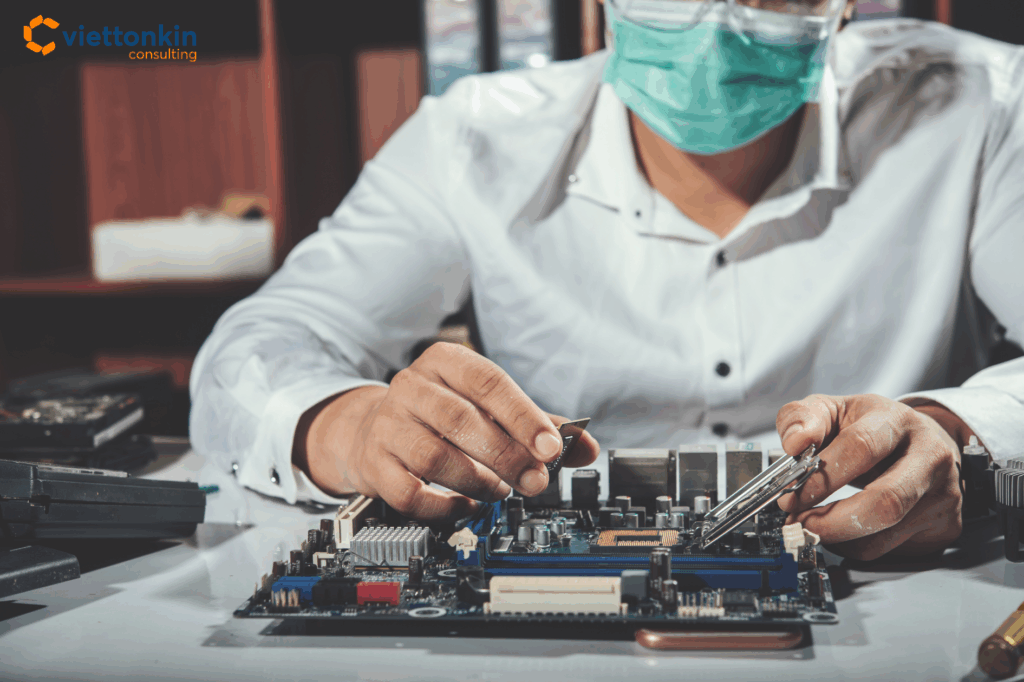
A semiconductor is a material used to control electrical current, making it essential for modern electronic systems. Semiconductor chips process information, store data, manage power, and control the functions of countless devices.
The industry operates through several connected stages. These include research, chip design, wafer fabrication, assembly, testing, packaging, and distribution. Each stage requires different equipment, technical expertise, and investment.
Malaysia has established a particularly strong position in back-end manufacturing. According to Bank Negara Malaysia, the country accounts for approximately 13% of global outsourced assembly, testing, and packaging activity. This capability supports international manufacturers that need reliable production partners.
This specialisation gives Malaysia an established role in the global supply chain. However, the next phase of development involves expanding domestic capabilities beyond traditional manufacturing services.
Why Penang Is Central to Malaysia’s Semiconductor Industry
Penang is one of Malaysia’s most established electronics manufacturing centres. Decades of industrial development have created a network of manufacturers, suppliers, engineering teams, logistics providers, and technical institutions.
The wider northern corridor, including Kedah and its Kulim industrial area, also supports semiconductor production. These locations offer industrial infrastructure, access to skilled workers, and connections to international customers.
For a semiconductor company, an established manufacturing cluster can reduce operating complexity. Suppliers are easier to coordinate, technical knowledge can circulate between businesses, and engineering teams can resolve production issues more efficiently.
Industrial parks and specialised facilities also help companies expand operations. A design park or high-tech industrial development can support collaboration between research teams, equipment suppliers, and manufacturers when it provides suitable infrastructure and access to talent.
Nevertheless, geographical concentration creates dependencies. Businesses must evaluate transport capacity, electricity reliability, water availability, and access to skilled engineers before committing to major expansion projects.
The Shift Towards Chip Design and High-Value Technology
Malaysia’s next challenge is to capture more value from intellectual property and advanced technical capabilities.
Chip design determines how an integrated circuit performs its intended functions. Design teams define architecture, optimise circuits, verify functionality, and prepare the design for fabrication. These activities require specialised software, experienced engineers, and close coordination with manufacturing partners.
In March 2025, MIDA announced a strategic partnership with Arm to strengthen local design capabilities. The four-year initiative includes training programmes targeting 10,000 integrated circuit design engineers. It forms part of a broader ambition to build a stronger domestic technology ecosystem.
The wider National Semiconductor Strategy also targets the development and upskilling of 60,000 high-skilled engineers, alongside at least RM25 billion in fiscal support.
These objectives indicate a deliberate move towards higher-value activities. However, training targets and policy commitments should not be confused with completed outcomes. Long-term success will depend on whether local companies develop commercially competitive products, retain skilled talent, and establish sustainable customer relationships.
Demand Drivers Across Global Technology Markets
Several technology trends are creating new opportunities for semiconductor manufacturers.
Artificial intelligence and data infrastructure
Artificial intelligence workloads require processors, memory, networking components, and supporting power-management systems. As investment in data centers increases, demand can rise for specialised chips and advanced packaging solutions.
Malaysia may benefit through manufacturing partnerships, equipment supply, testing services, and future design capabilities. However, capturing this demand requires the technical expertise and infrastructure needed for increasingly complex products.
Automotive and electric vehicle technology
Modern cars depend on electronic control systems, sensors, connectivity, and power-management components. Electric vehicle platforms also require semiconductors for battery management, charging, motor control, and energy conversion.
These industrial applications create opportunities for manufacturers that can meet demanding reliability and quality standards. Automotive programmes often involve lengthy qualification processes, making consistent production performance especially important.
Consumer electronics and smart home devices
Smart home products, connected appliances, wearables, and other electronic devices rely on microcontrollers, wireless components, sensors, and memory. Demand varies with product cycles, household spending, and inventory levels.
Energy-efficient designs and high-performance processing can improve functionality while managing power consumption. For Malaysian suppliers, the opportunity lies in delivering reliable components at competitive cost without compromising quality.
Government Support and Investment Expansion
Government policy is a major part of Malaysia’s semiconductor development strategy. The National Semiconductor Strategy seeks to strengthen domestic companies, attract investment, develop engineering talent, and expand participation in higher-value segments.
The government also aims to support local suppliers and improve links between multinational corporations, universities, and research institutions. Such collaboration can help smaller companies access technical knowledge and enter more demanding markets.
MIDA reported RM55.8 billion in approved investment for Malaysia’s electrical and electronics sector in 2024. This figure covers the broader E&E sector, not semiconductors alone, and should therefore be interpreted separately from the semiconductor investment total.
For businesses evaluating expansion, the relevant questions extend beyond incentives. They include project execution, infrastructure readiness, access to qualified workers, supplier development, and the long-term stability of customer demand.
A strategic investment should be assessed against these operational requirements rather than policy announcements alone.
Challenges That Could Influence Future Growth
Despite its established position, Malaysia faces several challenges as it seeks to strengthen its global competitiveness.
Talent availability
Advanced manufacturing and chip design require specialised engineering skills. Expanding the talent pipeline involves university programmes, practical training, industry collaboration, and opportunities for experienced professionals to develop their careers locally.
Infrastructure and operating costs
Semiconductor facilities depend on stable electricity, high-quality water, reliable logistics, and sophisticated equipment. Companies must also assess the cost of maintaining facilities and implementing increasingly complex production processes.
International competition
Other economies are investing heavily in semiconductor manufacturing, research, and design. Malaysia must differentiate itself through technical expertise, dependable execution, supplier quality, and continued innovation rather than relying only on cost advantages.
Supply chain resilience
Semiconductor production depends on specialised materials, machinery, software, and international logistics. Disruptions in one location can affect customers across multiple countries. Companies therefore need risk-management plans, alternative sourcing strategies, and clear contingency procedures.
The Outlook for Malaysia’s Semiconductor Market
The outlook for the Malaysian semiconductor market depends on how effectively the country combines its established manufacturing strengths with new technical capabilities.
Demand associated with AI, automotive electronics, and digital infrastructure offers potential growth opportunities. Yet market expansion will not automatically translate into higher domestic value creation. Companies must build expertise, improve productivity, and develop products or services that customers cannot easily replace.
Malaysia’s long-term ambition is to participate more fully across the semiconductor value chain. That means strengthening local design capabilities, supporting advanced packaging, improving collaboration between domestic suppliers and multinational businesses, and developing a sustainable engineering workforce.
For investors and technology professionals, the most useful indicators to monitor include realised investment, export performance, productivity, engineering employment, and the growth of locally developed intellectual property. These measures provide more meaningful evidence of progress than announcements alone.
Conclusion
Malaysia has established a strong position in the global semiconductor supply chain through its expertise in assembly test operations, manufacturing infrastructure, and international partnerships. As the semiconductor industry continues to grow, the country has an opportunity to expand into integrated circuit design, advanced packaging, and other high-value technology segments. According to Bank Negara Malaysia’s analysis of the electrical and electronics value chain in 2024, Malaysia accounted for 7.3% of global semiconductor exports and 13% of global outsourced assembly, testing, and packaging activity.
Government initiatives, skilled engineers, and private-sector investment can drive innovation in Malaysia and strengthen its ambition to become a global semiconductor hub. At the same time, maintaining cost-effective operations, developing local talent, and building stronger research capabilities will be essential for sustainable growth. The National Semiconductor Strategy announced in 2024 outlines the government’s ambition to attract RM500 billion in semiconductor investments during its first phase.
Emerging technologies like artificial intelligence, electric vehicles, and high-performance computing are creating new opportunities for Malaysian companies. To capture this demand, the country must continue to invest in engineering expertise, infrastructure, and advanced manufacturing capabilities. Ultimately, Malaysia’s ability to grow its technological capabilities and deliver reliable, competitive solutions will determine how much value it can create in the global semiconductor market.
Read more: A Foreign Investor’s Guide to Investing in Malaysia